
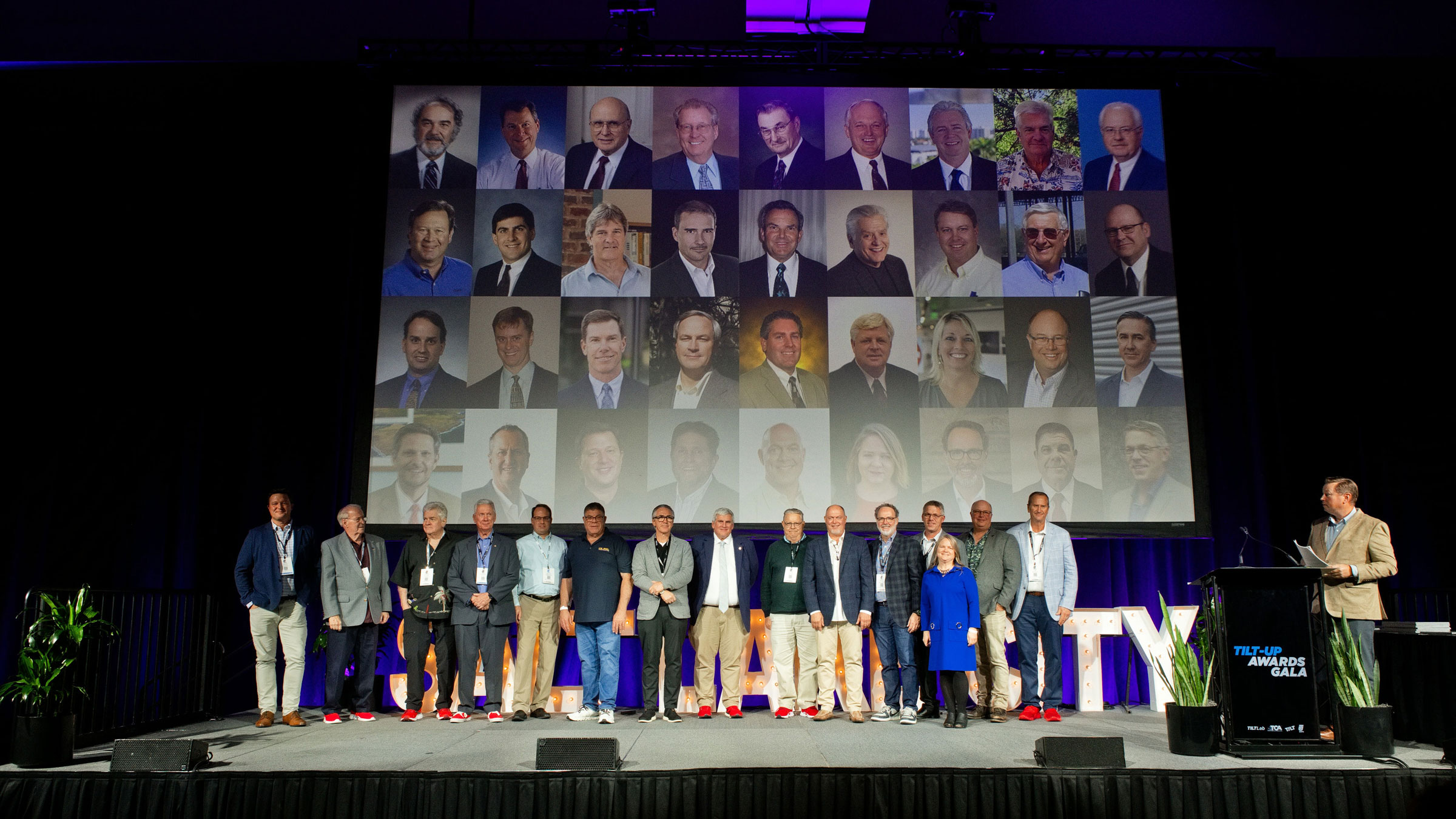
TCA past presidents gather onstage at the Tilt-Up Awards Gala in Salt Lake City as the Association marks its 40th anniversary.
Salt Lake City may have been the best convention the Tilt-Up Concrete Association has hosted in its forty years. I’ve been thinking about what makes me say that. It has something to do with how much work people did while they were there, and how much they seemed to enjoy doing it.
There was work being done on the show floor. Exhibitors prioritized the experience of their booths, and that afforded them more serious attention. The right person had the right vehicle to communicate the work. That mattered because engagement with exhibitors is a form of professional practice. It gives us a chance to evaluate an unfamiliar approach, refine a method we already use or establish a relationship we can draw on when a problem comes up. The quality of the exhibits made that kind of engagement possible.
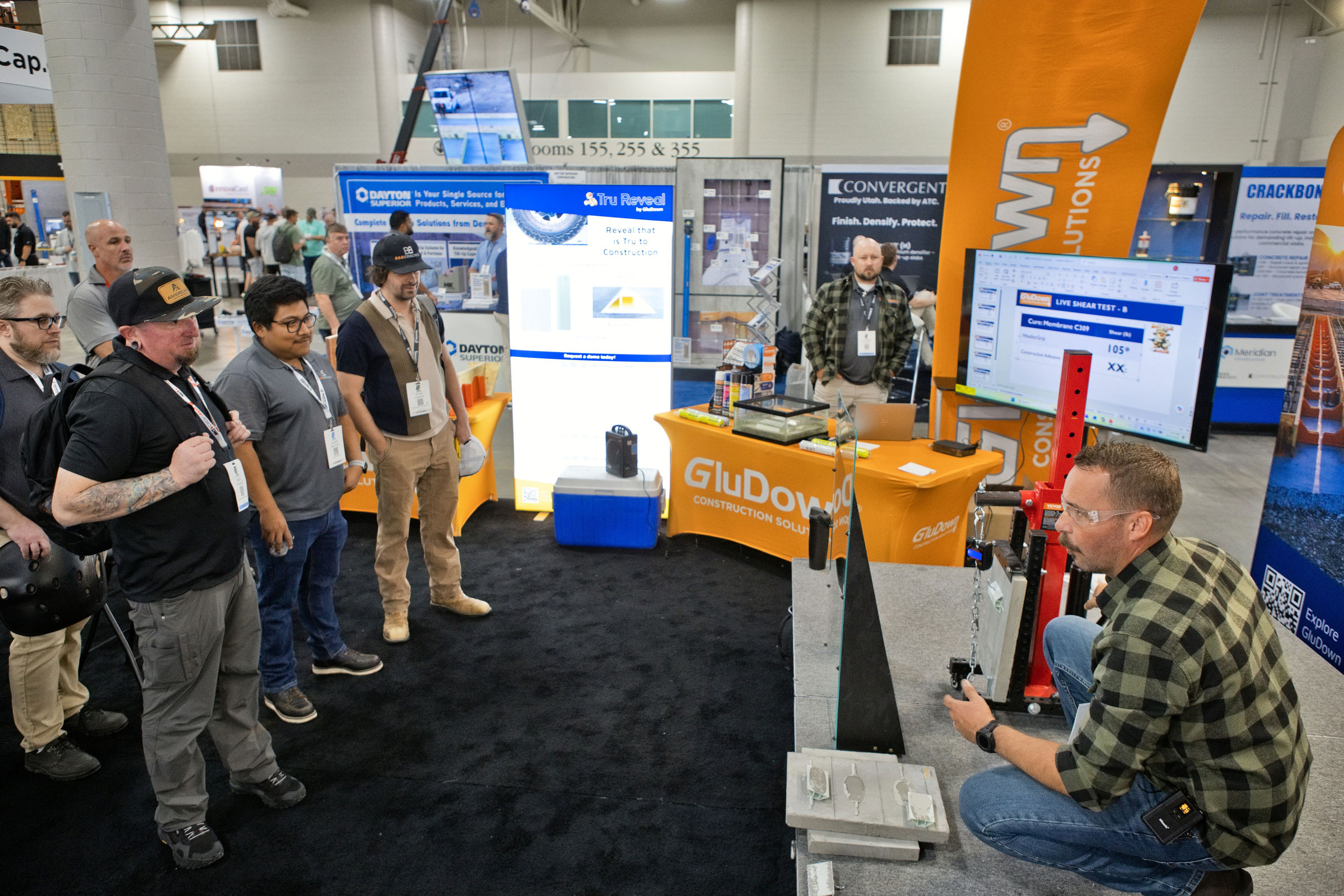
Cliff Saunders, tilt-up director at GluDown, Inc., ran a series of live tests on a stage in the company’s booth, comparing how its products performed under different conditions and discussing the results with attendees as the tests unfolded.
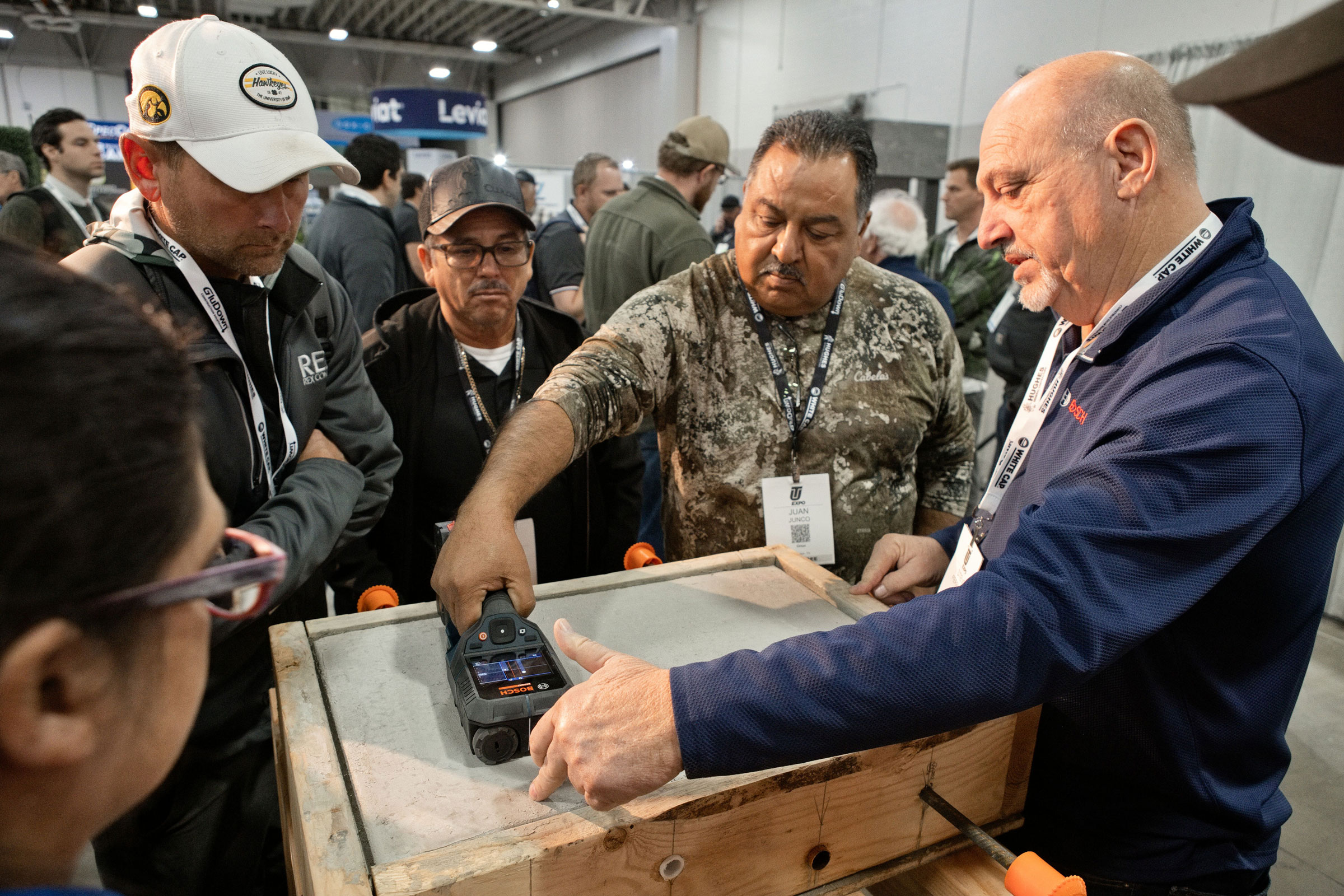
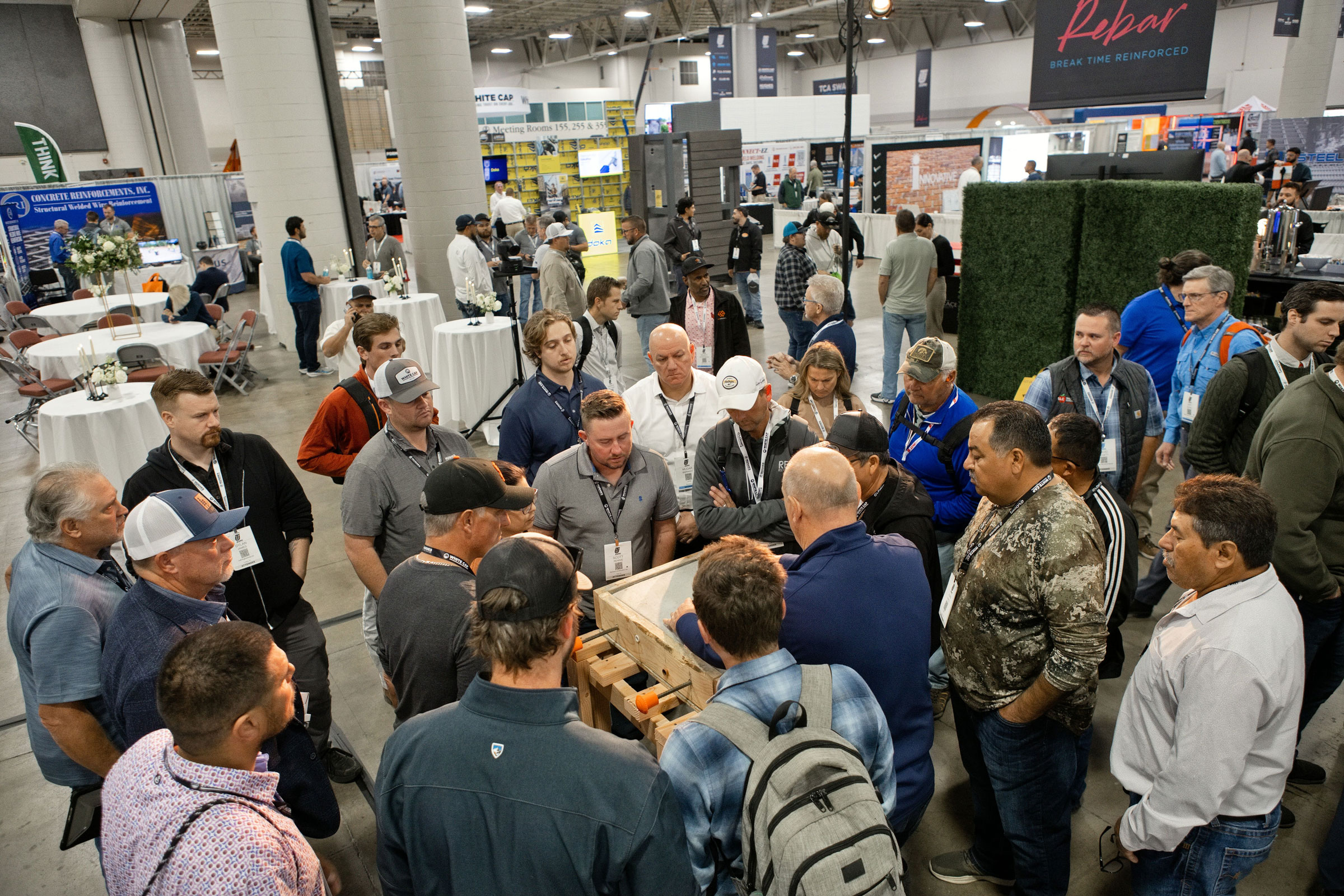
Attendees gather at Bosch’s hands-on stations in the Demo Theater to try ground-penetrating radar and see how scan results can help locate embedded reinforcement and other objects before drilling, coring or cutting tilt-up panels.
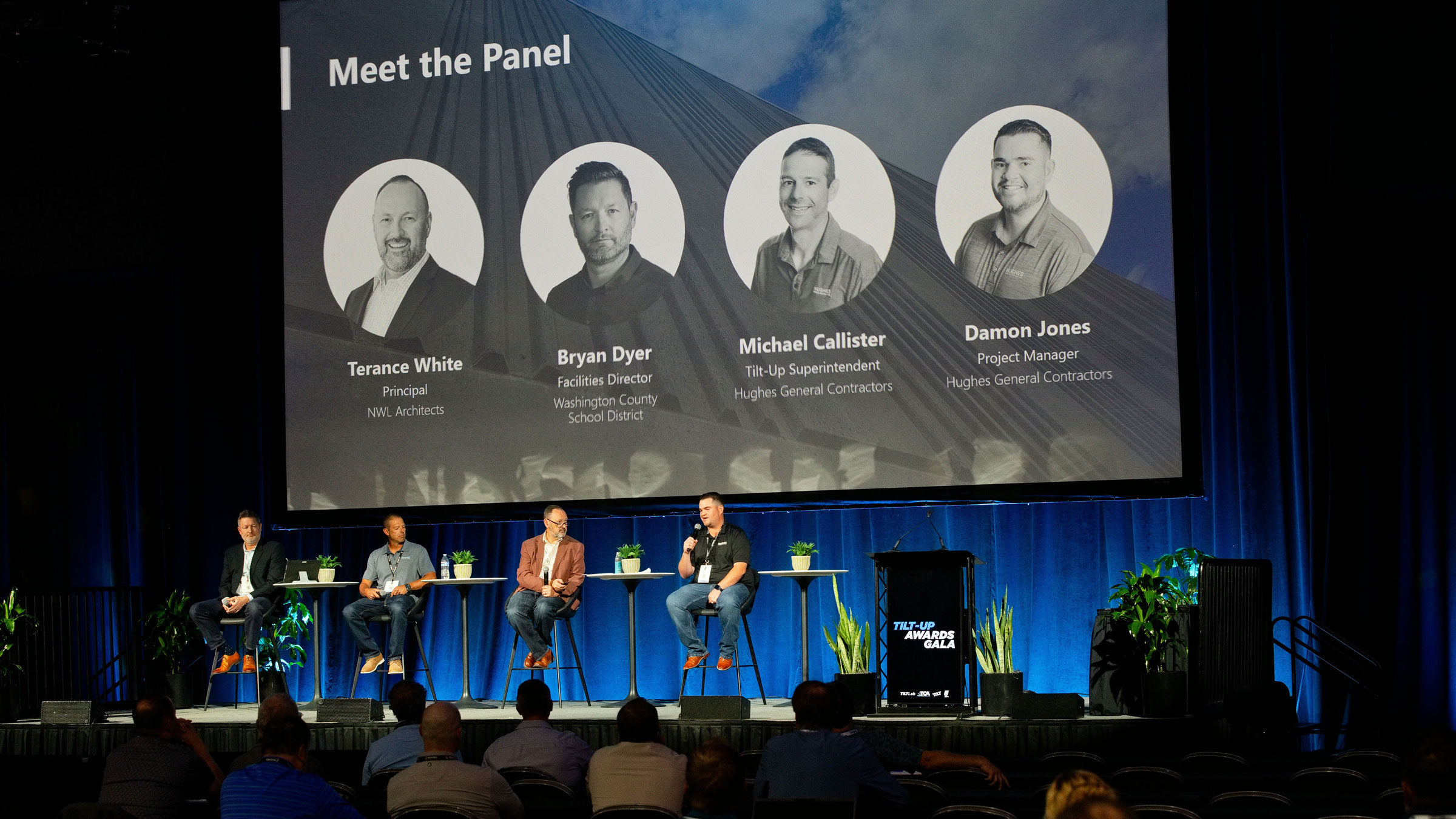
Panelists Terance White, Damon Jones, Michael Callister and Bryan Dyer are introduced at “How Tilt-Up Changed a School District,” a session tracing how three decades of experience with tilt-up shaped the Washington School District’s approach to durability, maintenance and architectural expression.
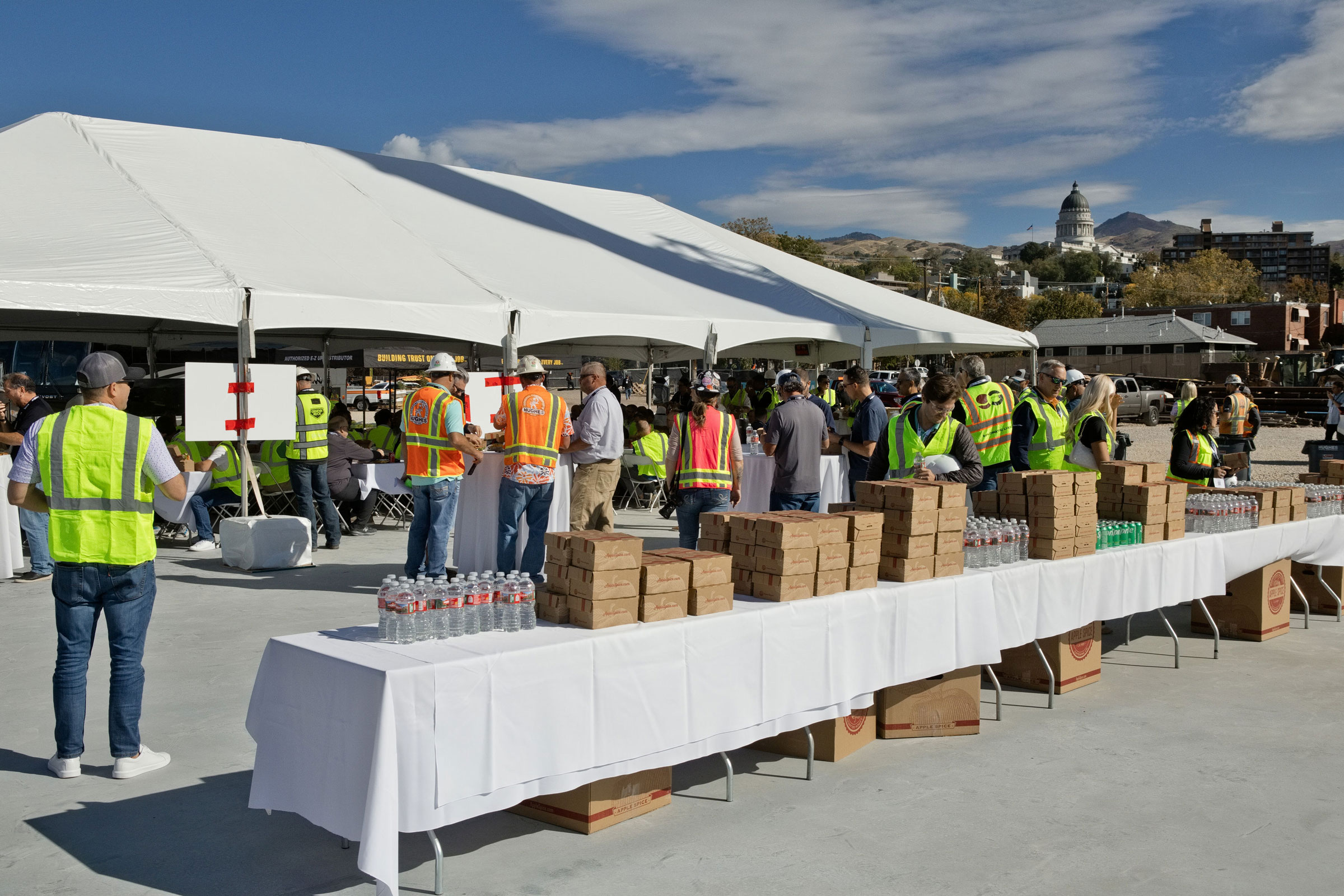
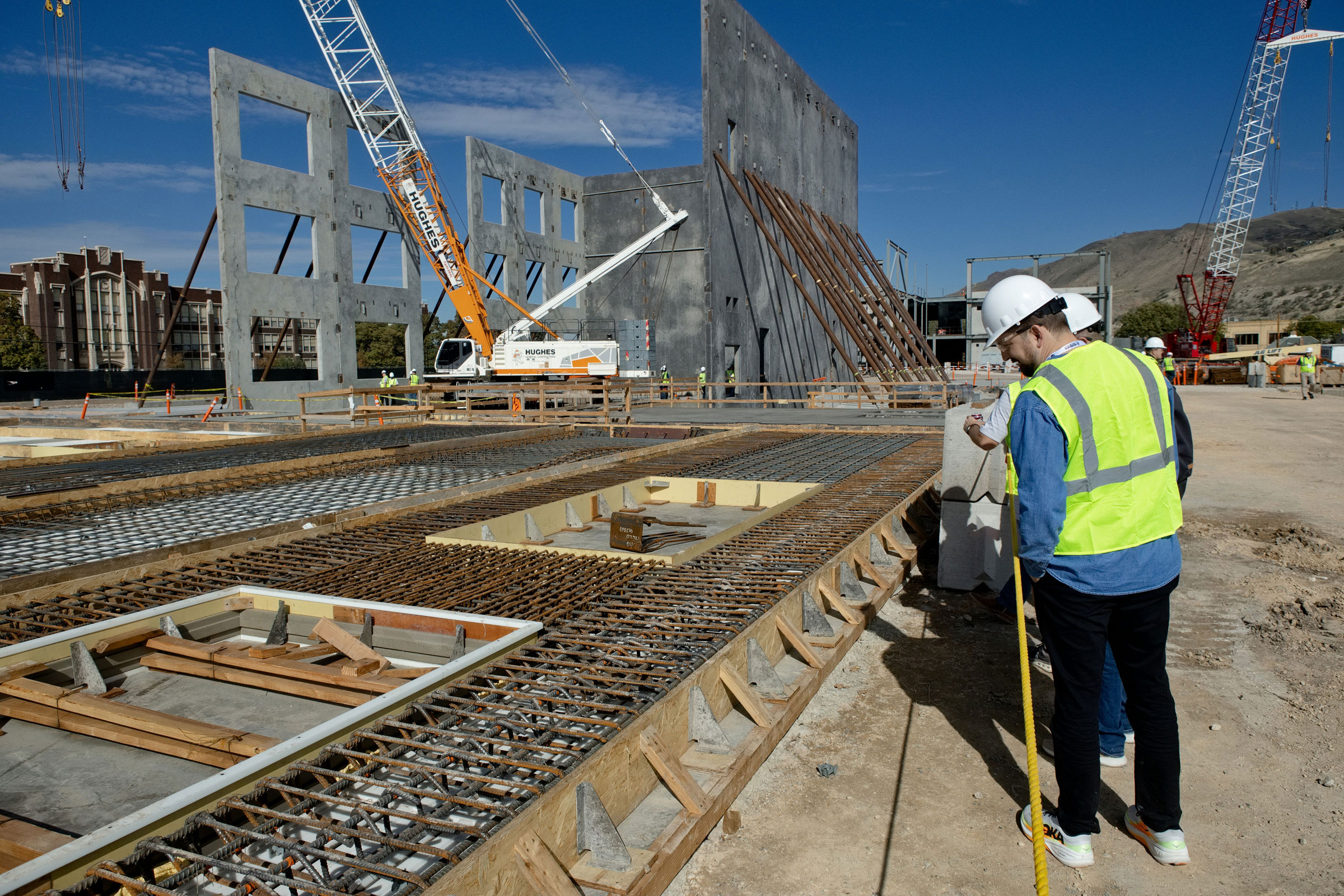
Morning and afternoon tour groups came together at West High School for lunch and a walk through the jobsite, where attendees saw tilt-up panels at several stages of construction.
There was work being done in the education sessions. The program was relevant because it addressed topics where we have questions and where we have doubts. It was interdisciplinary by design, bringing together perspectives that do not align without some work. We approached the program through two lenses, looking at the systems, methods and standards that make the work reliable and at how they are applied, carried out and evaluated in the field. That was the premise of Shared Ascent. Progress in tilt-up comes through steady improvements in how we conceive, execute, evaluate and sustain the work, and through our willingness to make what we learn available to others.
There was work being done on the tours. Utah’s design and construction community has expanded what is possible with site-cast concrete, producing buildings that combine architectural ambition, efficient construction and long-term performance. The tours let us experience those buildings at full scale and speak directly with the people behind them. The local teams put the program together with enthusiasm and took evident pride in their projects. They were also willing to be vulnerable about the work, opening it to critical review and sharing what they had learned and what they still hoped to do. That was worth traveling to see.
We also ate well, listened to live music and celebrated people whose work deserved recognition. We were comfortable and had time to gather. You could sit down with someone over lunch or stay a little longer when a conversation was going well. The pace felt right. I think that had a great deal to do with how much people were able to take from the week.
At the awards gala, I had the privilege of introducing Barclay Gebel as the recipient of the Peter Courtois Memorial Award. I said that through his work with the TCA, Barclay had gotten better at what he did, had made his company better and, in my judgment, had made everyone in the room better. I was talking about Barclay that evening. Since then, I’ve thought about what I said in relation to the convention as a whole.
I coach baseball. At the end of a game, one question tells me more about the value of our time together than any other. Did we get better?
I think we left Salt Lake City better than we arrived. Some of what we learned will show up in the questions we ask on the next project, in whom we call when we need to think something through, and in what we’re able to pass along to someone else.
By Mitch Bloomquist

Be the first to comment