
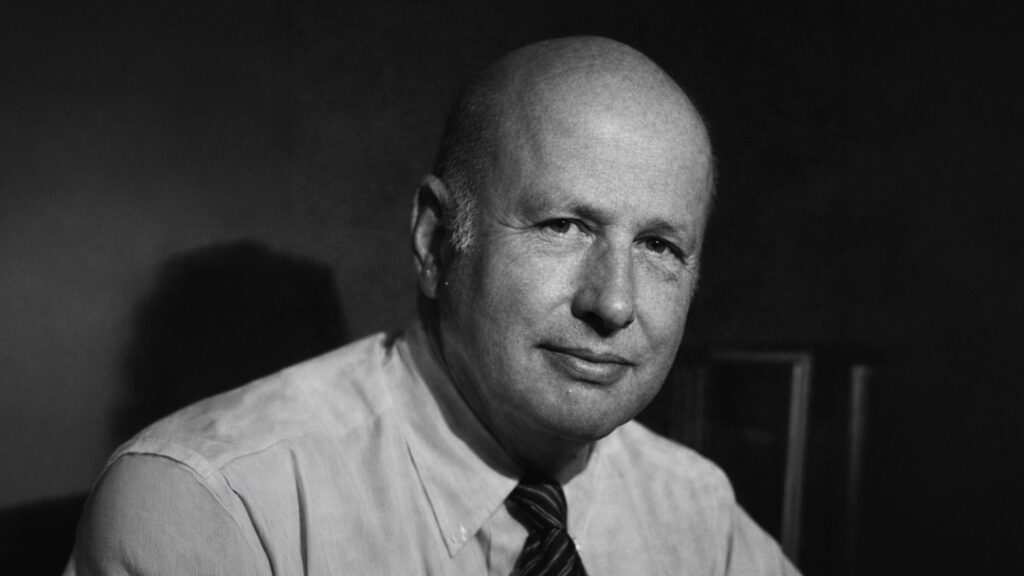
The tilt-up industry lost one of its foundational figures on April 8, 2026, with the passing of Hugh Brooks, Jr., S.E., at the age of 99.
For generations of engineers, contractors, educators, and industry leaders, Hugh Brooks was more than a practicing structural engineer. He was an author, educator, innovator, and early advocate whose work helped shape tilt-up construction into the mature and technically respected building system it is today.
Brooks earned his B.S. in Civil Engineering from the University of Southern California in 1950 and passed the California Structural Engineering examination in 1957, the same year he founded Hugh Brooks Associates Structural Engineers. Over a professional career spanning four decades, he designed more than 3,000 commercial structures and became widely recognized for his expertise in tilt-up concrete construction, precast systems, and parking structures.
His influence on tilt-up construction extended far beyond individual projects.
In 1986, Brooks became a founding member of the Tilt-Up Concrete Association, helping establish an organization that would go on to guide and elevate the industry worldwide. Brooks’ contributions to the industry were formally recognized in 1996 when he became the inaugural recipient of the Peter D. Courtois Memorial Award, the Tilt-Up Concrete Association’s highest honor. The award recognizes individuals whose career-long dedication and leadership have helped shape the tilt-up industry and establish benchmarks for future generations.
By the time of the award, Brooks had already designed hundreds of tilt-up structures, authored foundational technical publications, lectured extensively on tilt-up engineering and construction, and contributed significantly to the advancement of industry standards and education.
Perhaps no contribution carried greater influence than his authorship of the Tilt-Up Design & Construction Manual, first published in 1988. Through six editions, the manual became the industry’s defining technical reference, serving as an essential resource for engineers, contractors, architects, and students entering the field.
In the fall of 2002, the Tilt-Up Concrete Association purchased all rights to the publication from Brooks, ensuring the continued development and stewardship of one of the industry’s most influential technical resources. Subsequent editions built upon the foundation he established and helped extend its reach to future generations of practitioners.
Brooks also contributed to the advancement of building codes and engineering practice following the 1971 San Fernando earthquake. Through direct observation of failures in wall-to-roof anchorage systems in older tilt-up structures, he helped inform critical code changes during the 1970s that strengthened panel connection requirements and improved structural performance. His involvement with SEAOC, SEAOSC, and ACI Committee 551 helped bridge field observations with codified engineering standards.
Beyond tilt-up, Brooks was a prolific author whose publications influenced structural engineering practice more broadly. His Basics of Retaining Wall Design, first published in 1996, remains a widely used reference text now in its eleventh edition. His Illustrated Encyclopedic Dictionary of Building & Construction Terms became an authoritative industry resource and was cited by the U.S. Court of Appeals.
Brooks also embraced software development early in the engineering profession. In the mid-1990s, he developed RetainPro, one of the first widely adopted retaining wall design software programs. The software would later become integrated into the ENERCALC Structural Engineering Library developed by his son, Michael Brooks, S.E.
Innovation remained a defining characteristic throughout his life and career. Brooks held U.S. Patent 3,082,887 for the “Marinalift” boat storage system and developed the “Flip-Slab” construction method in the early 1960s, reflecting his lifelong interest in improving construction efficiency and structural systems.
Even outside his technical accomplishments, colleagues remember Brooks as an educator and communicator deeply invested in sharing knowledge. He lectured extensively through TCA events, World of Concrete, university programs, and SEAOSC seminars across the United States. Committed to continually improving his ability to teach and present, he spent nearly a decade as a member of Toastmasters.
Brooks served in the United States Navy during World War II aboard the USS Hancock and remained intellectually active and professionally engaged throughout his life. He approached engineering with both rigor and curiosity, helping guide the tilt-up industry through formative decades of growth and technical advancement.
His legacy continues not only through the structures he designed, the publications he authored, and the standards he influenced, but through the generations of engineers and industry professionals shaped by his work.
The Tilt-Up Concrete Association extends its condolences to Michael Brooks, the Brooks family, and all those impacted by Hugh Brooks’ remarkable life and enduring contributions to the engineering profession and the tilt-up industry.

Be the first to comment