
The challenge facing tilt-up in Hawaii has been clearly stated—and recently documented. In many cases, by the time the contractor is engaged, the system has already been decided.
That dynamic continues to define the opportunity ahead.
For many in the region, the default has historically been steel—leaving tilt-up out of the conversation before it begins. But as local leaders continue to demonstrate the method’s advantages in cost, schedule, and control, the next step has become equally clear: shift the conversation earlier.
The upcoming Tilt-Up Field Summit: Hawaii is designed to do exactly that—led by the same local professionals working to advance the method across the islands.
Scheduled for June 18–19, 2026, in Kapolei, the event brings together owners, designers, engineers, contractors, and suppliers for a focused, education-first program centered on modern tilt-up construction. Developed in collaboration with Hawaii-based industry leaders and hosted by the Tilt-Up Concrete Association, the Summit reflects a deliberate effort to align the full project team—before design decisions are locked in.
This local leadership is central to the program’s intent.
Rather than importing a predefined format, the Field Summit has been shaped by the realities of building in Hawaii—where logistics, material access, and project sequencing differ meaningfully from mainland conditions. The result is a program grounded in the experience of those delivering work there today, designed to address both constraints and opportunity with clarity.
At the same time, the format introduces a broader strategy.
Instead of replicating the scale of a national convention, the Field Summit concentrates core knowledge, standards, and applied learning into a two-day experience tailored for geographically isolated and emerging markets. It is a portable model—one that delivers essential TCA value while remaining responsive to local context.
The program is structured to establish a shared understanding of tilt-up fundamentals while addressing the specific challenges of building and sustaining the method in a developing market. For Hawaii, that means focusing not only on how tilt-up is executed, but how it is introduced—how architects, engineers, and owners evaluate it as a viable system from the outset.
Day one centers on education and alignment. Sessions trace the evolution of tilt-up practice, explore strategies for building momentum in emerging markets, and connect engineering intent with field execution. Topics such as bracing, erection sequencing, material compatibility, and surface performance are addressed with an emphasis on real-world application.
In the afternoon, the program shifts from presentation to participation. Guided field learning stations provide hands-on exposure to the tools, systems, and techniques used in current tilt-up construction. Rather than passive observation, attendees engage directly with the processes that define successful projects—an approach that reinforces both understanding and confidence.
The day concludes with a brief, informal social hour designed to strengthen local relationships without shifting the program’s focus away from education.
Day two offers an optional credentialing pathway for participants seeking to formalize their knowledge through TCA/ACI certification. A structured review session is followed by an exam, allowing attendees to translate what they’ve learned into recognized professional qualification.
Throughout, the Summit maintains a clear philosophy: education first, local context always. Vendor participation is instructional rather than promotional, and the overall scale is deliberately restrained to support meaningful interaction and continuity of learning.
In many ways, the event represents a direct response to the conditions described by Hawaii’s tilt-up leaders. If the barrier is late engagement, the solution is earlier alignment. If the challenge is awareness, the response is shared understanding—across disciplines, not just within them.
The Field Summit also serves as a broader test. As a proof-of-concept, it demonstrates how a portable, concentrated version of TCA’s educational framework can support markets where traditional engagement models are less accessible. Its success in Hawaii may inform similar efforts in other regions facing comparable constraints.
For the local industry, however, the objective is more immediate.
Tilt-up is already working in Hawaii. Projects are being delivered, capabilities are expanding, and confidence is growing among those directly involved in the work. What remains is extending that understanding upstream—into the decisions that shape projects before they reach the field.
The Tilt-Up Field Summit: Hawaii is not simply an event. It is a locally led effort to change when and how the conversation begins.
To learn more and register, visit the Tilt-Up Concrete Association.
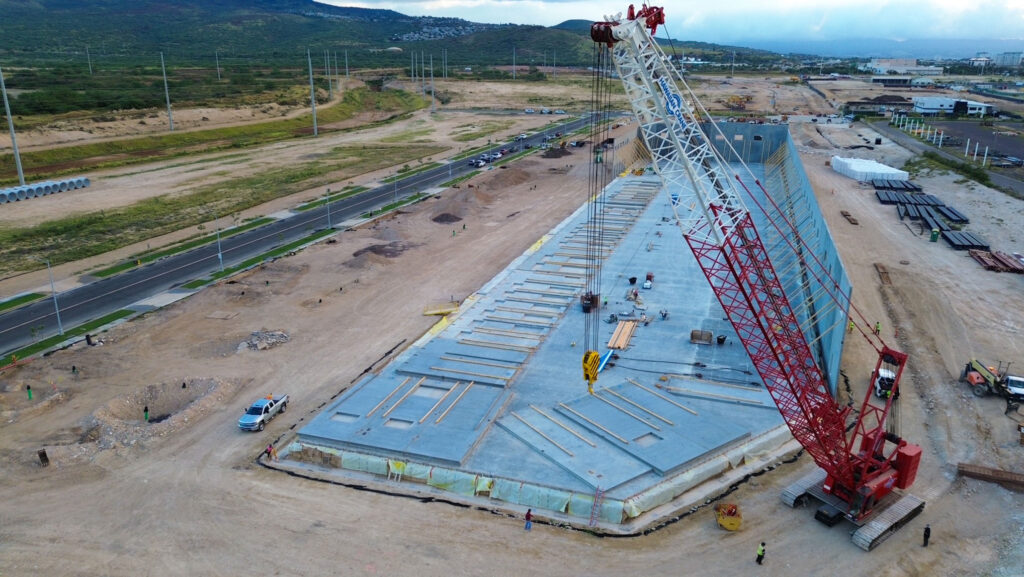
Kapolei Harborside Warehouse — Spanning 110,000 square feet with 25 dock doors and a 36-foot interior clearance, this facility delivers modern capacity and efficiency to Hawaii’s growing industrial market.

Be the first to comment