
Fraser Mills Business Centre is an industrial condominium development located in Coquitlam, British Columbia, within the 96-acre Fraser Mills master-planned community. As the only industrial component of the broader mixed-use redevelopment, the project was conceived to support light industrial and distribution users while maintaining architectural compatibility with an adjacent residential environment. The project received a Tilt-Up Achievement Award in recognition of its application of tilt-up construction within a constrained urban and seismic context, offering lessons applicable to similar mixed-use and infill conditions.
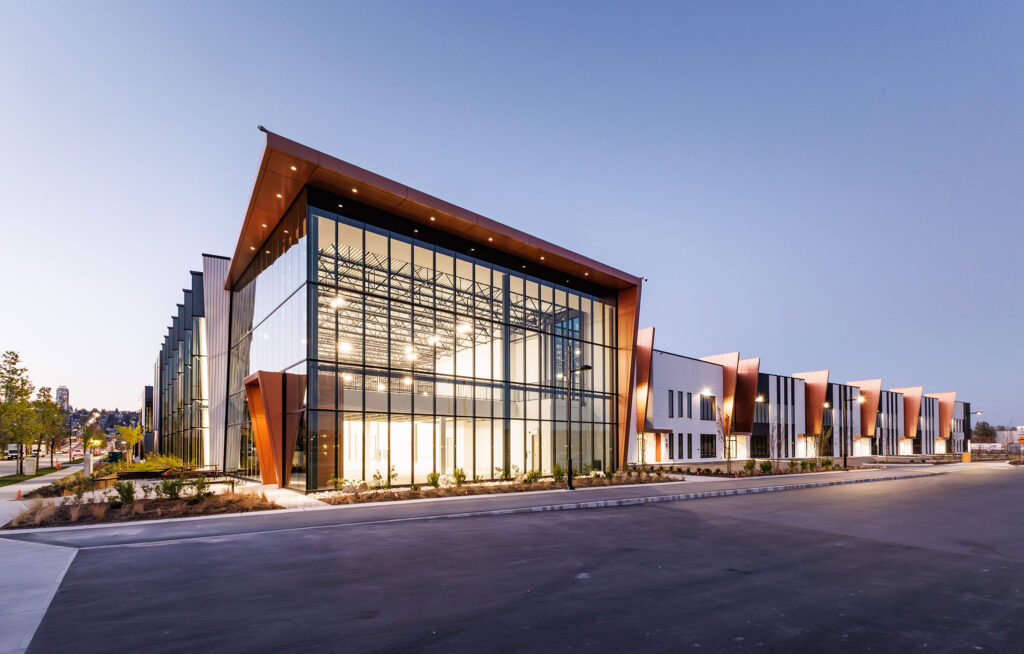
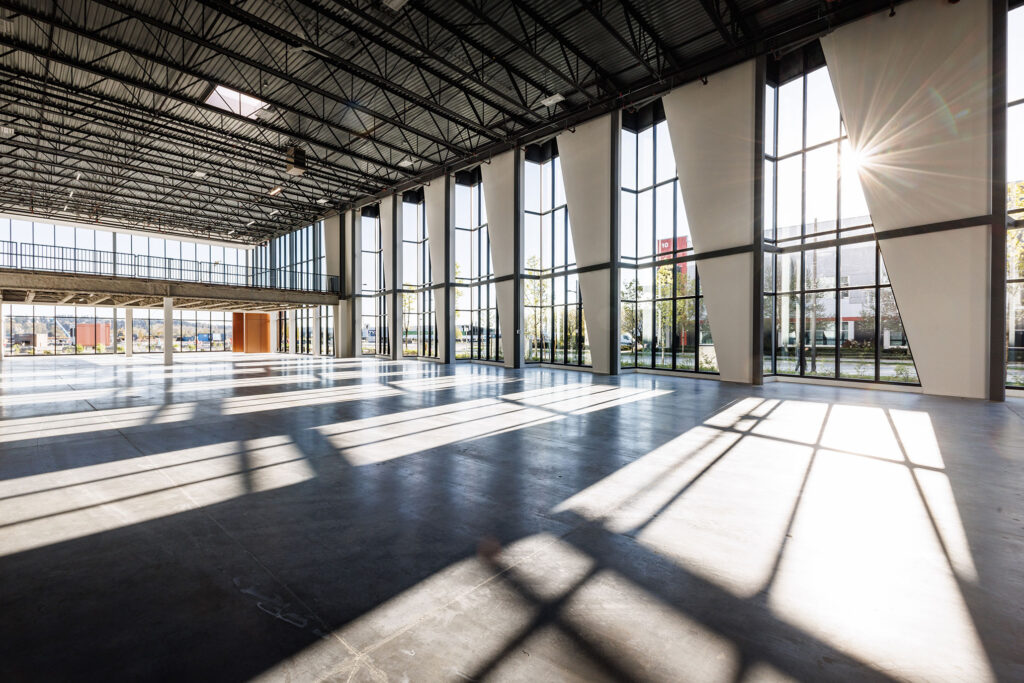
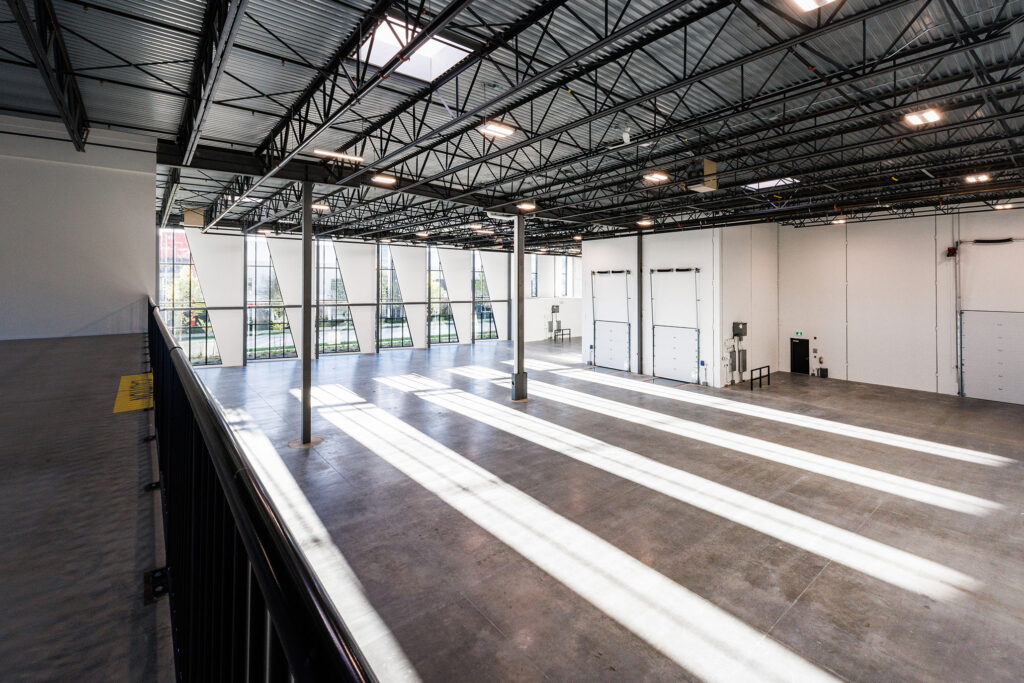
The development consists of two buildings containing 16 industrial strata units, with flexible configurations ranging from approximately 7,952 square feet to contiguous spaces of nearly 94,851 square feet. Each unit included a pre-installed structural steel mezzanine and 28-foot clear warehouse ceiling heights, supporting a range of operational needs. While the project functions as an industrial facility, its siting along King Edward Street and within a master-planned community required careful consideration of scale, massing, and public-facing design.
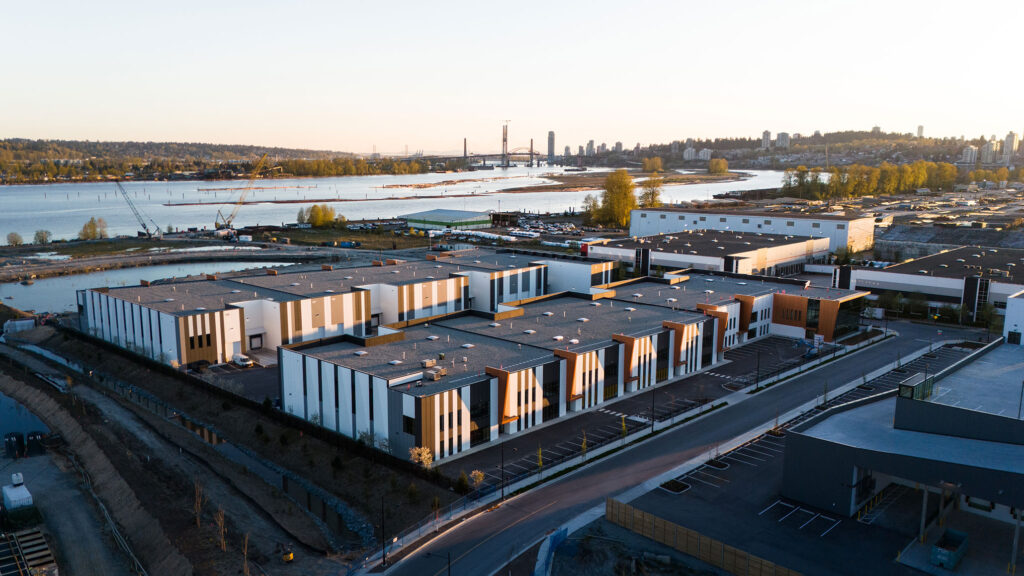
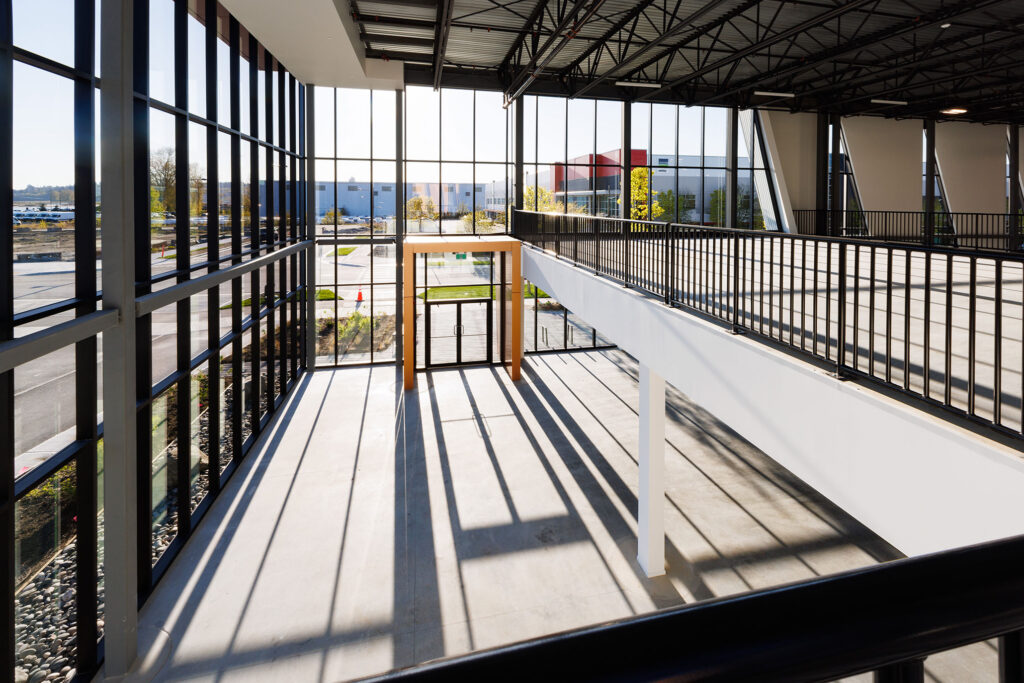
Tilt-up concrete construction formed the primary enclosure system, with 258 cast-in-place panels integrated with structural steel framing, glazing, and metal cladding. The building footprint departed from conventional industrial rectilinearity through an undulating plan condition and a stepped roofline. These design decisions directly influenced panel geometry, panel-to-panel relationships, and erection sequencing. The project demonstrates how early coordination between architectural intent and panelization strategy can expand the formal possibilities of tilt-up construction while maintaining constructability.
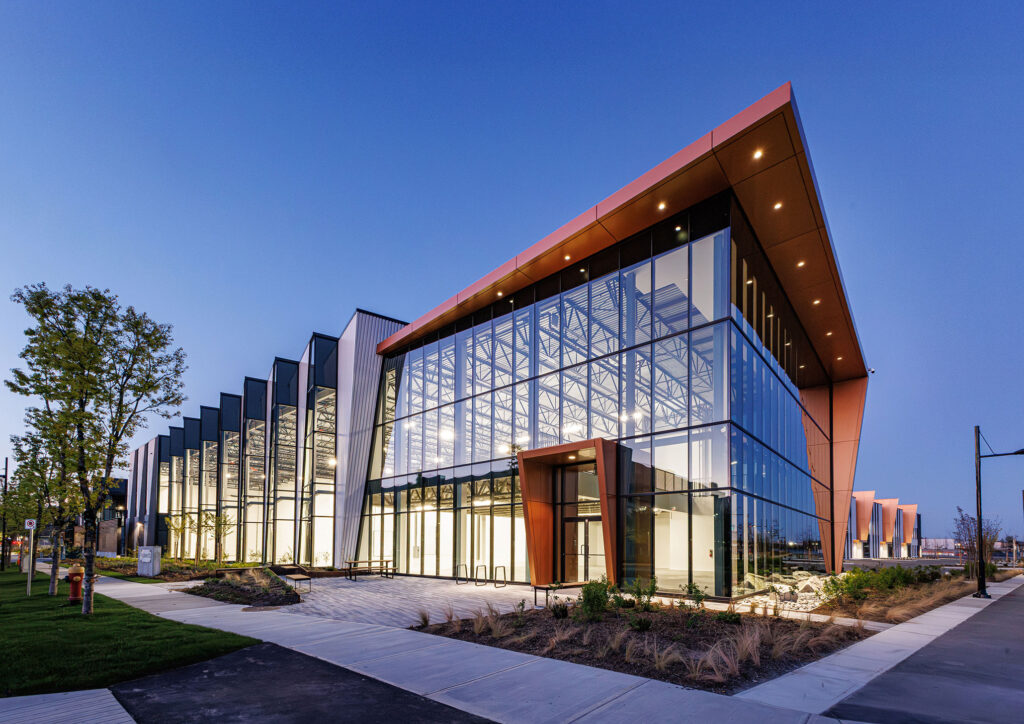
The panels were detailed to function as both structural and architectural elements. Textured finishes and subtle tonal variation were used to engage natural light and provide visual depth without applied ornament. Large glazed openings were integrated flush within the panel system, minimizing visual interruption and reinforcing continuity across the façades. Steel canopies were coordinated with panel joints and framing lines to define unit entrances and provide signage zones while maintaining horizontal alignment. Linear metal screening at loading areas referenced the site’s history as a former lumber mill, illustrating how secondary façade elements can be aligned with panel layout to reinforce broader design narratives.
Engineering coordination was critical to project execution. The irregular building geometry, combined with the site’s location in a high seismic zone, required numerous panel-to-panel connections and carefully detailed tie-down connections to foundations. Accurate embed placement, bolt alignment, and sequencing were essential to maintaining structural performance while accommodating shifts in elevation and plan. The project highlights the importance of integrating seismic considerations early in the tilt-up design process, particularly when working outside standard industrial forms.
To achieve large glazed openings without compromising erection safety, sacrificial legs were incorporated into select panels. These temporary elements provided stability during lifting and bracing and were removed after erection to allow for final glazing installation. This approach demonstrates a transferable technique for accommodating expansive openings in tilt-up panels when architectural transparency is a priority. In addition, hanging panels at unit entrances required precise control during lifting operations and exact coordination between panel geometry, embeds, and supporting framing.
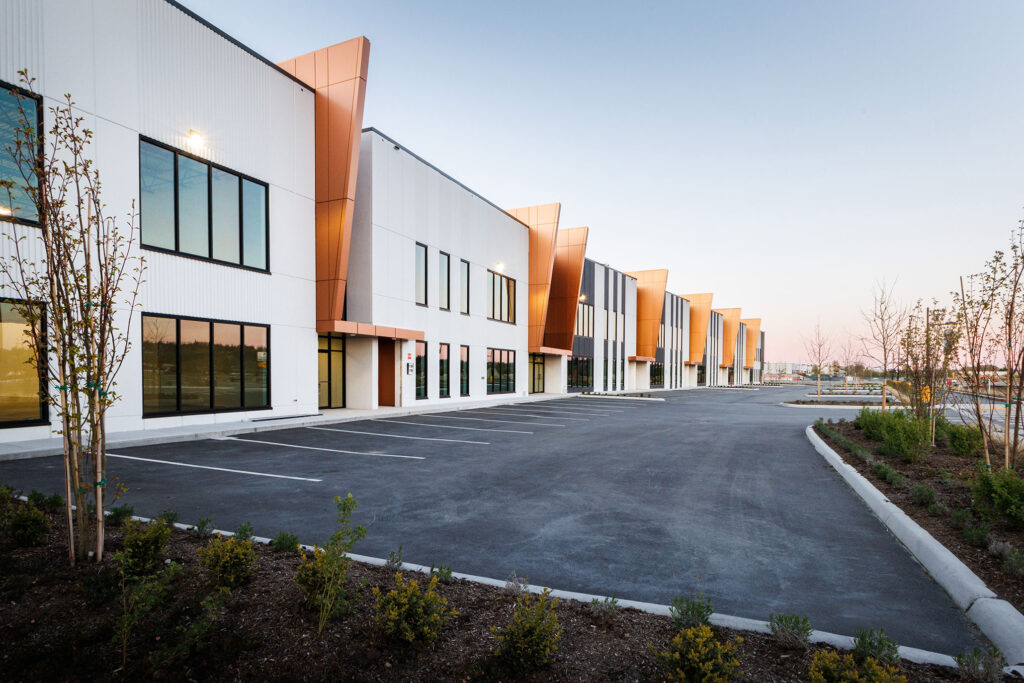
Site design reinforced integration with the surrounding community. Amenity zones along King Edward Street incorporated landscaping, seating, and bicycle infrastructure, encouraging pedestrian engagement and aligning the industrial use with the objectives of the larger master-planned development. These decisions illustrate how tilt-up industrial projects can contribute to mixed-use environments through coordinated massing, panel articulation, and public-facing site strategies.
Fraser Mills Business Centre contributes to the industry’s collective understanding of tilt-up construction by demonstrating how panel geometry, seismic coordination, and erection planning can support architectural variation, integrated glazing, and community interface. The project provides a reference for applying tilt-up systems to industrial condominiums where form, performance, and urban context are equally influential in decision-making.
Project Credits
- Developer / Client: Beedie
- General Contractor: Beedie Construction Ltd.
- Tilt-Up Concrete Contractor: Beedie Construction Ltd.
- Architect: TKA+D Architecture + Design
- Engineer of Record: WHM Structural Engineers
- Photography: Jayden Beedie
This article was generated based on content submitted during the Tilt-Up Achievement Awards program.

Be the first to comment