
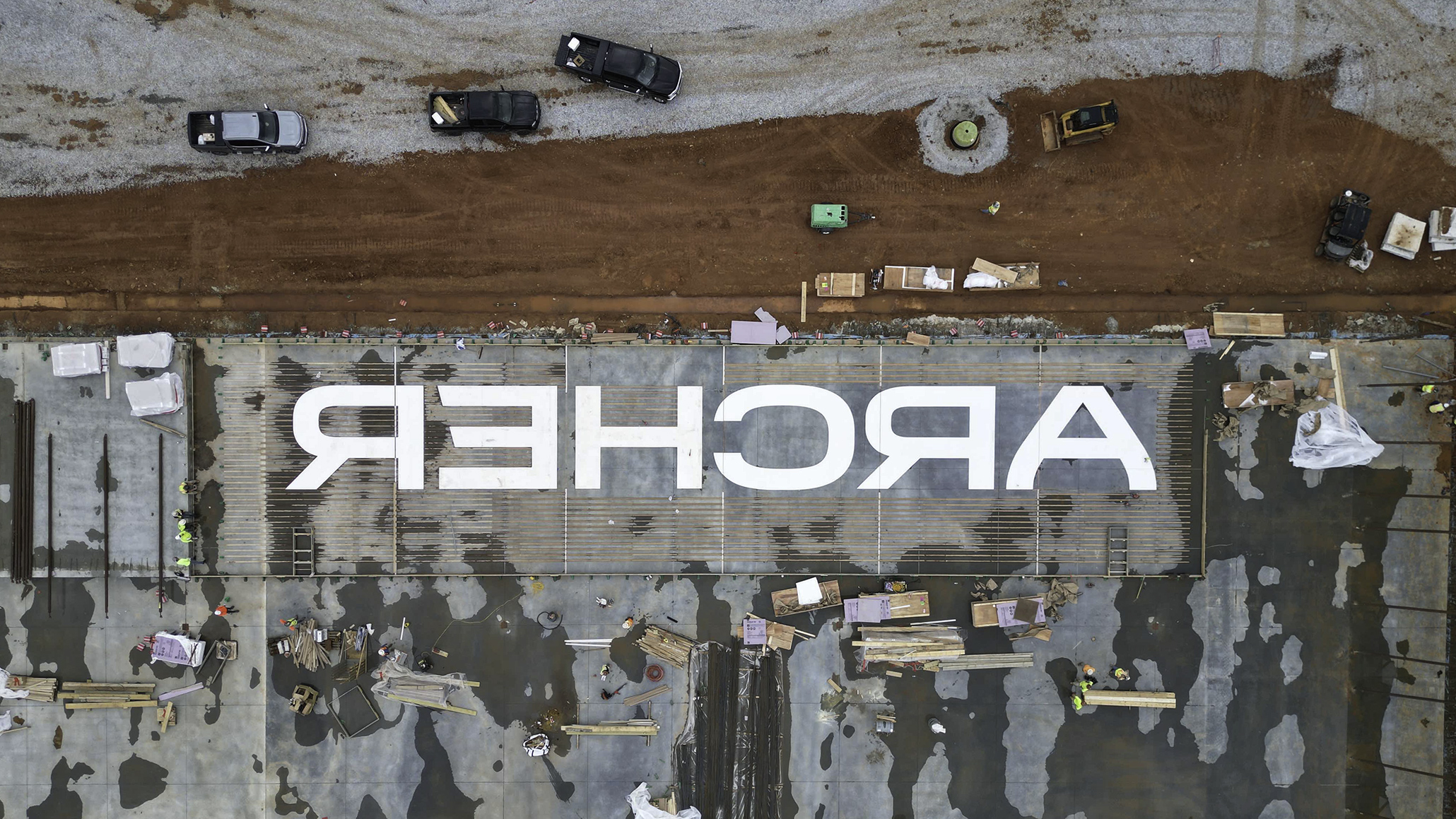
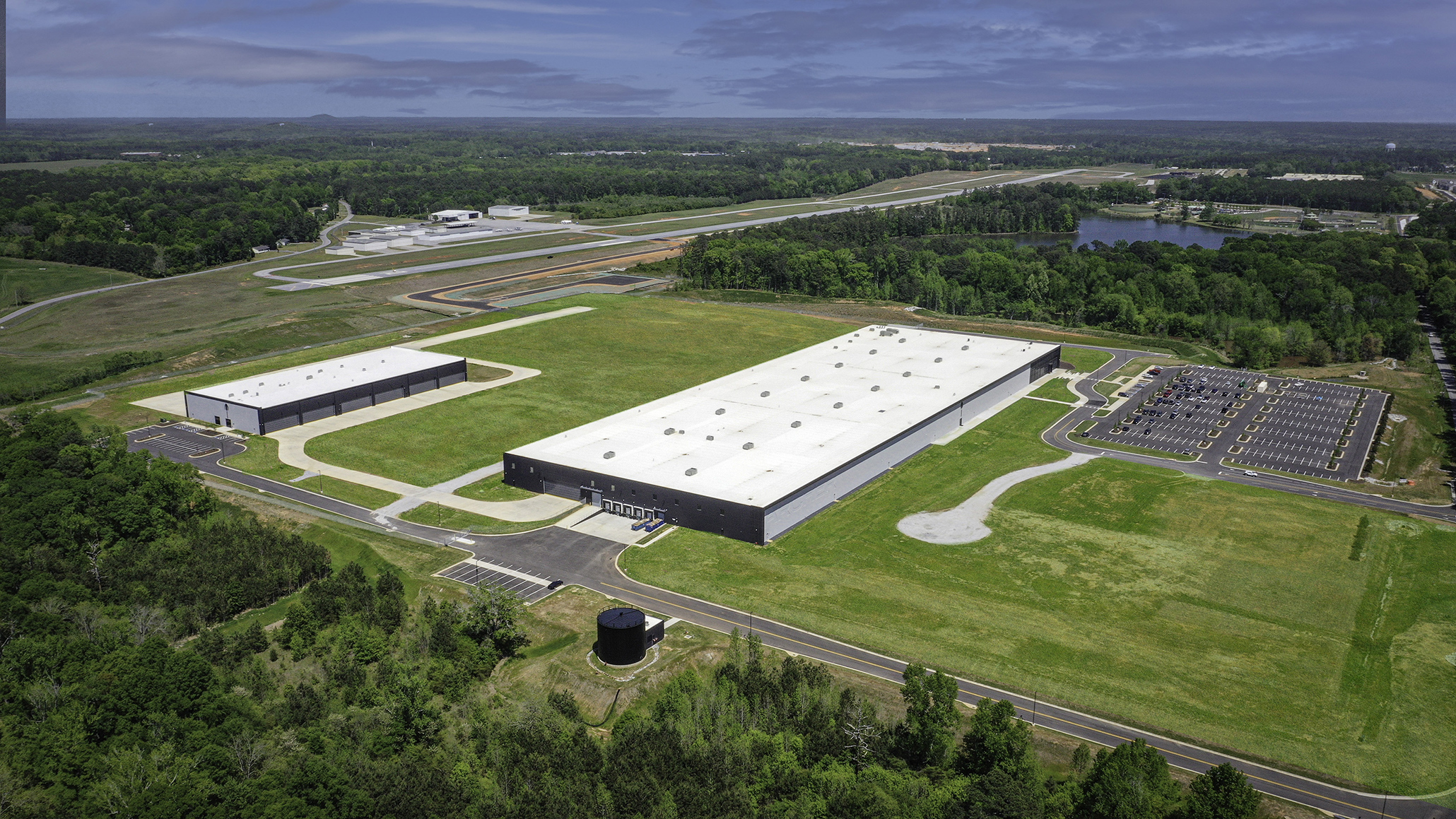
Project Archer, located in Covington, Georgia, adjacent to the Covington Municipal Airport, was recognized with a Tilt-Up Achievement Award for its application of tilt-up construction in a specialized aircraft manufacturing environment. Developed as a two-building campus for an electric air taxi manufacturer, the facility was designed to support both aircraft production and corporate operations while accommodating future growth and scalable manufacturing. With direct taxiway access and a program focused on FAA-compliant production infrastructure, the project demonstrates how tilt-up construction can support emerging industries with demanding operational and architectural requirements.
The architectural concept sought to create a facility that reflected the advanced technology and precision associated with next-generation aviation. Rather than treating the manufacturing buildings as purely utilitarian structures, the design team used the tilt-up envelope as an opportunity to reinforce brand identity and establish a strong visual connection between the facility and the aircraft produced within it.
Integrating identity into the building envelope
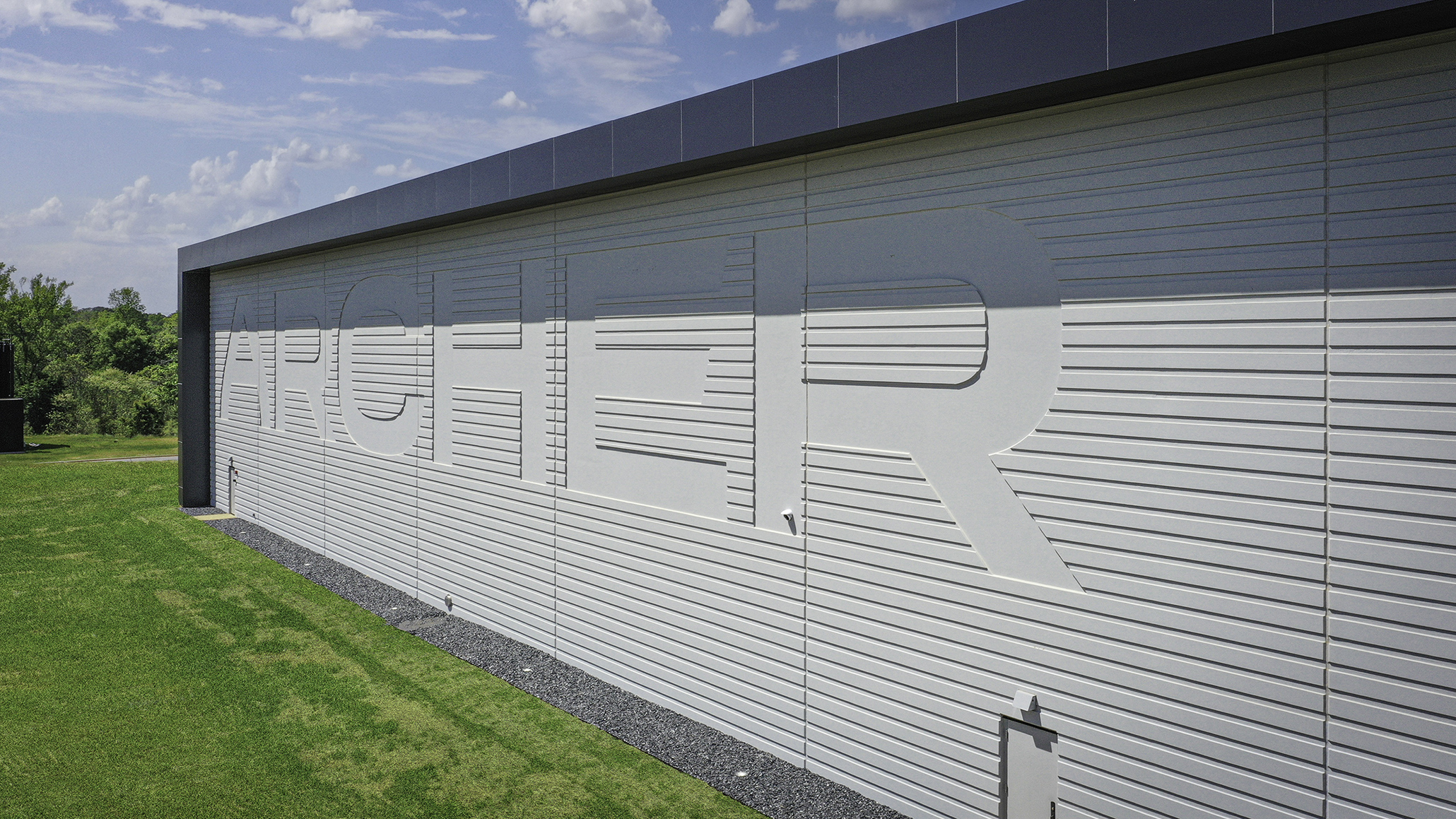
One of the project’s most distinctive features was the incorporation of the company’s logo directly into the tilt-up panel system. Custom polyurethane molds were developed to create a formed relief within the concrete panels, making the logo a permanent architectural feature rather than an applied element. Achieving this required careful coordination between the architectural design, panel engineering, and fabrication teams to ensure precise alignment and execution.
The branding strategy extended beyond the logo itself. Horizontal reveals spaced at one-foot intervals were incorporated across the panel surfaces, with varying reveal depths surrounding the logo to create additional visual texture and emphasis. This approach demonstrated how tilt-up panels can support both structural performance and architectural expression while contributing to a cohesive identity throughout the campus.
Expressing movement through façade design
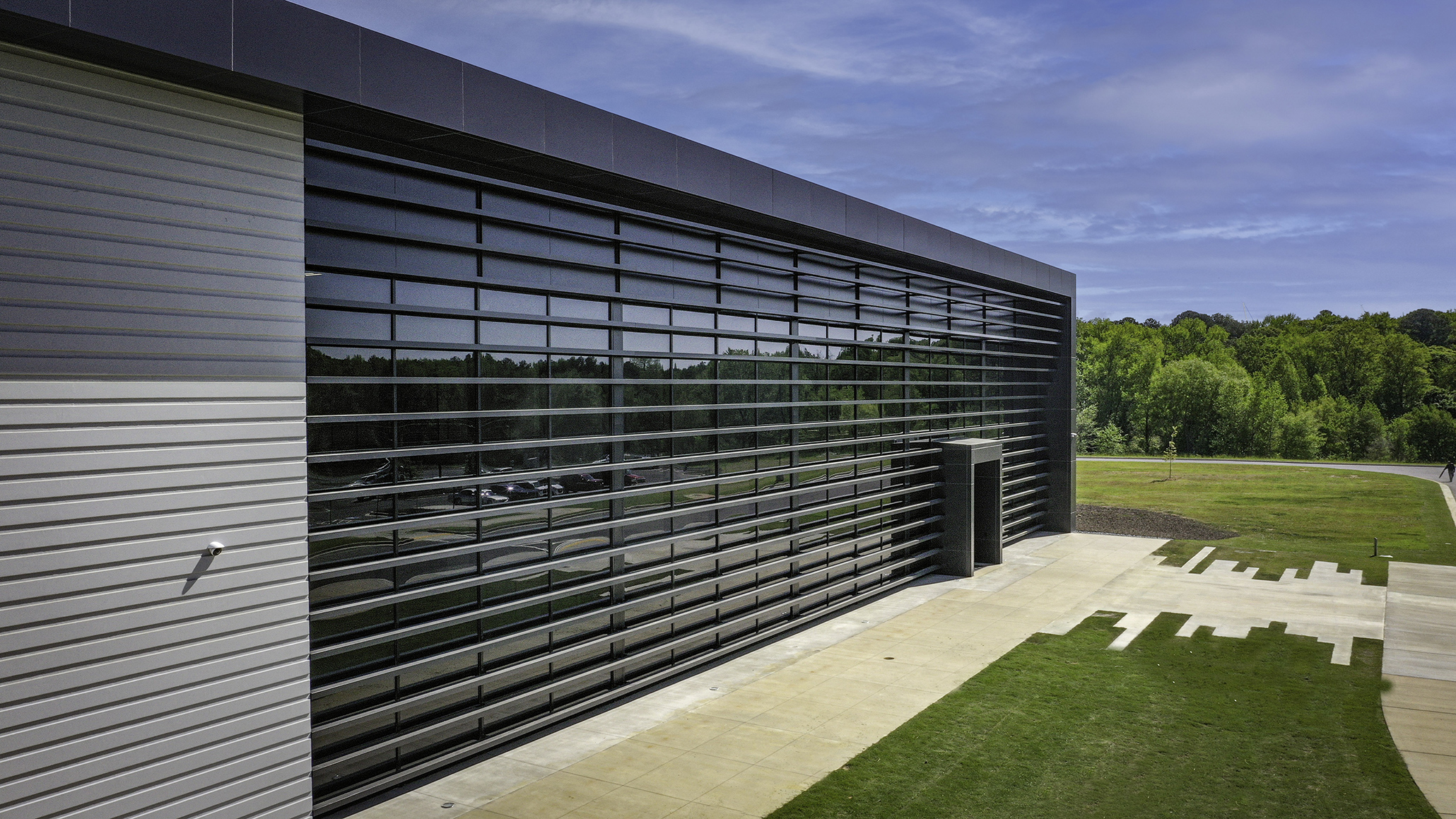
Several architectural elements were developed to reinforce themes associated with flight, innovation, and motion. A curving fin system moved across both horizontal and vertical axes of the façade, creating depth, shadow, and visual variation along the building envelope. Exterior color selections were coordinated with the manufacturer’s aircraft branding, strengthening the relationship between the facility and the products being produced within it.
Additional detailing further connected the architecture to the aircraft itself. The insulated metal panel cladding incorporated a downward-sloping reveal aligned with the signature pitch of the client’s aircraft design. While subtle, this detail illustrates how architectural concepts can be integrated into building systems through careful coordination of materials and geometry.
A custom eyebrow element unified portions of the façade composition while helping define the main entry sequence. Together, these features transformed the large industrial facility into a building that communicates purpose and identity without compromising manufacturing functionality.
Coordinating complex entry features
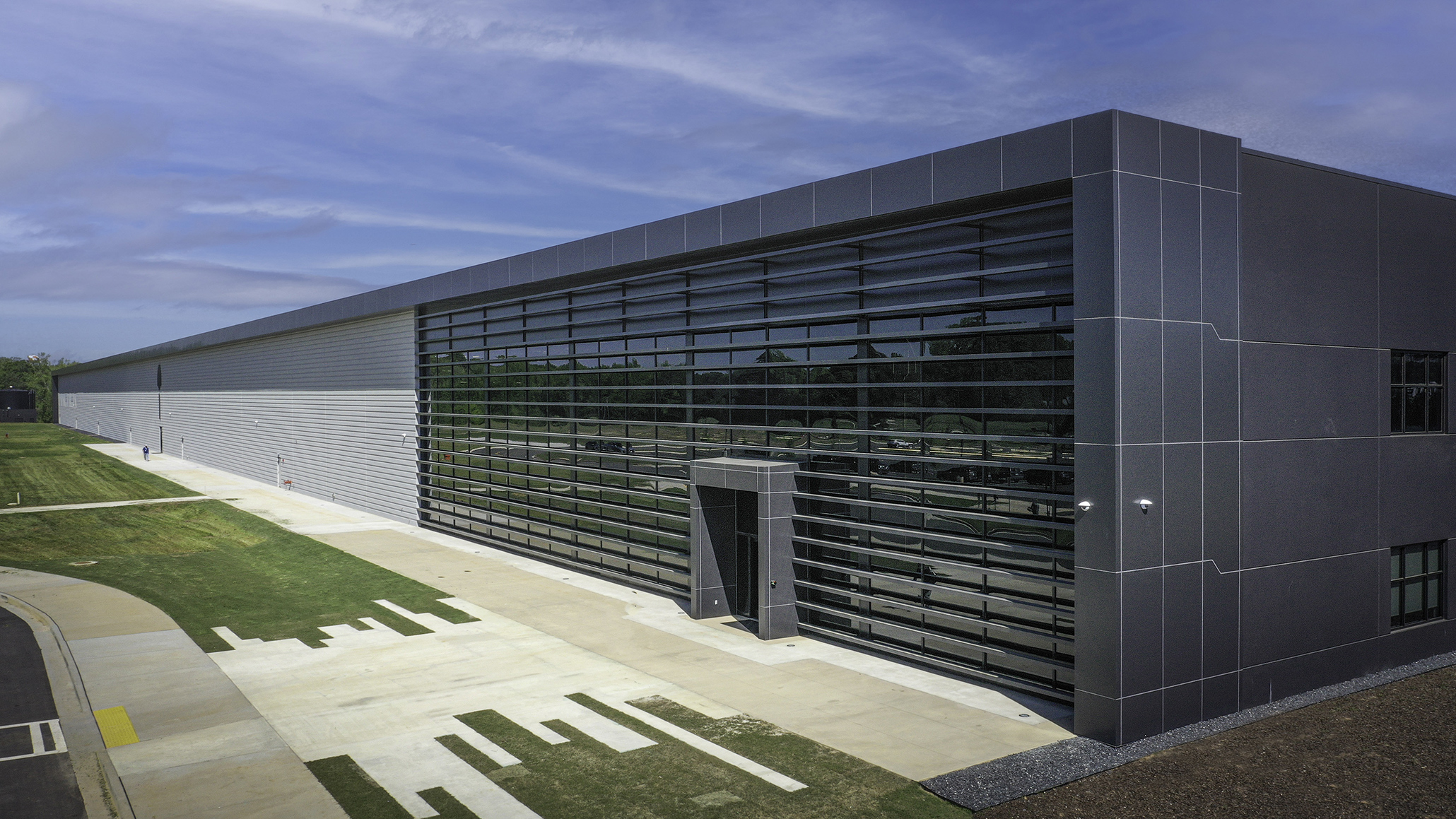
The main entrance introduced several engineering and construction challenges. A 32-foot-tall tinted storefront system was developed to create transparency and establish a clear arrival point for visitors and employees. Supporting glazing at this scale required close collaboration among the design and engineering teams to satisfy structural and performance requirements while maintaining the desired architectural appearance.
Adjacent to the lobby, a two-story curtain wall system known as the “wavy wall” introduced another layer of complexity. Custom hollow structural steel tubes were fabricated in an undulating pattern that functions as both a large-scale sunshade and a defining architectural feature. The geometry required precise fabrication and coordination to maintain alignment with the surrounding tilt-up and cladding systems.
The entry vestibule utilized insulated metal panels that wrapped building corners, reinforcing continuity between façade materials and contributing to the overall architectural composition.
Delivering under a fast-track schedule
The project was executed under an aggressive schedule driven by the client’s production goals and anticipated growth. Design documentation and construction activities progressed concurrently through a fast-track delivery approach, requiring continuous coordination and proactive problem-solving among project stakeholders.
The successful integration of custom panel detailing, large-scale glazing systems, specialized steel features, and architectural branding demonstrates the flexibility of tilt-up construction when supported by early collaboration and careful planning. The project illustrates how tilt-up systems can accommodate increasingly sophisticated architectural requirements while maintaining the speed and efficiency necessary for large-scale industrial development.
Project Archer contributes to the broader understanding of tilt-up construction by demonstrating that manufacturing facilities can incorporate highly customized architectural expression without sacrificing constructability, schedule performance, or operational requirements. As advanced manufacturing sectors continue to expand, the project provides a useful example of how tilt-up construction can support both industrial efficiency and architectural identity within a single integrated solution.
Project Credits
Architect: Randall-Paulson Architects
General Contractor: Evans General Contractors
Photography: Frank Fortune
This article was generated based on content submitted during the Tilt-Up Achievement Awards program.

Be the first to comment