
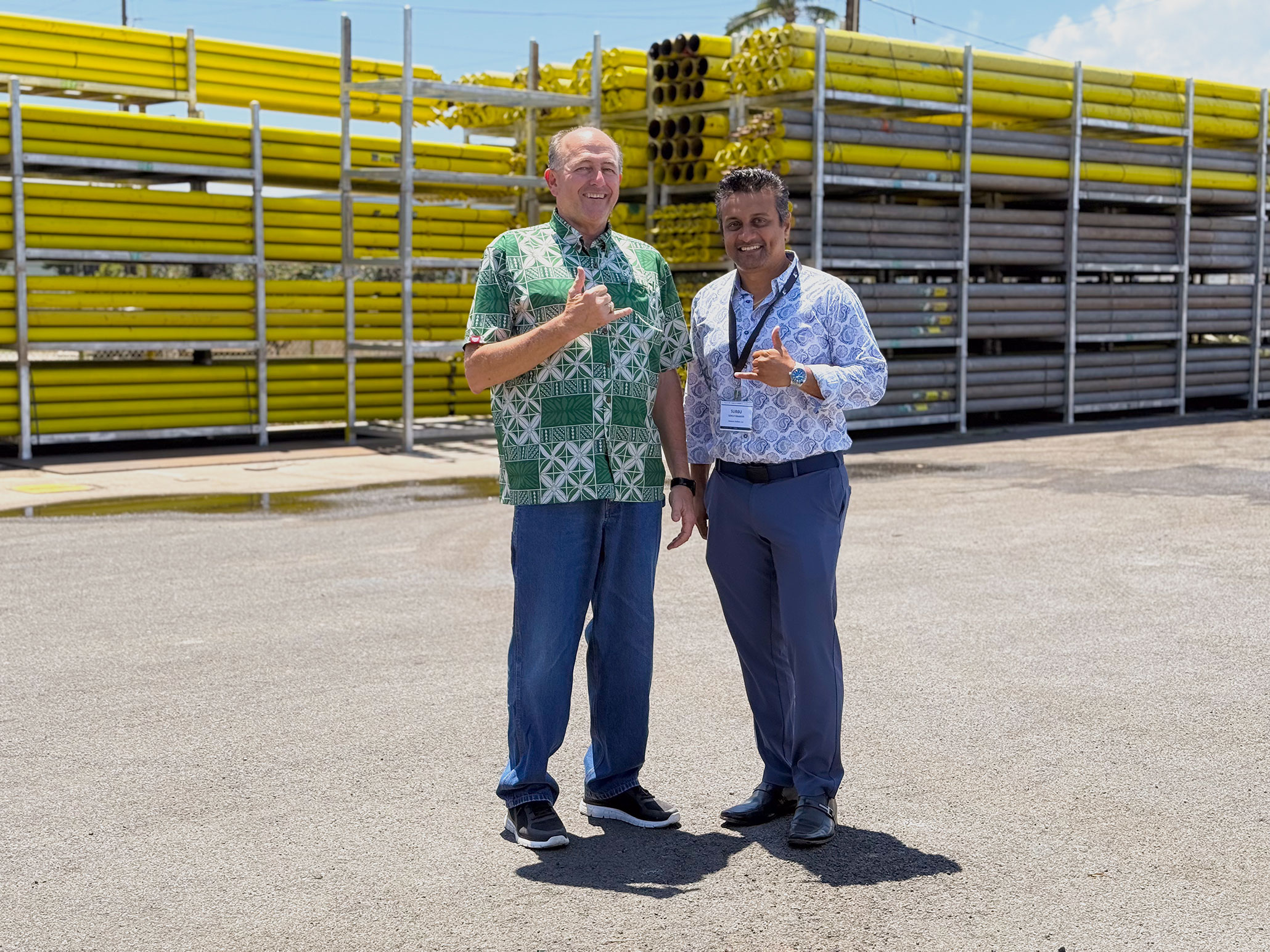
Gary Camp and Subbu Venkataraman share a shaka at Atlas Sales’ Kapolei facility, reflecting the spirit of partnership that supports Hawaii’s tilt-up community.
Stewardship is often discussed in terms of projects, people, and organizations. In Hawaii, it can be seen in something as simple as a tilt-up brace.
For Gary Camp, President of Atlas Sales Co., Inc., stewardship begins long before a brace reaches a jobsite.
Years ago, building brace inventory for Hawaii required ingenuity as much as investment. Camp recalls repurposing components, sourcing pipe to specification, and fabricating galvanized braces to establish local inventory before new equipment became readily available.
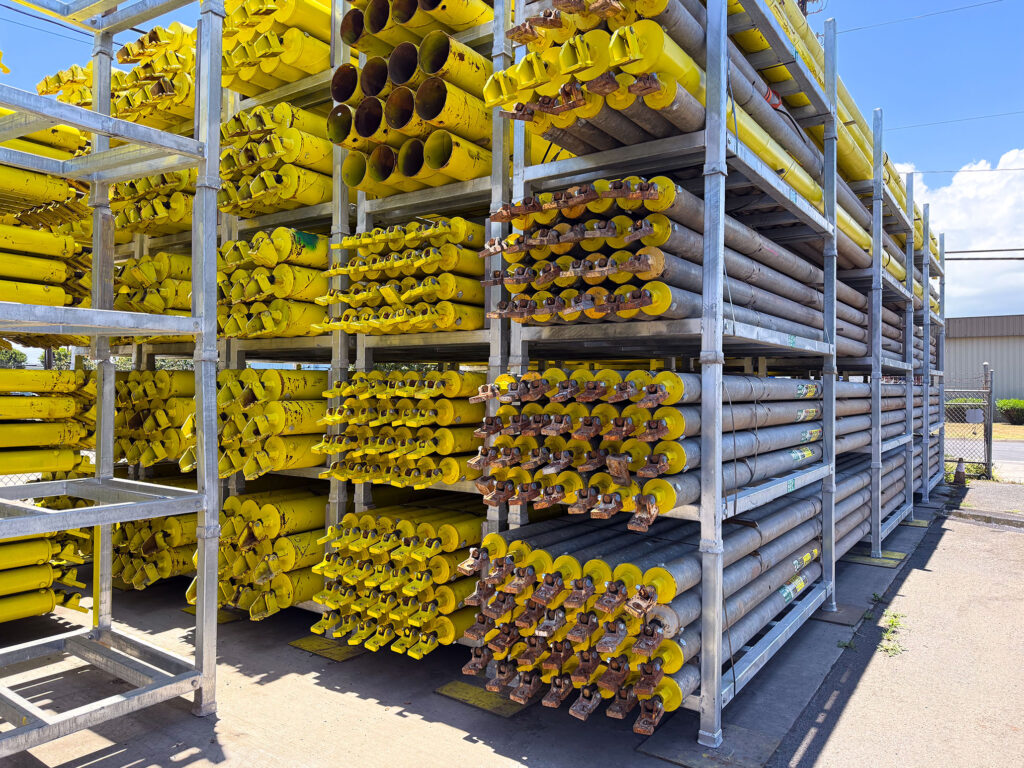
Purpose-built storage racks organize and protect the brace inventory serving Hawaii’s tilt-up market. Visible among the newer braces are some of the original galvanized units fabricated during the early years of building local capacity.
Today, new braces still do not enter service upon arrival. Instead, they undergo a preparation process developed specifically for Hawaii’s environment. Manufacturing oils are removed, rust protection is applied, and the braces are finished in high-visibility yellow before entering service. Purpose-built racks protect them during storage and transport, helping prevent damage and extend service life in one of the world’s most corrosive environments.
That commitment continues throughout the life of the equipment. Before braces and lifting hardware leave the yard, Atlas personnel inspect each item for condition and specification tolerances. Inspection dates are recorded directly on the equipment, threaded adjustment mechanisms are lubricated, and the equipment is organized for safe storage and transport. The process reflects a philosophy as much as a maintenance program: equipment is expected to leave the yard ready for service—and to return in the same condition.
The effort is uncommon, but so are the conditions.
Replacement parts are expensive to obtain. New equipment requires significant transportation costs and lead times. Salt air accelerates corrosion. Resources cannot be replenished as easily as they can in most mainland markets.
What makes this story remarkable, however, is not the preparation process. It is the culture that has grown around it.
That investment appears to be reciprocated throughout Hawaii’s tilt-up community. Contractors described retracting threaded feet before storage to protect the threads, using barriers and flagging to prevent equipment strikes, and handling braces with a level of care that reflects an understanding of what they represent.
“It’s a reputation thing. We view ourselves as caretakers of those resources while they’re in our possession,” said Subbu Venkataraman, President of Honolulu Builders, LLC. “Taking care of them is simply part of being a good contractor and a good partner to the industry. We try to return them as we received them.”
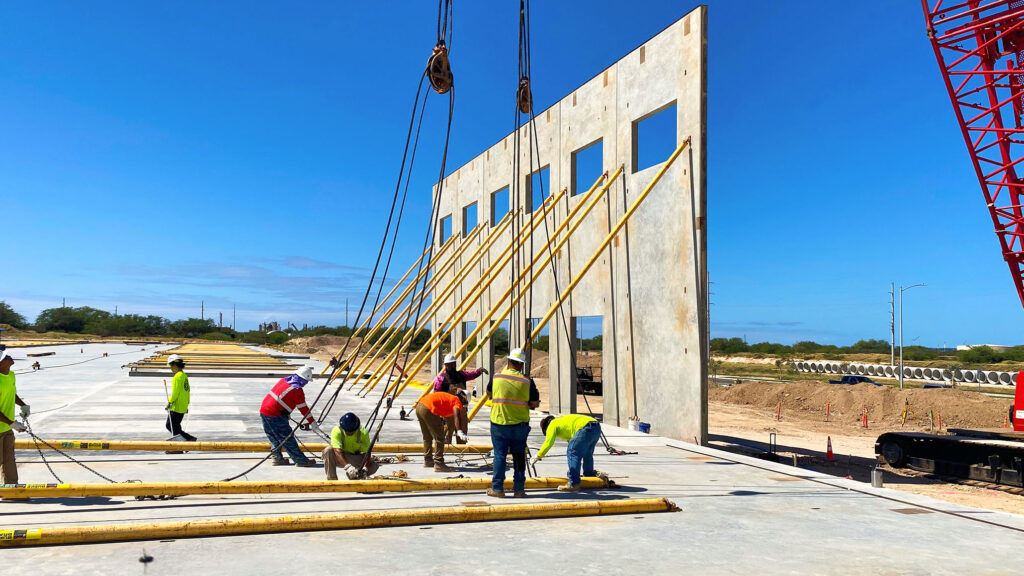
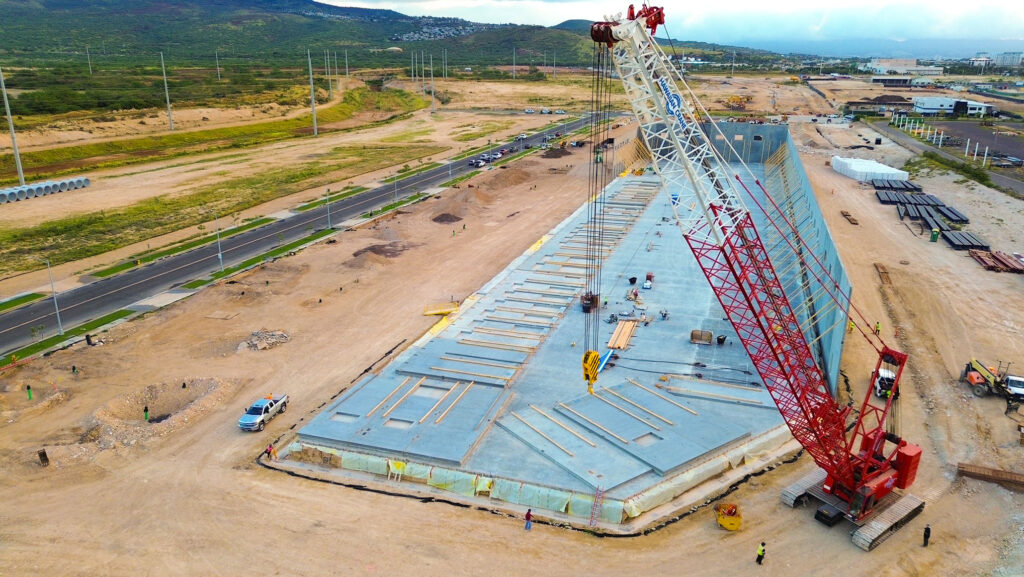
Tilt-up braces support wall panels during construction of Kapolei Harborside Warehouse, a 110,000-square-foot industrial facility in Kapolei. Though temporary by design, the carefully maintained brace inventory serving Hawaii’s tilt-up market supports project after project across the islands.
That philosophy has become ingrained throughout Honolulu Builders’ field operations. Venkataraman credits experienced leaders such as Superintendent Justin McCarthy with establishing expectations that new crew members quickly adopt. Caring for braces is not about avoiding repair charges alone—it is about respecting the equipment, the supplier, and the next contractor who will depend on those same resources.
That mindset is partly practical. Damaged braces create real costs, and avoiding unnecessary expenses matters. Yet the discussion extends beyond any individual company or project.
Every repair, replacement part, and avoidable expense ultimately affects the resources available to support future projects. Equipment removed from service reduces available inventory. Rising costs affect the economics of providing tilt-up construction in Hawaii. Preserving equipment is also a way of preserving the market’s ability to remain competitive and capable.
None of these practices are particularly extraordinary on their own. Protect the equipment. Maintain it properly. Return it ready for the next project.
Yet repeated consistently across an entire market, those small acts become something larger.
They become a recognition that stewardship itself is shared, even when ownership is not. They become an understanding that the health of the market depends on decisions made long before the next project begins.
Terry Baird, National Tilt-Up Specialist for Leviat, offered perhaps the simplest observation. In his view, the most beautiful braces on the planet are found in Hawaii.
The statement is not really about braces.
It is about respect—for the investment required to bring them to the islands, for the people who maintain them, and for the contractors who will depend on them next.
In Hawaii, preserving braces is not simply about preserving equipment. It is about preserving the long-term viability of the market they support.
In that sense, the braces themselves may be the least interesting part of the story.
By Mitch Bloomquist, Executive Director – Tilt-Up Concrete Association

Be the first to comment