
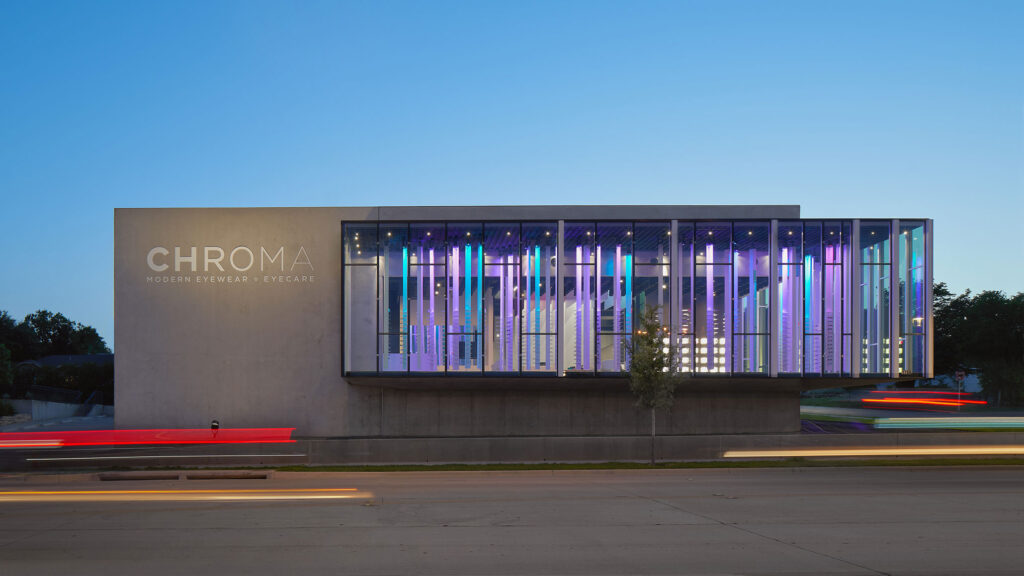
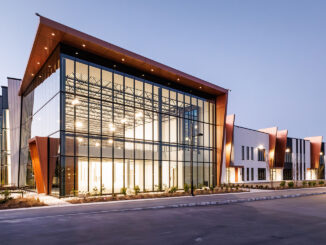
CHROMA is a modern eyewear and eyecare facility located along Montgomery Street in Fort Worth, Texas, adjacent to the city’s Cultural District and directly across from a new multipurpose arena. Conceived as both a clinical optometry practice and a retail environment, the project was recognized with an Excellence in Achievement Award in 2022. While modest in scale at 5,600 square feet, the building offers a clear case study in how tilt-up construction can be strategically applied to small, design-intensive commercial projects with demanding programmatic, site, and budget constraints.
Programmatic organization and site response
The building program was organized around daylight sensitivity and operational needs. Optometry testing and exam rooms, which require restricted daylight, were consolidated within a solid concrete volume on the west side of the building. Public-facing functions—including the optical retail space, waiting area, and administrative offices—were positioned to receive daylight wherever possible. A void in the building form introduced light into office spaces, while a skylight brought daylight from above into administrative areas.
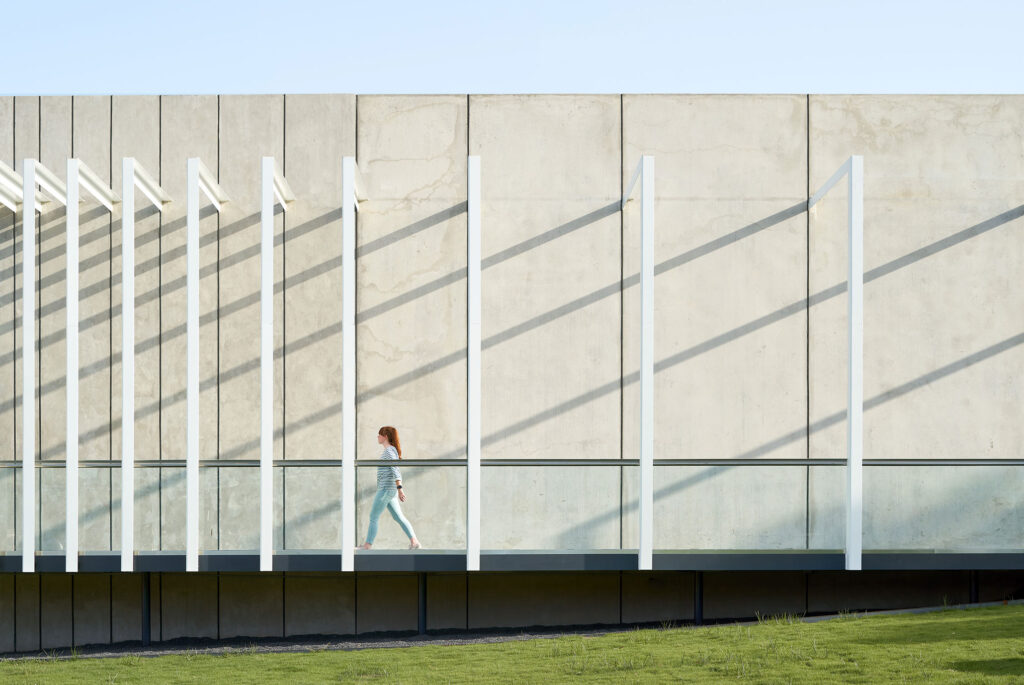
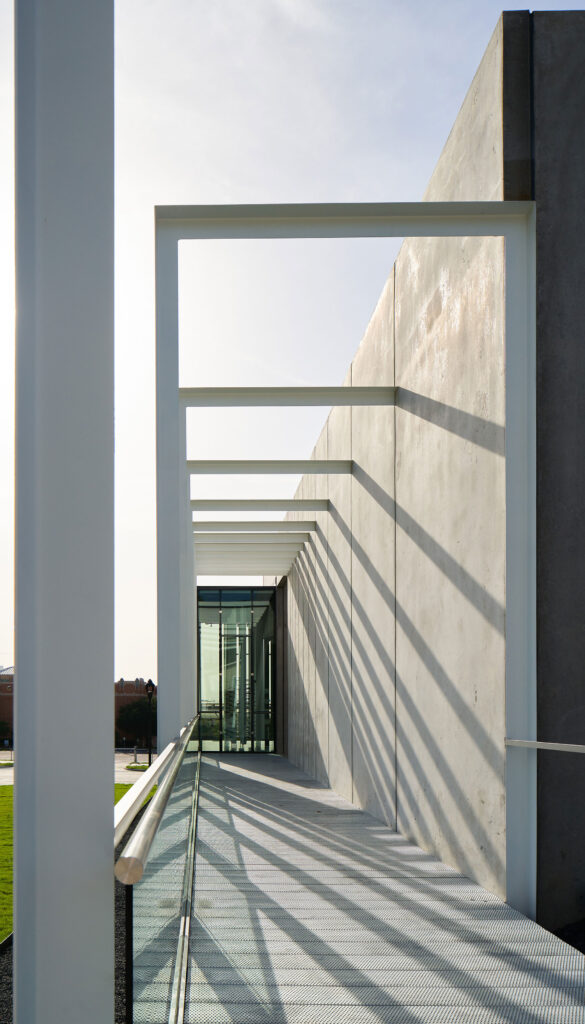
The optical sales and waiting area were expressed as a glass volume projecting from the concrete structure, allowing the interior environment to remain visually accessible and active along the street. After coordination with city staff and the adjacent residential community, the project footprint was reduced from four city lots to three. A more compact building form and an exterior elevated walkway allowed the full program to be accommodated while addressing neighborhood concerns and reducing site impact.
Structural strategy and panel execution
Tilt-up concrete panels formed the primary structural system and the dominant architectural expression. The panels performed multiple roles simultaneously, functioning as exterior enclosure, vertical structure, and interior finish in select locations. Steel framing and glue-laminated beams spanned between panels, allowing large interior openings while maintaining structural efficiency. Window openings were minimized on the west elevation to support clinical requirements, reinforcing the logic of the program through the building envelope.
All concrete panels were cast on site using casting beds. Due to limited site area, panels were stacked during casting, but not directly on one another. When casting on top of an existing panel, a layer of earth was placed between the panel and the new casting bed. This approach prevented ghosting of panel geometry and allowed greater flexibility in the casting sequence. Panels were left with an unaltered natural finish and cast without chamfers, reinforcing a refined and restrained material expression consistent with the surrounding Cultural District context.
Several elements expanded conventional tilt-up application. A large architectural wing wall fronting Montgomery Street and multiple spandrel panels supported by steel contributed to the building’s formal composition. The grade beam along Montgomery Street was cast using a mix design and formwork system intended to visually match the tilt-up panels, extending material continuity to the ground plane. Unlike typical tilt-up sequencing, the slab-on-grade was cast after all panels and primary structure were in place, eliminating perimeter and column base cold joints and resulting in a cleaner, more continuous finish.
On the east side of the building, the slab thickens and cantilevers 12 feet beyond the tilt-up wall to support the steel-and-glass retail volume. This move allowed the glass enclosure to read as a distinct element emerging from the concrete form while remaining fully integrated with the structural system.
Integrated interiors and cost discipline
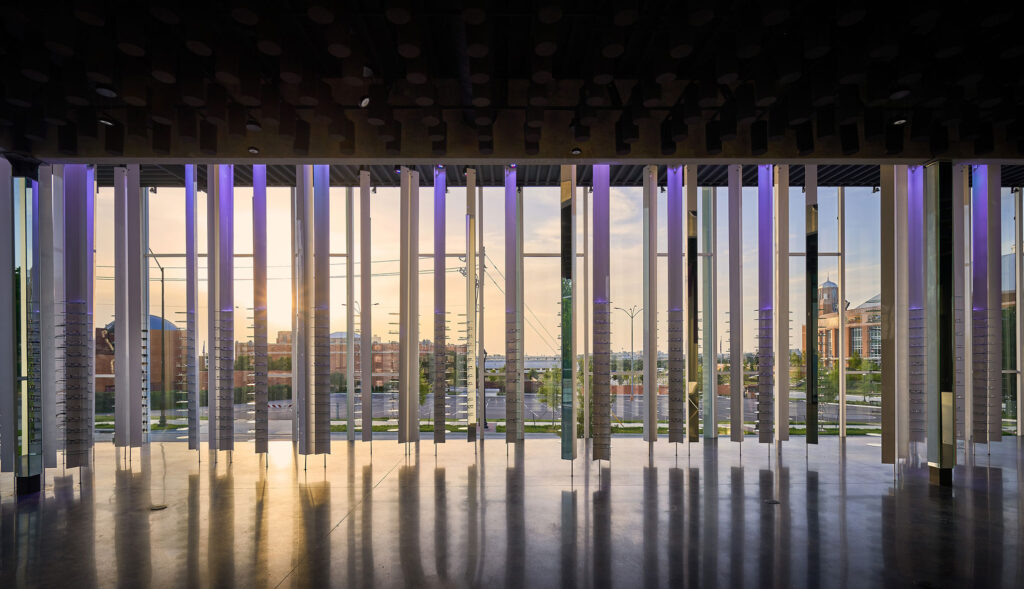
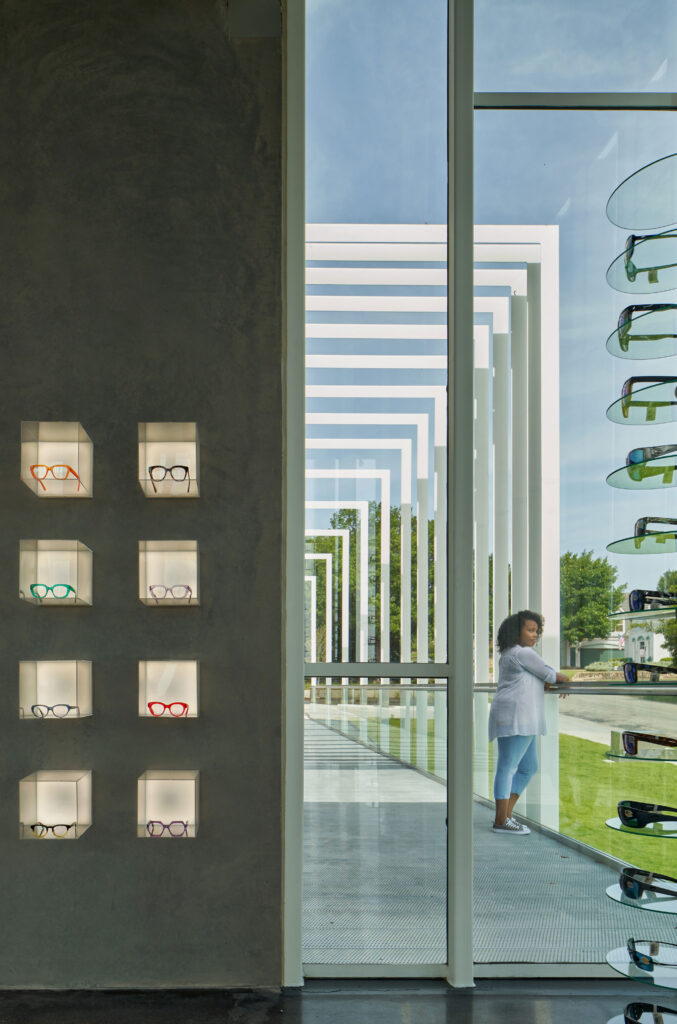
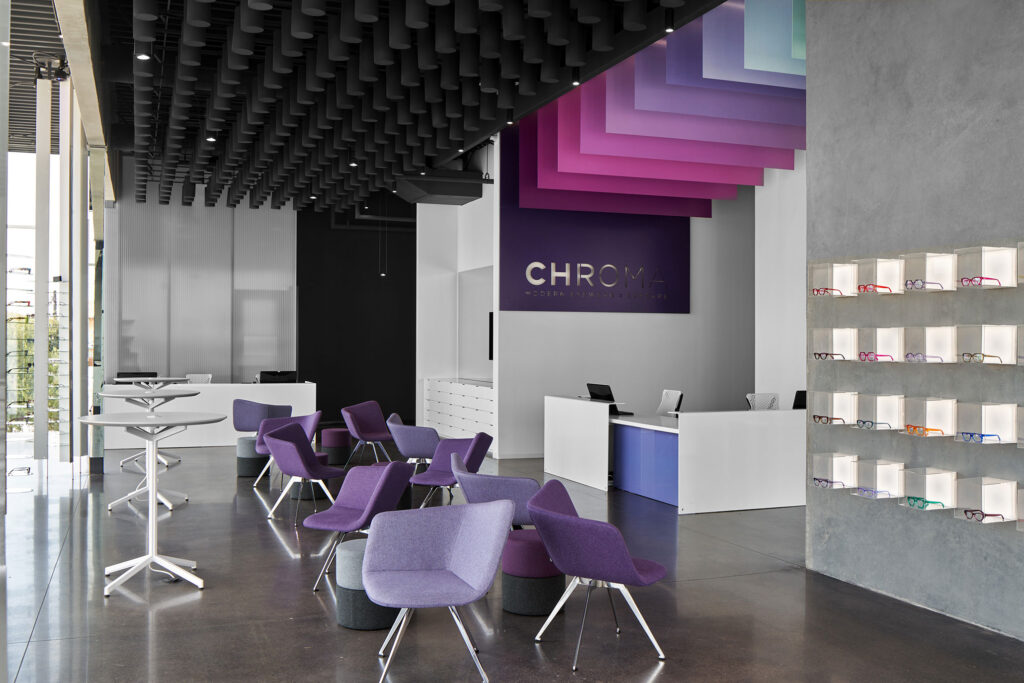
Interior architecture and retail fixtures were intentionally integrated with the structure to control cost and reinforce a cohesive spatial and brand experience. One concrete panel was cast with 36 embedded junction boxes to support a feature wall of illuminated acrylic display cubes. These displays appear to be directly attached to the concrete surface, eliminating secondary framing and reducing material complexity.
The geometry of the display supports, fabricated from steel angles, was echoed in the curtainwall detailing and along the elevated exterior walkway, creating a gradual spatial immersion as visitors approach the building. Cost efficiency was achieved through careful detailing, direct sourcing, and collaboration with local fabricators. Circular glass shelves used throughout the retail space were sourced from mass-produced glass trivets, resulting in significant cost savings without compromising design intent. Simple steel fabrications and solid-surface materials were used for transaction desks and counters, while floors were polished concrete and signage fabricated from powder-coated aluminum plate.
The project was designed and delivered to a strict target of approximately $285 per square foot, inclusive of retail fixtures and key custom interior elements. Tilt-up construction was essential to meeting this budget, allowing the structure itself to become the finished architectural surface. Construction methods were intentionally wielded as core design elements, producing a consistent relationship between form, material, and function.
Early in the design process, the client elected to leave a franchise practice and establish an independent brand developed in parallel with the building’s architecture, interior design, and visual identity. Construction was completed in spring 2020, with the facility opening in March of that year. Despite opening during the onset of the COVID-19 pandemic, the business experienced immediate growth, with reported sales exceeding pre-pandemic levels in its first year of operation and continuing to increase thereafter.
The project demonstrates how tilt-up construction can support brand-driven architecture, urban infill development, and disciplined cost control, expanding confidence in tilt-up as a viable system for small, highly customized commercial buildings.
Project Credits
Architect: Ibañez Shaw Architecture
Photography: Dror Baldinger, FAIA
This article was generated based on content submitted during the Tilt-Up Achievement Awards program.

Be the first to comment