
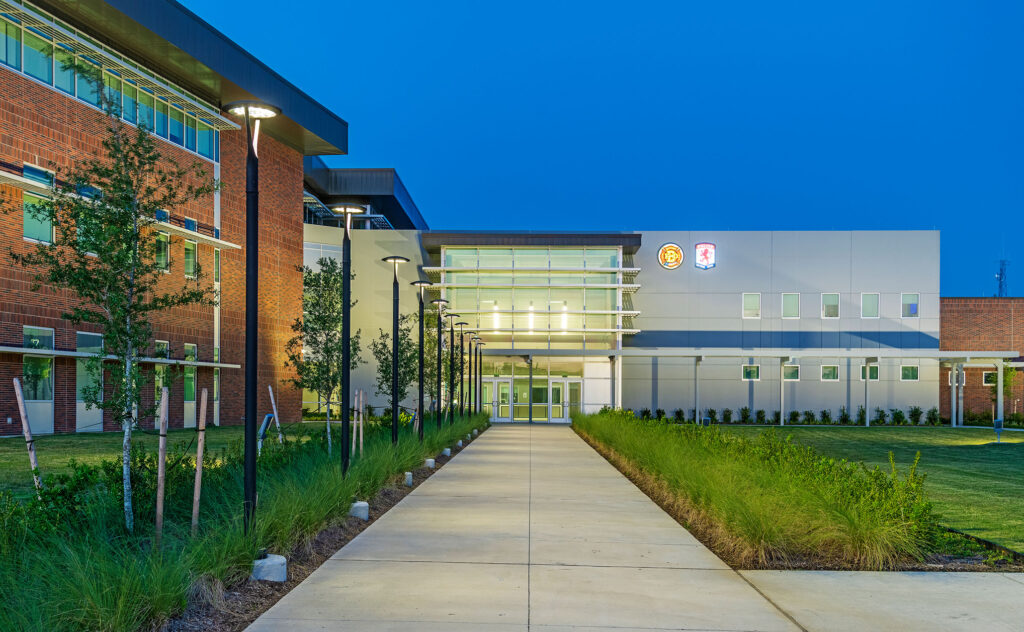
The Baytown Public Safety Building is a three-story, 57,013-square-foot facility located in Baytown, Texas that consolidates police administration, fire department offices, and the city’s Emergency Operations Center into a single structure. Recognized with an Excellence in Achievement award, the project serves as a case study in applying tilt-up construction to a critical civic facility where operational continuity, environmental resilience, and phased execution were primary drivers of decision-making.
From the outset, the project was defined by its dual role as both an everyday administrative building and a hardened emergency operations hub. This requirement elevated performance expectations beyond those typical of municipal office buildings and informed the selection and execution of the tilt-up system. Rather than treating tilt-up as a standardized enclosure approach, the project team leveraged it as a flexible structural strategy capable of accommodating enhanced coastal engineering demands and complex site conditions.
The building enclosure is composed of 98 tilt-up panels with a combined surface area of 54,195 square feet. Panel design included three-story heights, oversized window openings, and large spandrel panels, requiring close coordination between architectural intent and structural detailing. These configurations demonstrate how tilt-up panels can be adapted to balance transparency, security, and load resistance in public safety applications, particularly when large openings and vertical continuity are introduced.
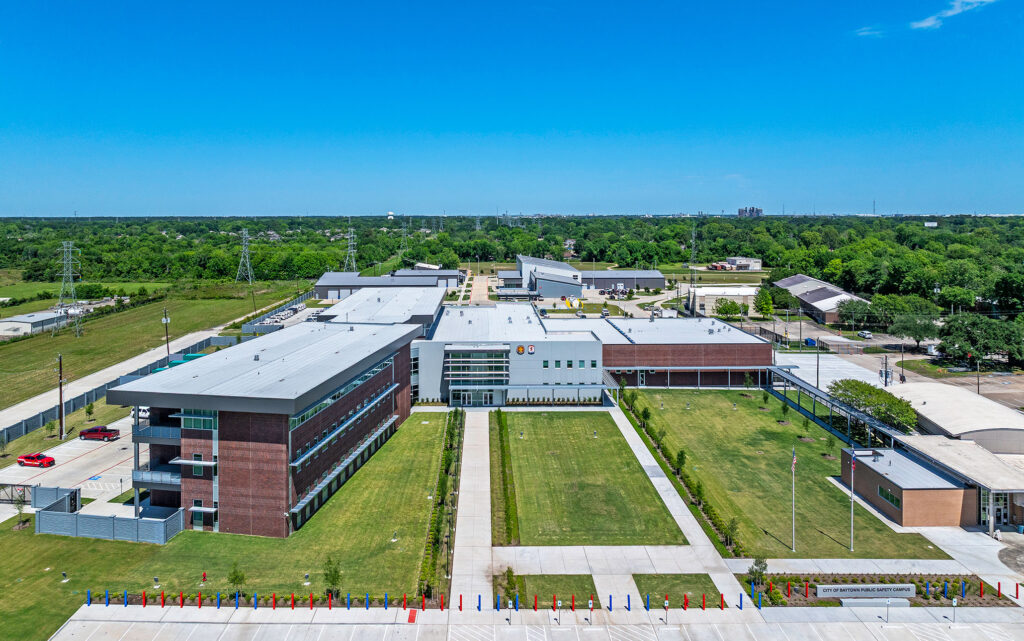
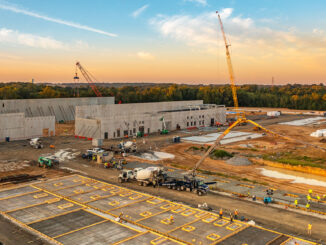
A defining challenge of the project was its T-shaped footprint, which departed from the more common rectangular forms associated with efficient tilt-up sequencing. This geometry required the building to be constructed in three distinct phases rather than through a single, continuous erection sequence. Panel casting, erection order, and structural stability were coordinated across partially completed portions of the building, reinforcing the importance of aligning panel strategy with building form during early planning. The project illustrates how phased tilt-up execution can be successfully managed when panelization and sequencing are treated as integrated design decisions rather than downstream construction tasks.
Site constraints further shaped construction methodology. Located within an active government complex, the project site offered limited laydown area and restricted access, leaving insufficient space for conventional casting operations. To address this condition, the team implemented temporary casting beds, false framework, and panel stacking techniques. These strategies allowed panel production to proceed within a constrained footprint while maintaining safety, quality, and schedule performance. The approach provides a transferable model for tilt-up projects in dense or operational campuses where space limitations would otherwise restrict feasibility.
Construction sequencing was also influenced by adjacency to an active police station. Work had to be planned to minimize disruption to daily operations and maintain secure access throughout construction. Tilt-up erection activities were concentrated into controlled timeframes, demonstrating the method’s advantage in projects where adjacent facilities must remain fully operational. This condition reinforces tilt-up’s suitability for sites where operational continuity is a non-negotiable constraint.
Awarded in 2021, the project advanced during a period marked by material cost escalation and supply chain disruptions. These external pressures were compounded by Gulf Coast weather, including frequent rain events and the ongoing threat of hurricanes and tropical storms. The project underscores the value of early procurement planning, flexible sequencing, and adaptive detailing as tools for maintaining schedule and budget reliability under volatile conditions.
Engineering requirements were central to panel design. As a coastal, critical-use facility, the building was engineered to resist hurricane-force winds and remain operational during severe weather events. Tilt-up panels incorporated large, strategically placed structural embeds to support enhanced load paths and security requirements. These embeds required precise coordination between engineering and construction teams, highlighting embed planning as a primary determinant of panel performance in high-demand tilt-up applications.
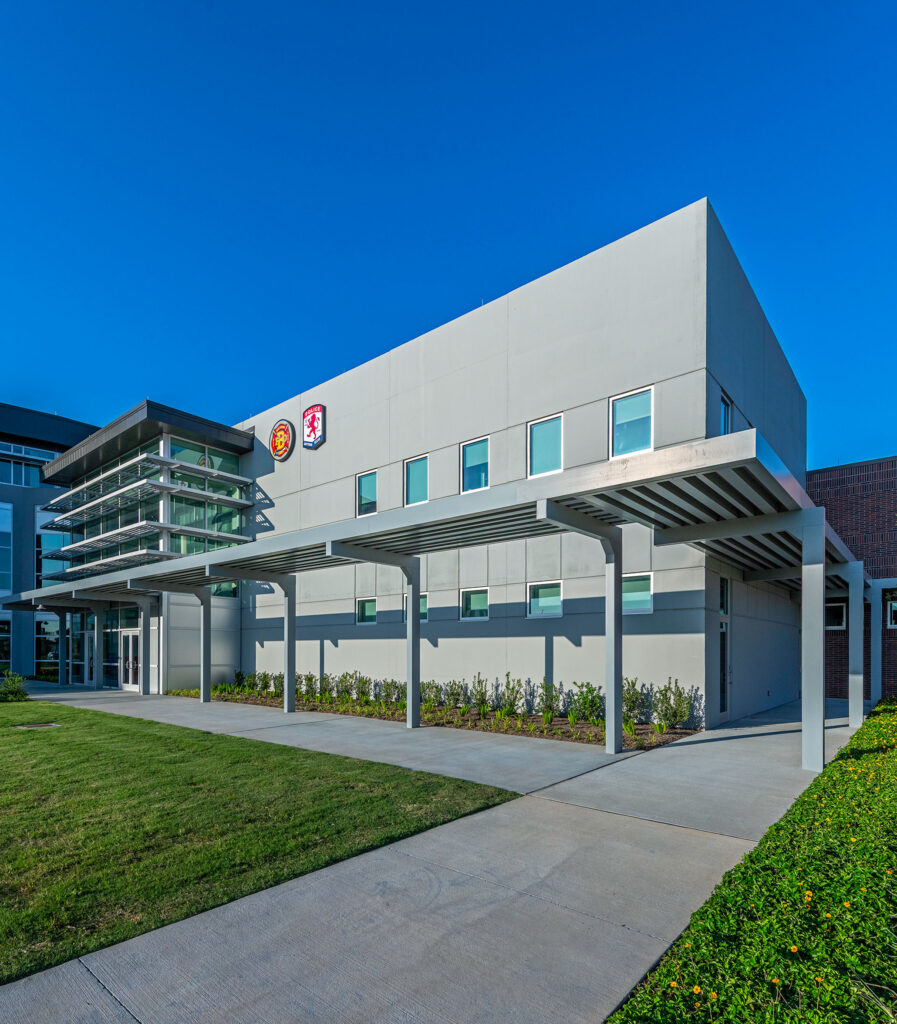
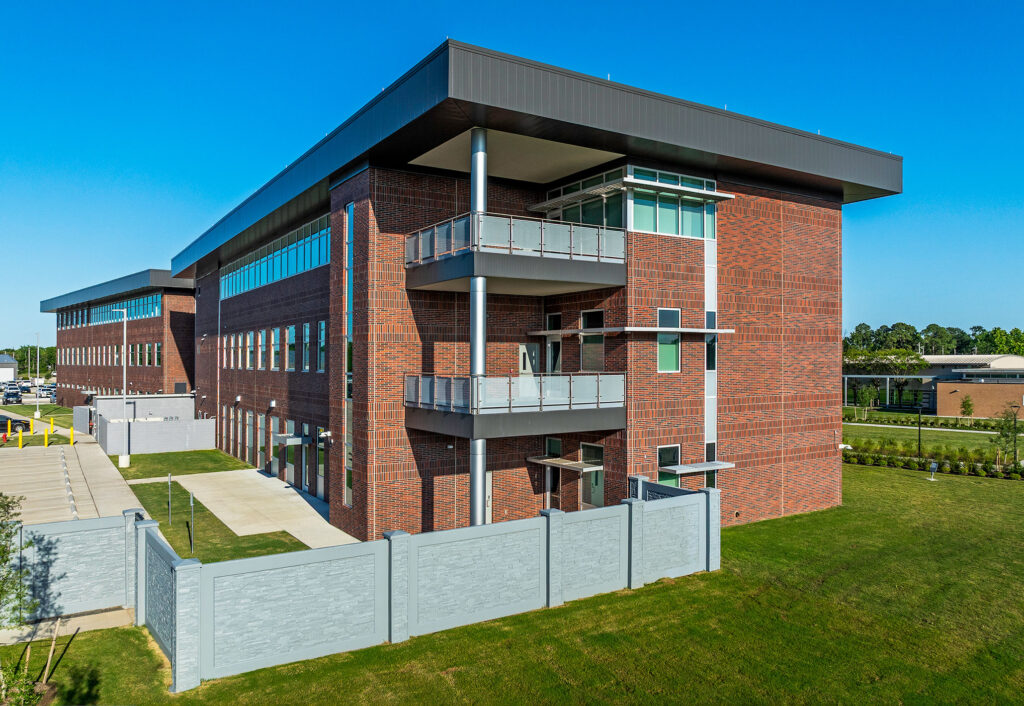
Architectural finishes were integrated directly into the panel system, introducing additional coordination demands. Thin brick was specified across multiple panels, but material shortages required a change in execution strategy. Recessed areas were designed into the panels during casting, allowing thin brick to be installed post-erection in a randomized pattern. This adjustment preserved the intended architectural character while demonstrating how panel detailing can remain adaptable when supply conditions shift.
Many panels also received stained finishes, requiring disciplined quality control to achieve consistency across large surface areas. Mock-up evaluation, sequencing considerations, and close alignment between design intent and field application were necessary to manage finish variability. The project reinforces the importance of treating finish selection and application as integral components of panel planning rather than secondary aesthetic decisions.

Completed on time and within budget, the Baytown Public Safety Building contributes to the industry’s collective understanding of how tilt-up construction can support critical civic infrastructure. The project offers transferable insight into phased sequencing for non-rectilinear forms, constrained-site casting strategies, embed-intensive panel engineering, and adaptive finish integration. Together, these lessons reinforce tilt-up’s capacity to function as a resilient, high-performance system for public safety facilities operating under demanding environmental and operational constraints.
Project Credits
- Engineer of Record: Datum Engineers
- Concrete Contractor: Orion
This article was generated based on content submitted during the Tilt-Up Achievement Awards program.


Be the first to comment