
In construction, discussions about market conditions tend to focus on broad indicators: interest rates, labor availability, supply chain disruptions, and geopolitical pressures. These forces are widely understood to influence development activity and project financing. What is discussed less often is how these same pressures reshape the way project teams evaluate building systems.
Economic uncertainty rarely affects all construction approaches equally. Instead, it changes the decision-making environment in which owners, designers, and contractors assess risk.
When capital becomes cautious and project margins tighten, the priorities that guide system selection often shift.
- Cost certainty becomes more valuable than theoretical optimization
- Schedule reliability carries more weight than speed alone
- Material durability is reconsidered through the lens of lifecycle risk
- Supply chain stability becomes as important as design flexibility
- Systems that contractors know how to execute predictably begin to carry additional value
These conditions do not necessarily favor one specific building type. Rather, they tend to favor construction systems that emphasize repeatability, locally available materials, and integrated structural logic.
In other words, systems whose performance characteristics reduce unknowns.
This dynamic becomes particularly visible during periods of market volatility. When financing is expensive and project feasibility is closely scrutinized, owners and developers often become less interested in novelty and more focused on execution reliability. Construction approaches that rely on widely available materials, familiar labor pools, and established construction sequences can become more attractive because they limit exposure to unforeseen variables.
Conversely, systems that depend on specialized materials, complex supply chains, or highly constrained labor availability may introduce additional risk precisely when the market is least tolerant of it.
This does not make those systems inherently less capable. But it does change how they are evaluated.
Tilt-up construction provides a useful example of how these dynamics can play out.
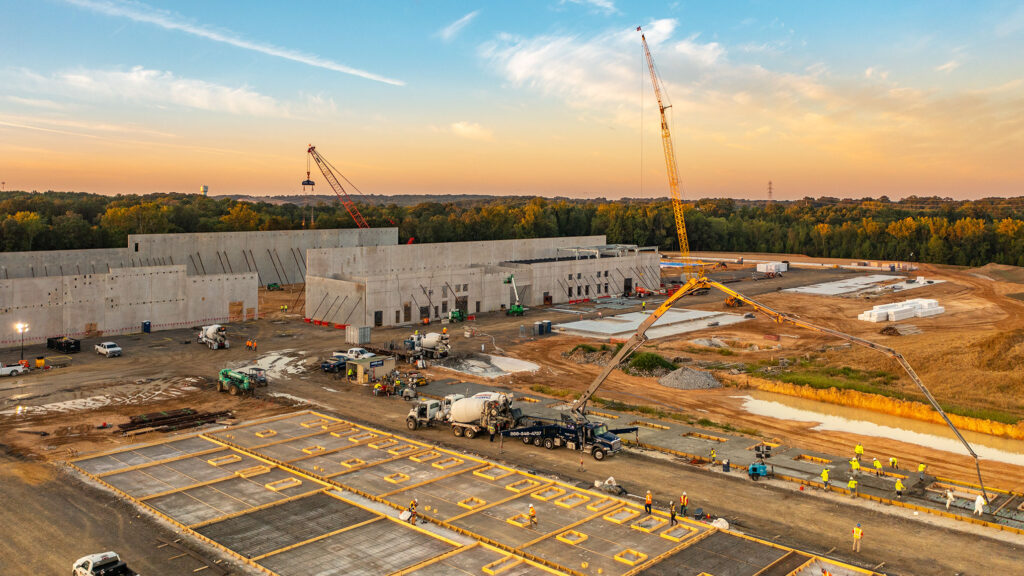
As a construction system, tilt-up relies on site-cast concrete panels formed and poured on the project slab and then lifted into place. The method integrates structure, enclosure, and fire resistance into a single panelized system using materials that are widely available across North America. Because the panels are cast on site, the process draws heavily on regional labor and local supply networks rather than specialized fabrication facilities.
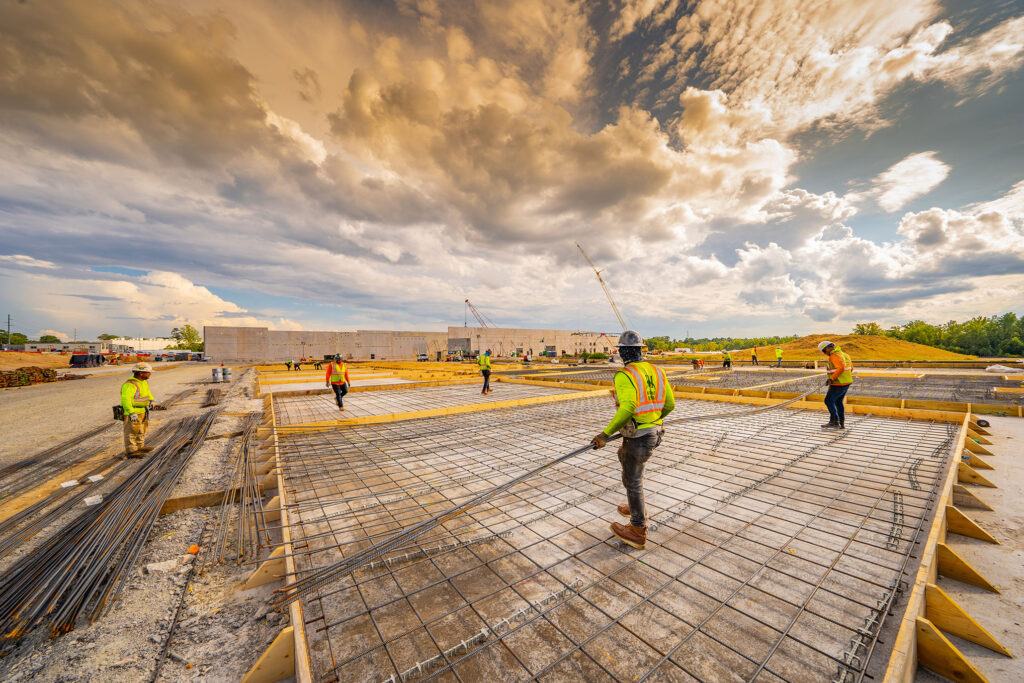
Tilt-up panels cast on a reusable casting slab before being lifted into place as part of the building’s structural system. Photo by Matthew McFarland.
These characteristics do not make tilt-up universally superior to other approaches. But they do align closely with the priorities that tend to emerge when market uncertainty increases.
- Material inputs are familiar and broadly distributed
- Construction sequencing is well established and repeatable
- The structural system and building envelope are often integrated rather than layered across multiple trades
As a result, project teams frequently find that the method provides a high degree of predictability in both schedule and cost—two factors that become especially valuable when financial conditions are volatile.
What makes this observation particularly interesting is that it highlights a broader issue in how construction systems are discussed within the industry.
Too often, building methods are evaluated as if they were static categories—precast versus tilt-up, steel versus concrete, modular versus conventional framing. These comparisons can be useful at a basic level, but they often overlook the context in which system selection actually occurs.
In reality, the relative advantages of a construction system are rarely fixed. They evolve with market conditions.
A system that is optimized for design flexibility during periods of economic expansion may not be the same system that best manages risk during periods of financial tightening. Likewise, a construction method that performs well in regions with specialized fabrication infrastructure may be evaluated differently in markets where those resources are less accessible.
Understanding construction through the lens of systems—rather than simply building types—helps reveal these relationships more clearly.
It encourages project teams to ask a different set of questions:
- How does this system manage risk?
- How dependent is it on specialized supply chains?
- How predictable is its construction sequence?
- How resilient is it to market fluctuations?
Viewed this way, shifts in the economic landscape do more than slow or accelerate construction activity. They reshape the framework through which project teams make decisions about how buildings are delivered.
And in those moments, systems built around repeatability, material availability, and execution certainty often find themselves newly aligned with the priorities of the market.
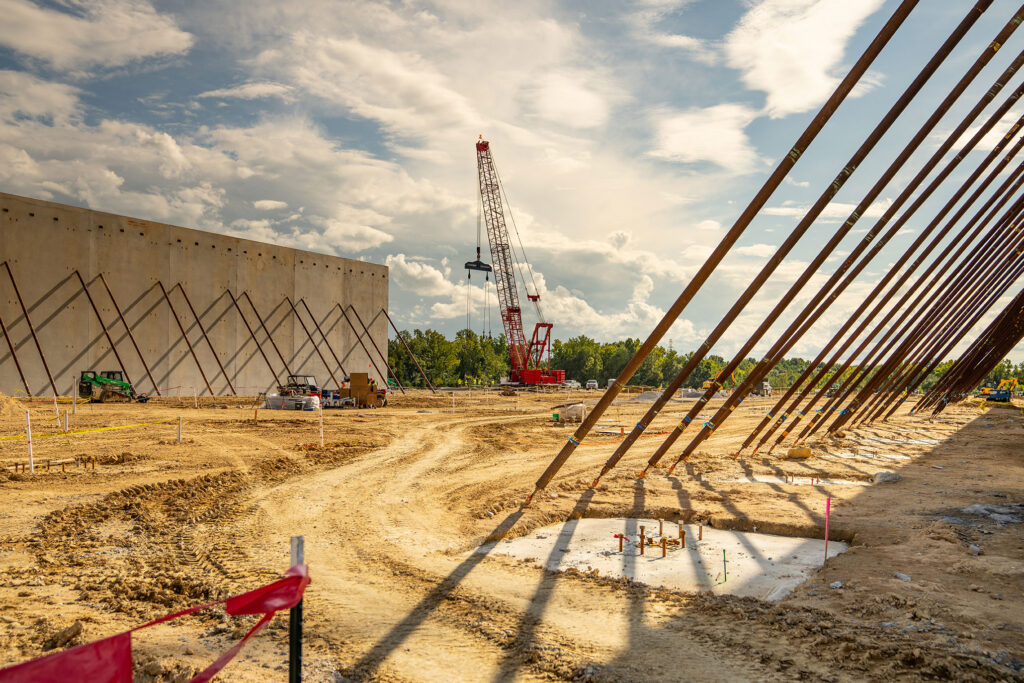
Erected tilt-up panels illustrate the repeatable construction sequence that allows the system to deliver predictable structural performance and schedule reliability. Photo by Matthew McFarland.
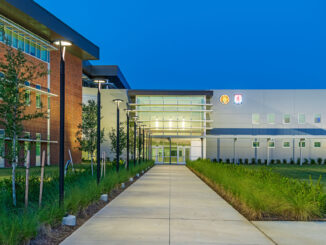
Tilt-up’s continued presence across a wide range of building sectors—from industrial and logistics facilities to schools, offices, and data centers—suggests that these characteristics resonate with many project teams navigating today’s conditions.
Not because the system changes when the market does.
But because the questions owners ask during uncertain times often bring its underlying strengths into sharper focus.
By Mitch Bloomquist
Executive Director
Tilt-Up Concrete Association


Be the first to comment