
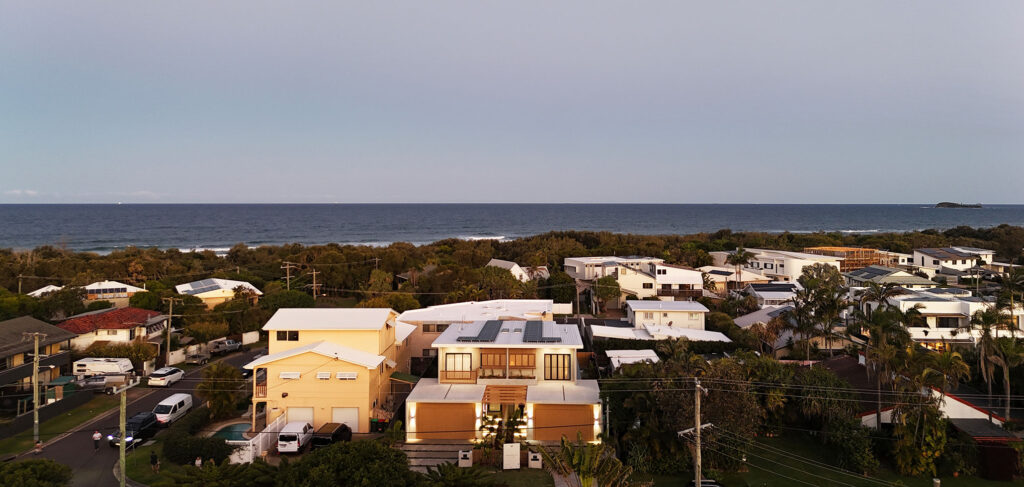
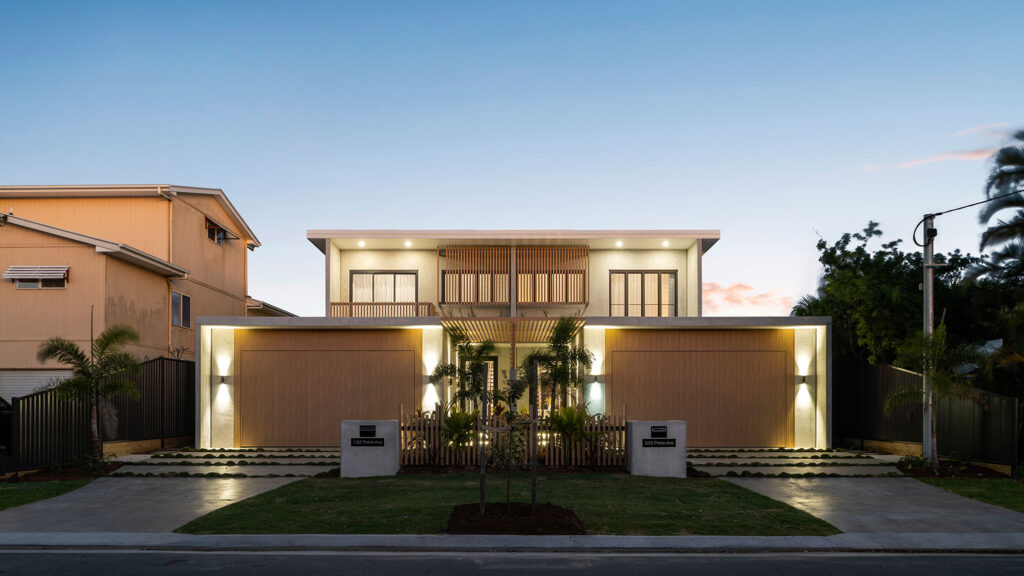
Along the quiet, tree-lined street of Petrie Avenue in Marcoola, a new residential project is reframing expectations for coastal construction in Australia. Marketed as the Sunshine Coast’s first luxury duplex delivered with tilt-up construction, the home at 2/22 Petrie Avenue presents a compelling case for the architectural potential—and long-term value—of site-cast concrete in a high-salt, high-wind environment.
While tilt-up construction is well established across Australia in industrial and commercial markets, its application in residential work remains limited. This project by MLK Concrete Pty Ltd demonstrates how the method can be adapted to meet the refined expectations of contemporary coastal living while addressing durability, maintenance, and building-performance demands.
A Construction Method Suited for the Coast
Tilt-up construction, in which concrete wall panels are cast horizontally on site and raised into position with a crane, offers inherent advantages in coastal regions. Solid concrete walls provide exceptional resistance to corrosion, termites, and moisture ingress—issues that challenge traditional timber framing near the ocean. The project team emphasized longevity as a primary design driver: the concrete envelope resists salt-laden winds, reduces ongoing maintenance, and provides fire resistance well beyond typical residential standards.
Occupant comfort is another benefit. The thermal mass of the concrete panels dampens temperature swings, keeping interiors cooler in summer and more stable year-round. Acoustic performance is notable as well; the solid walls significantly reduce noise transfer between the home and surrounding neighborhood, an attractive advantage given the property’s proximity to beach access and public spaces.
An Architectural Expression Beyond the Expected
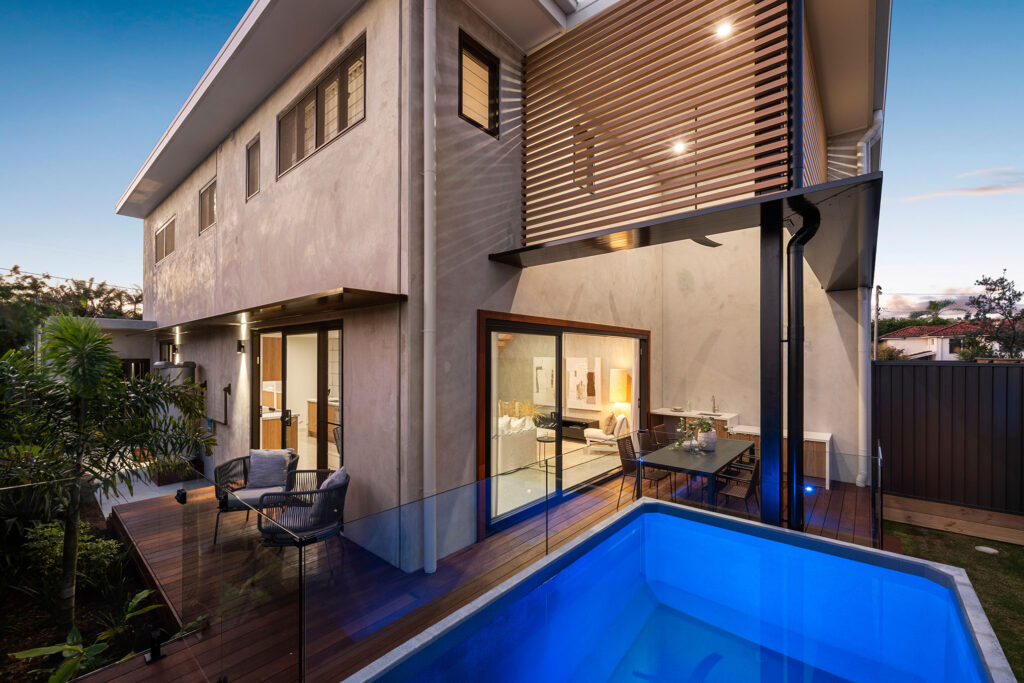
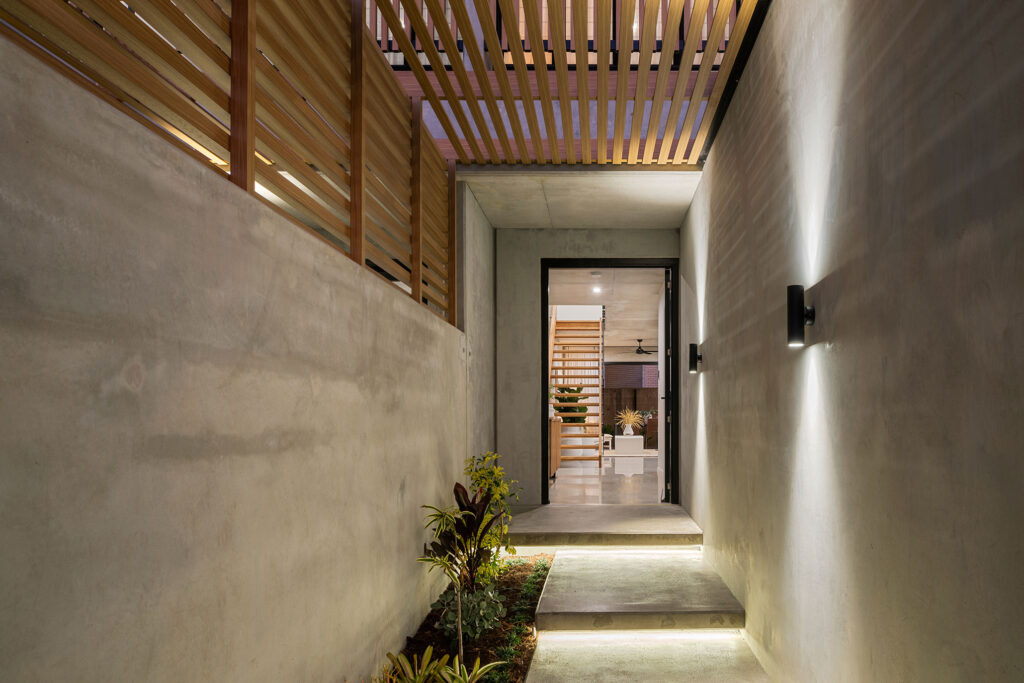
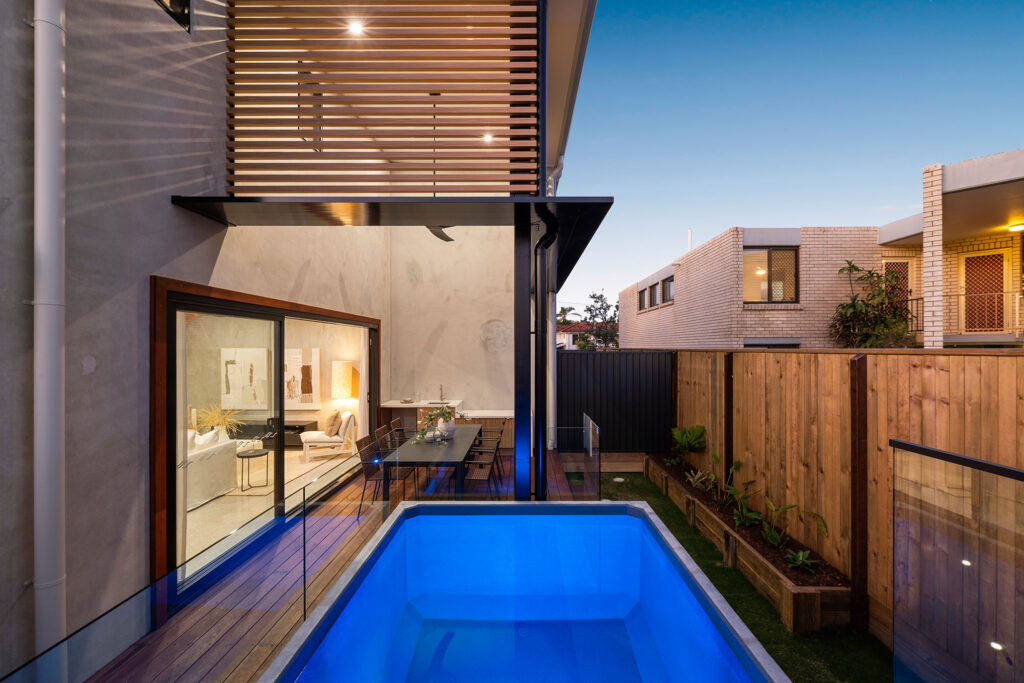
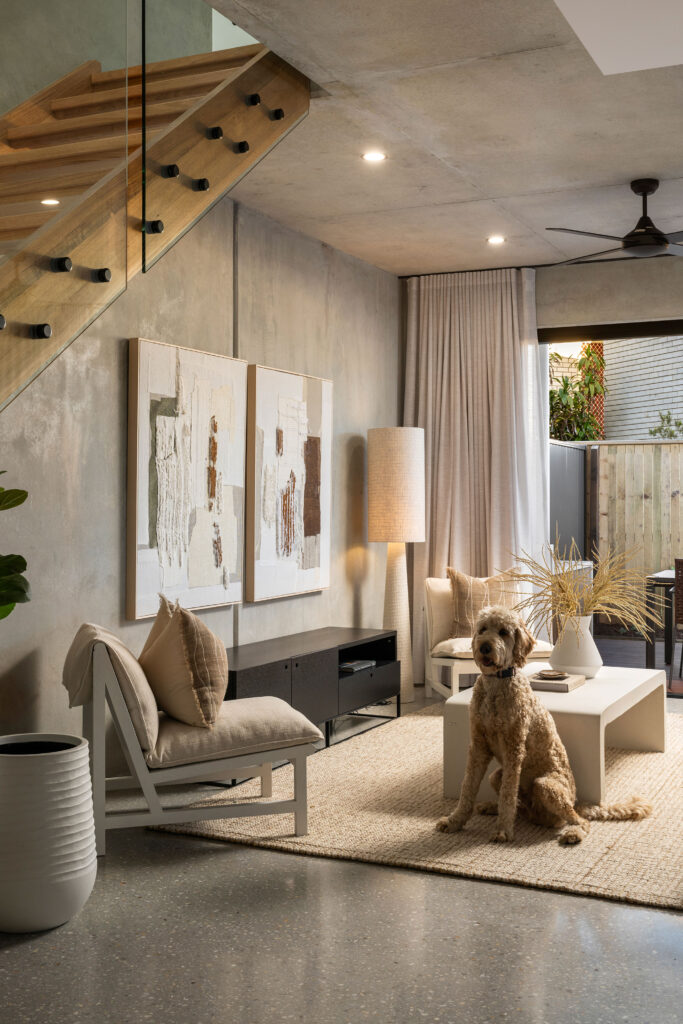
What distinguishes this project is not only its structural performance but the clarity with which the design embraces a coastal lifestyle. The duplex presents a warm, modern façade with timber-look cladding that softens the concrete surfaces and creates a welcoming residential scale. Inside, the plan is organized around openness, natural light, and strong connection to outdoor living spaces.
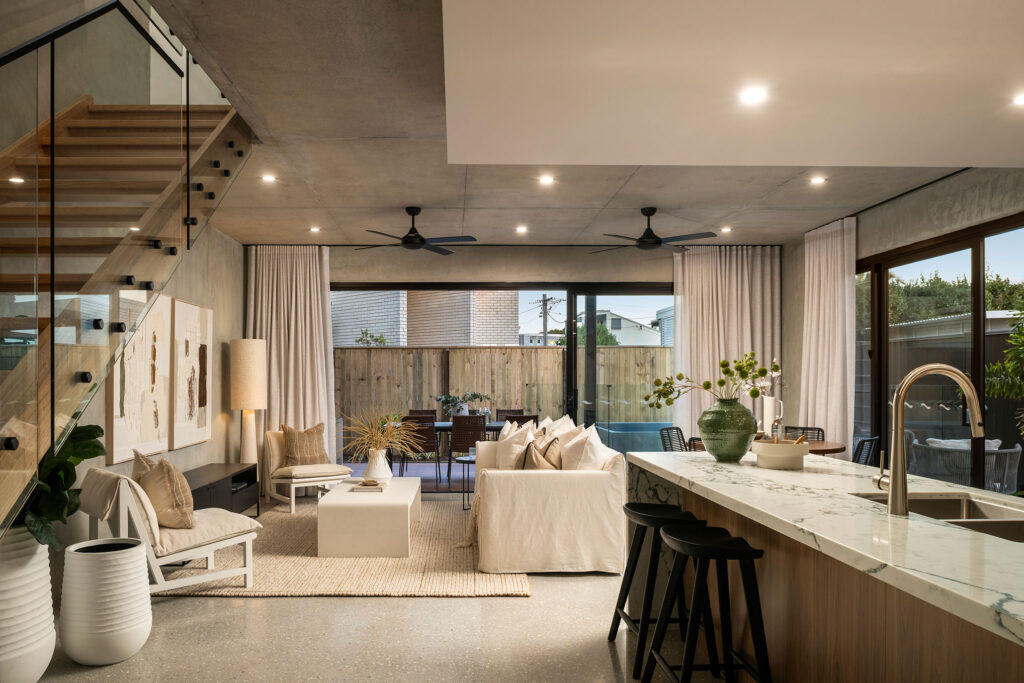
A generous kitchen anchors the ground level, complete with stone surfaces, a butler’s pantry, and an open arrangement that flows directly into the living and dining areas. Large openings draw occupants toward an east-facing alfresco terrace—a sheltered outdoor room with a built-in barbecue and low-maintenance landscaping. A plunge pool completes the setting, creating an intimate environment suited to the region’s subtropical climate.
Upstairs, three bedrooms and two bathrooms support flexible living. The primary suite features a walk-in wardrobe and a private ensuite, continuing the project’s focus on durability paired with a calm, resort-inspired aesthetic.
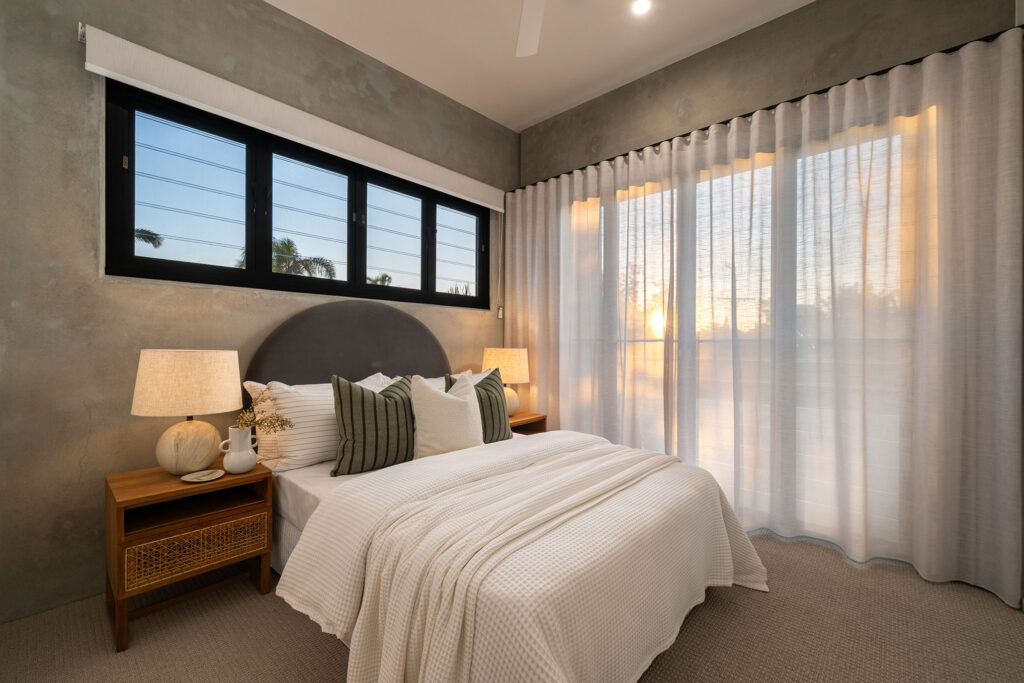
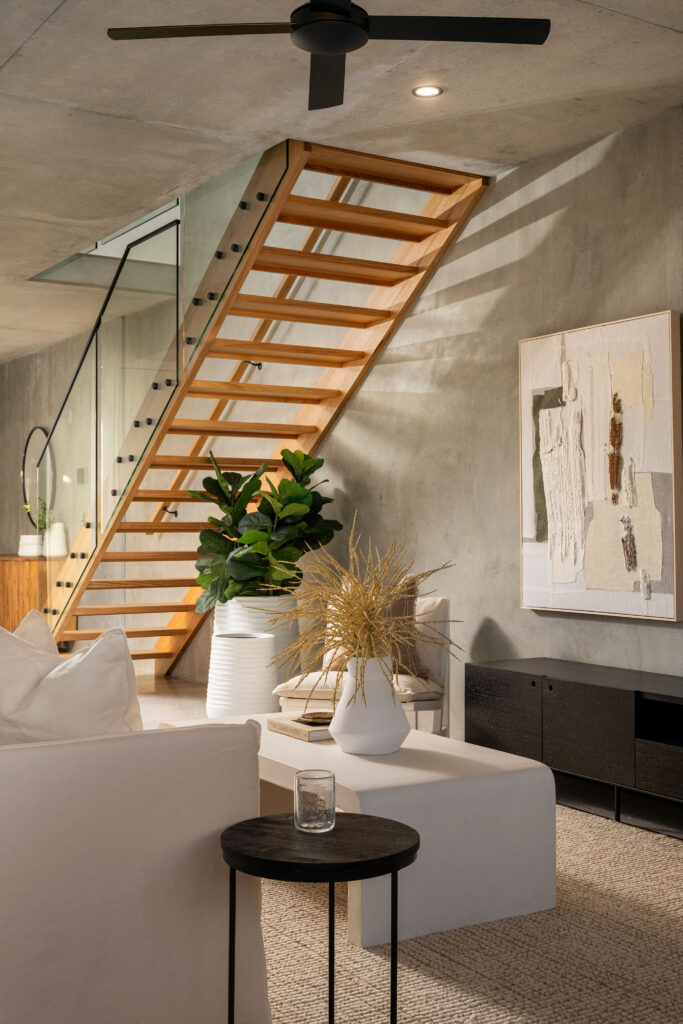
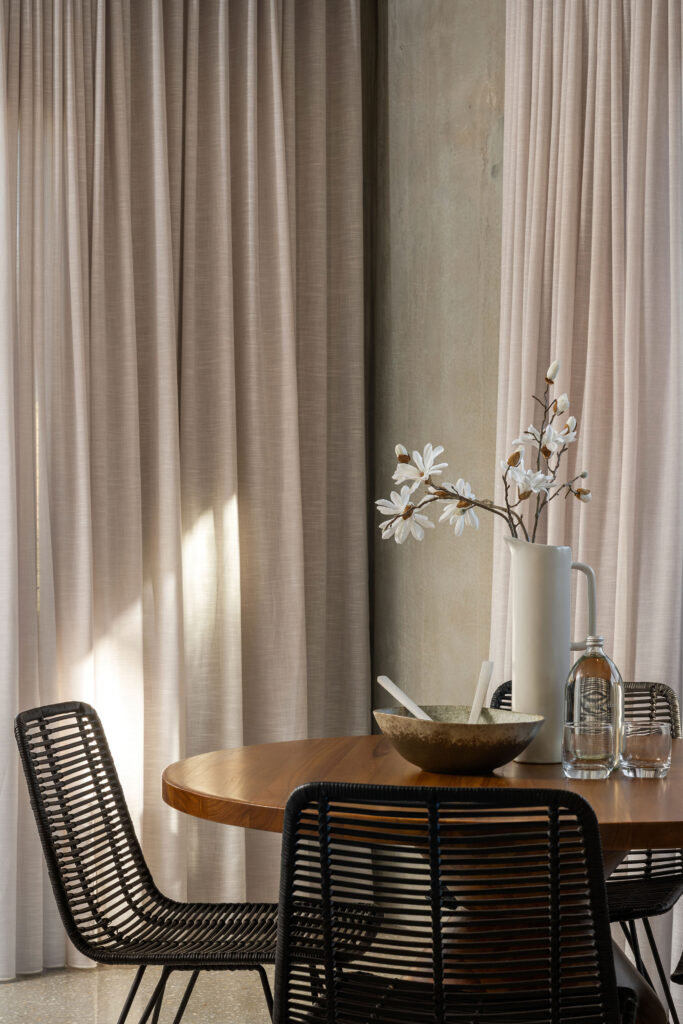
Throughout the interior, the tilt-up structure contributes to a sense of quietness and solidity rarely found in lightweight residential construction. The result is a home that feels grounded, temperate, and intentionally designed for coastal conditions.
A Model for a New Residential Typology
Projects like this duplex point to a broader trend: the reconsideration of tilt-up construction as a viable option for high-quality residential architecture. The method enables precise, efficient construction and significantly reduces long-term maintenance—an increasingly important factor for homeowners, investors, and local governments in climate-exposed regions.
For the Sunshine Coast, where demand for durable housing continues to grow, this duplex functions as a case study in alternative delivery. Built on a constrained suburban lot, the panels were cast on the property itself, eliminating extensive formwork and minimizing construction impacts. The project’s material palette demonstrates that tilt-up can serve both structural and expressive roles, supporting a cohesive architectural identity rather than dictating one.
The home also meets the needs of multiple occupancy types—permanent residents, holiday-home owners, or long-term renters seeking low-maintenance living close to the ocean.
Expanding the Role of Tilt-Up in Coastal Housing
As climate, insurance, and material-performance pressures shape the future of residential construction, tilt-up offers a path aligned with long-term durability and architectural flexibility. The Marcoola duplex provides evidence that the method can support not only robust building envelopes but also refined living environments characterized by natural light, outdoor connection, and material warmth.
Its successful integration of tilt-up structure with contemporary coastal architecture suggests a broader opportunity for adoption across similar regions. For designers and builders throughout Australia and beyond, the project stands as a clear example of tilt-up construction moving beyond traditional commercial origins and into residential work that values both lifestyle and longevity.
By Mitch Bloomquist
Executive Director
Tilt-Up Concrete Association

Be the first to comment