
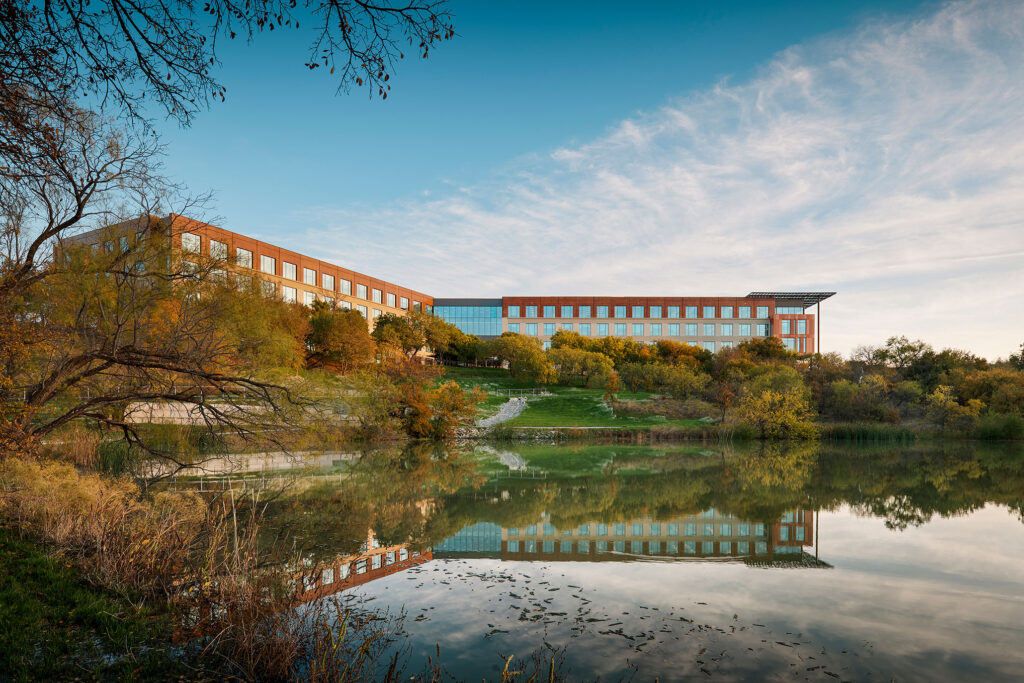
The AmerisourceBergen Regional Headquarters in Carrollton, Texas, is a 304,467-square-foot, four-story office facility designed as Phase 1 of a larger corporate campus. The project received the Excellence in Achievement Award from the Tilt-Up Concrete Association, recognizing its exemplary execution and industry impact. Positioned on a bluff overlooking a pond and natural landscape, the building demonstrates how tilt-up construction can support a large corporate program while expressing a regional architectural language rooted in the Texas vernacular.
Comprising 77 tilt-up panels and 83,495 square feet of tilt-up wall area, the structure occupies a 75,000-square-foot footprint. The tallest panel reaches 71 feet 5 inches, with the largest panel measuring 1,252 square feet and weighing 128,100 pounds. Panels were typically 15 feet wide, aligning efficiently with the building’s 30-foot structural grid. This dimensional coordination reinforced structural efficiency while supporting interior planning, allowing façade rhythm and workplace organization to operate in concert.
Site constraints and erection logistics
The panel laydown area along the north elevation bordered a pond, constraining staging and requiring careful coordination for erection and bracing. The proximity to water introduced logistical challenges that demanded sequencing adjustments and close collaboration between the erecting team and general contractor to maintain schedule continuity. Solutions were developed that accommodated bracing requirements without compromising either site conditions or the project timeline.
Lateral stability required particular attention. The scale of the floor plates, the presence of double-height volumes, and façade interruptions at critical corners reduced straightforward shear distribution opportunities. An aggressive cross-bracing strategy was introduced at the building core. Concealed core solutions were developed to integrate this bracing within the architectural framework, preserving both programmatic flexibility and visual continuity.
Finish control at architectural scale
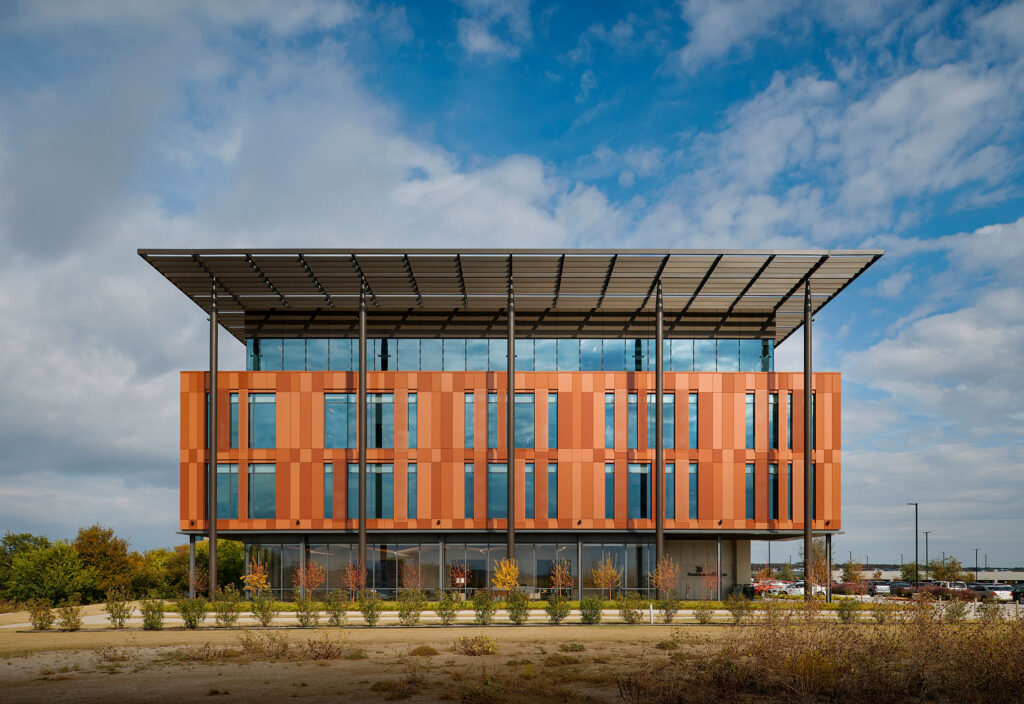
The project’s architectural character relied on two primary finish systems: stained tilt-up concrete and formliner applications at all spandrels. Long, uninterrupted runs of stained panels heightened the difficulty of achieving consistent coloration across elevations.
To support the intended natural aesthetic, the architect directed the contractor to limit patching to only the most severe surface conditions. Minor imperfections were accepted as part of the material expression. Where patching was necessary, multiple patch compositions were tested in conjunction with varied stain formulas to identify the least perceptible solution beneath the final application.
Because of panel length, stain applicators were unable to complete entire elevations in a single continuous spray without visible transitions. Extensive planning defined appropriate break locations and protection strategies for adjacent panels. To mitigate aesthetic variation caused by changing weather conditions, entire elevations were stained in a single day whenever feasible, ensuring tonal consistency across large surfaces.
Panel strategy and campus integration
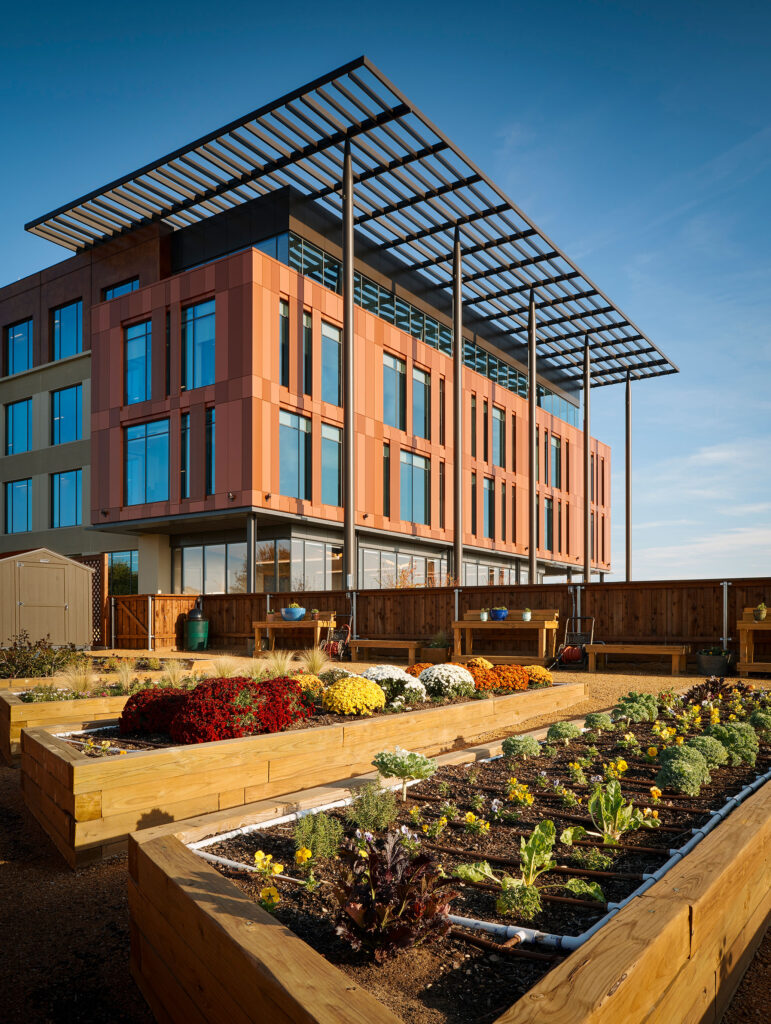
Tilt-up construction supported the project’s emphasis on indoor-outdoor continuity. Deep canopies, sun-shading devices, and wide trellis overhangs create shaded outdoor rooms and gathering areas overlooking the lake and adjacent trails. An enclosed paseo establishes view corridors from the main entry toward the water, reinforcing the building’s relationship to its landscape setting.
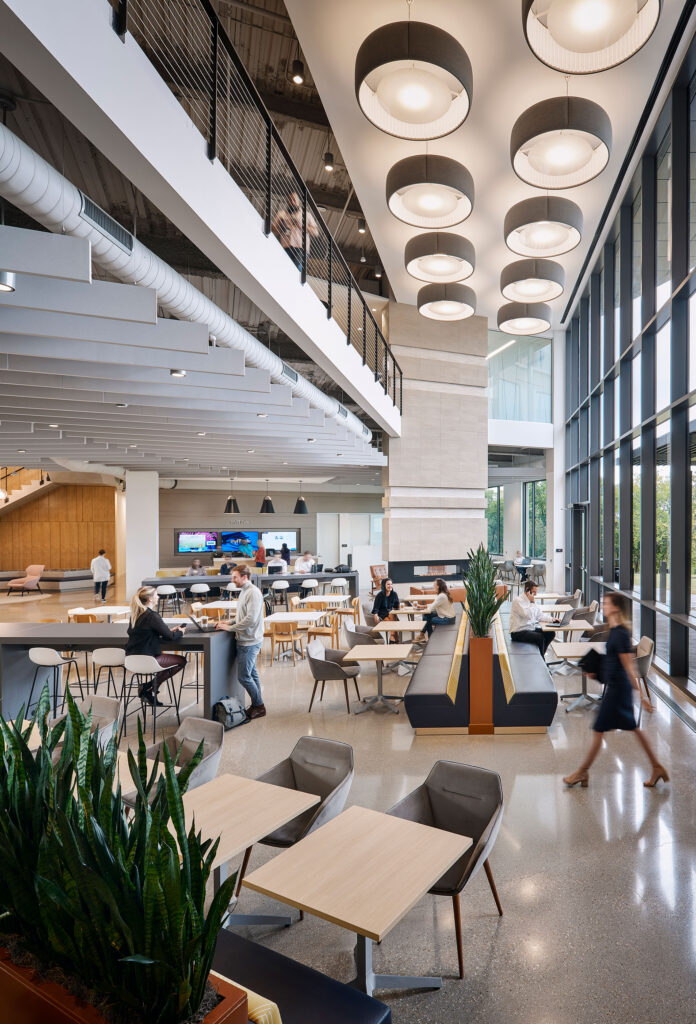
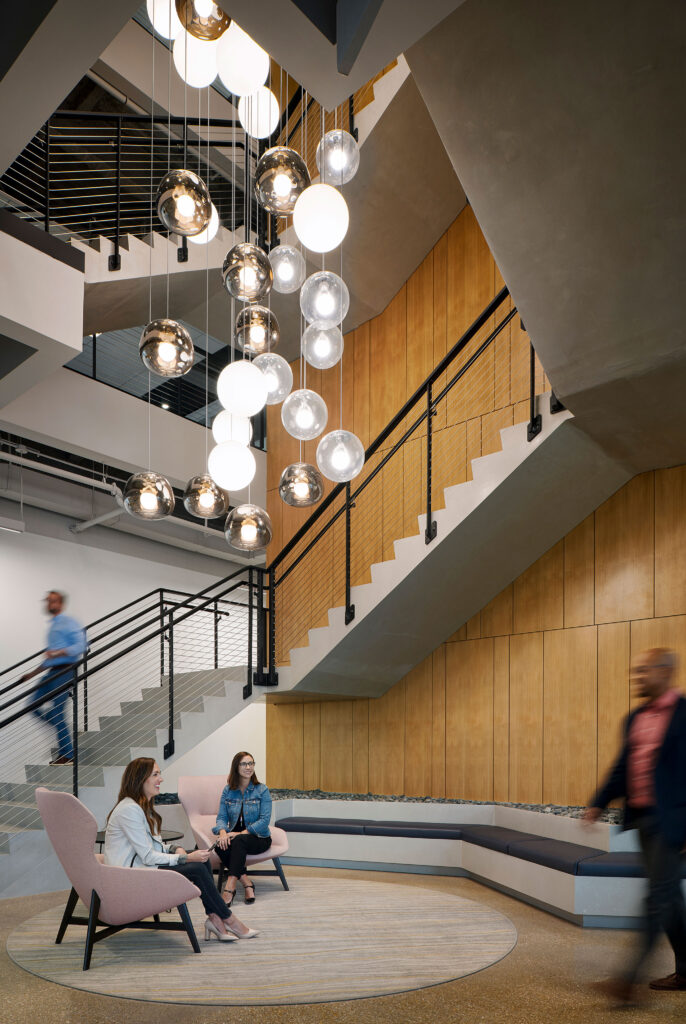
Internally, a monumental staircase extends through all four floors and functions as a central organizing element. Large glazed openings align with panel modules to frame exterior vistas, demonstrating how disciplined panel sizing can reinforce spatial intent. Post-applied interior insulation supports thermal performance objectives and contributed to LEED Silver certification. Reveals and formliner spandrels provide articulation and depth while maintaining constructability.
Scalable framework for growth
With plans for expansion to accommodate more than 3,000 employees, the headquarters establishes a scalable tilt-up framework for future campus development. The alignment of panel widths with the structural grid provides a repeatable system that can extend across additional phases without sacrificing architectural coherence.
Beyond its award recognition, the project contributes to the industry’s collective understanding by demonstrating that multi-story corporate office environments with demanding finish requirements can be executed successfully in tilt-up. It underscores the importance of finish mock-ups, coordinated staining strategies, and early bracing integration in large floor plate structures. In doing so, it expands confidence in tilt-up as a system capable of delivering both programmatic scale and regional architectural expression.
Project Credits
Concrete Contractor: Orion (formerly TAS Commercial Concrete Construction)
Photographer: Ryan Gobuty
This article was generated based on content submitted during the Tilt-Up Achievement Awards program.

Be the first to comment