
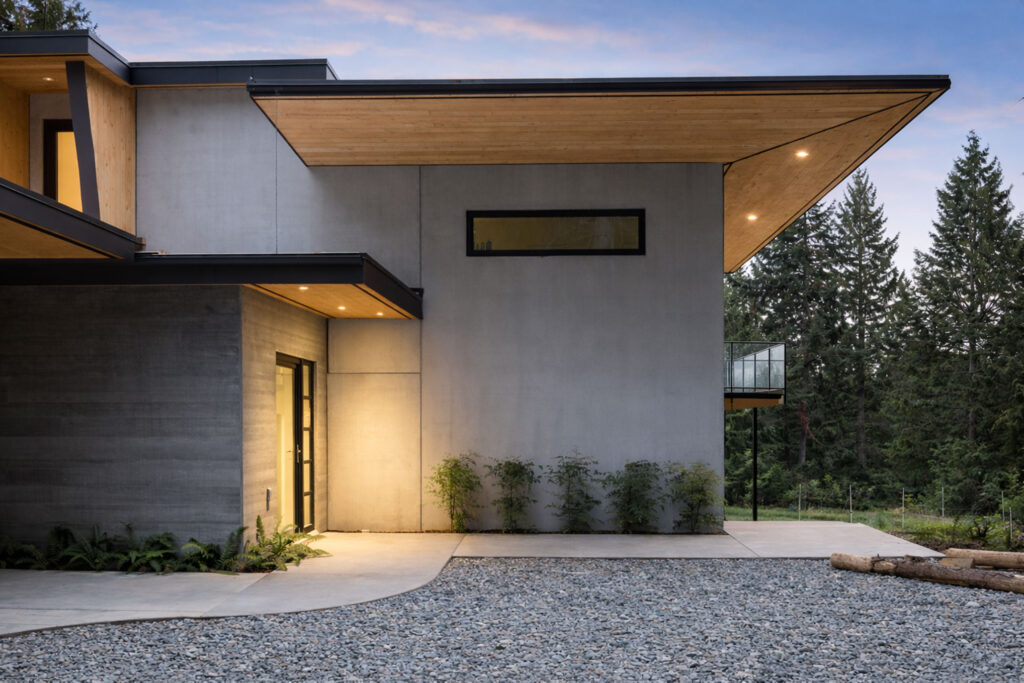
The Tize residence, a two-story single-family home located on the Sunshine Coast in British Columbia, Canada, received an Excellence in Achievement award in 2018. The project demonstrates how tilt-up concrete construction can be applied at a residential scale to support passive design strategies, long-term durability, and high-performance building envelopes.
The home was constructed using 18 site-cast insulated tilt-up panels configured as composite sandwich assemblies. Each panel consisted of a 6-inch structural wythe of 32 MPa concrete, 8 inches of expanded polystyrene insulation, and a 2-inch self-consolidating concrete veneer. Panels were cast horizontally on site and erected by crane, allowing the wall system to function simultaneously as structure, enclosure, and exterior finish.
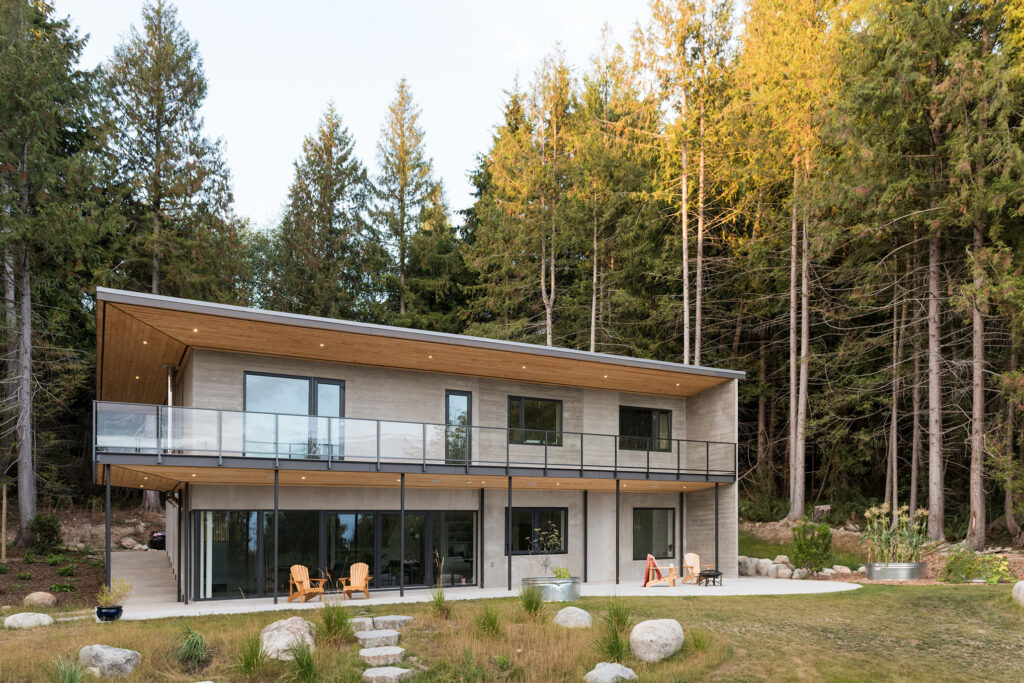
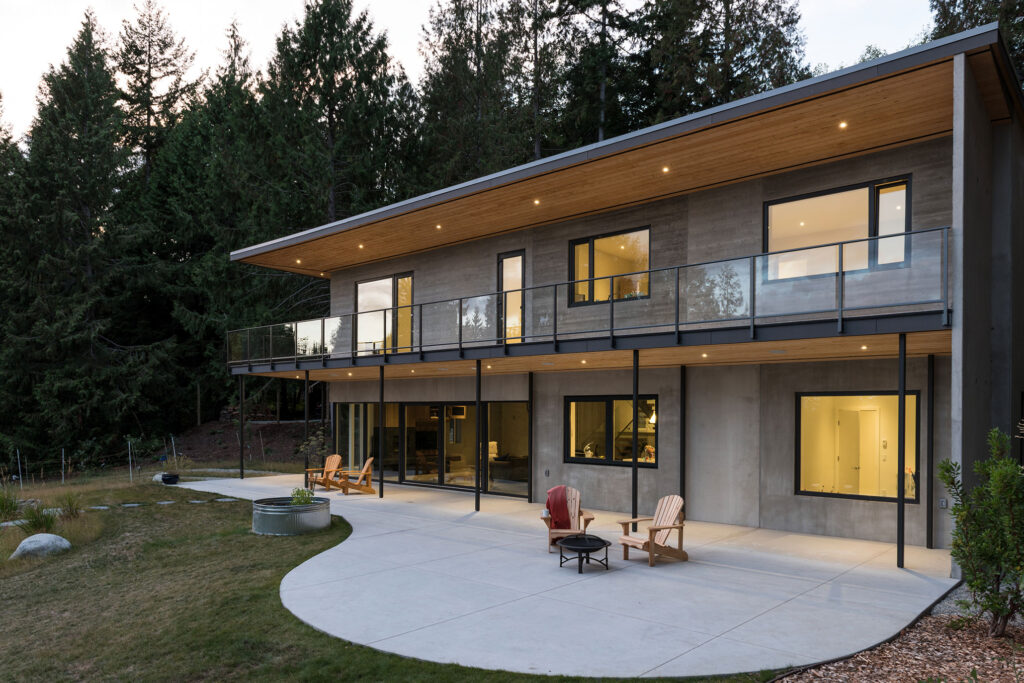
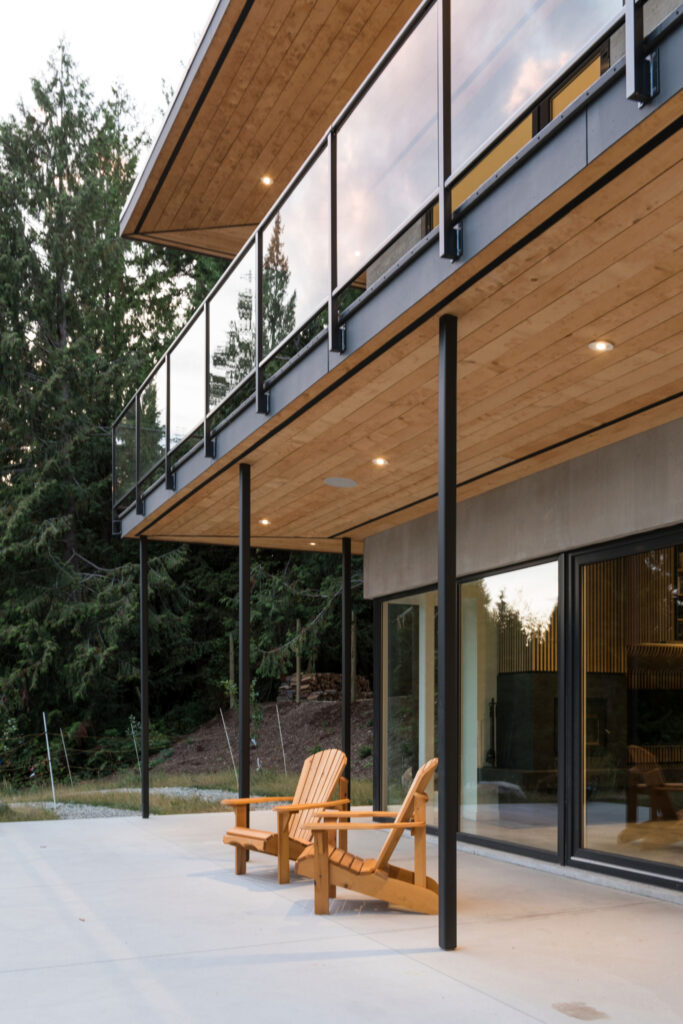
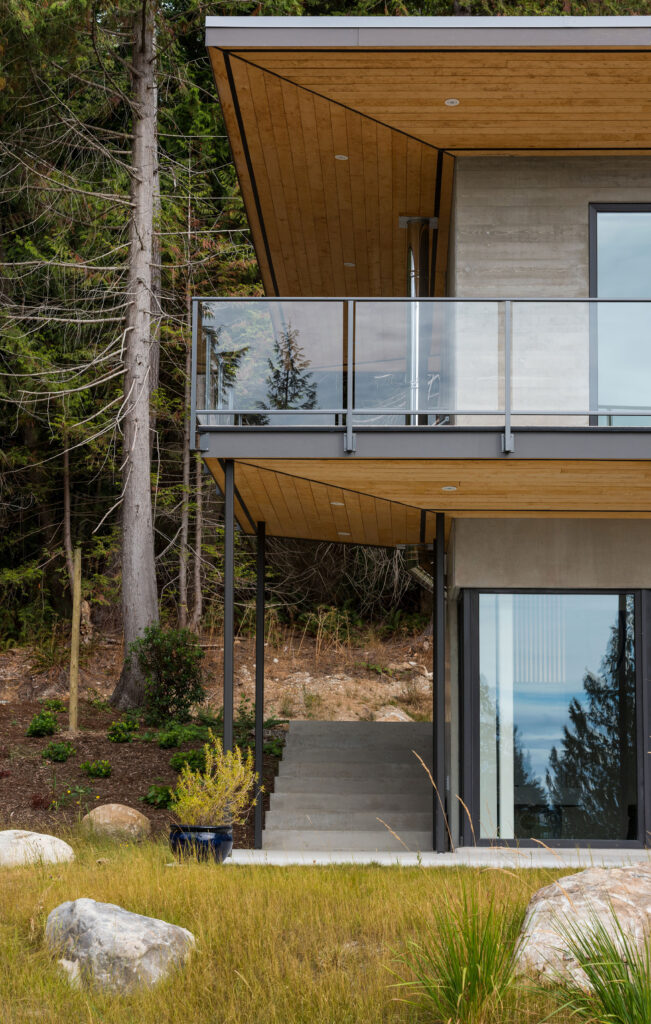
Passive design principles informed the overall building strategy. The residence was oriented to the south to maximize solar gain during winter months, while 7-foot roof overhangs were incorporated to provide shading during summer conditions. The thermal mass of the concrete panels was intentionally used to moderate interior temperatures throughout the year, reducing mechanical demand and contributing to stable indoor conditions.
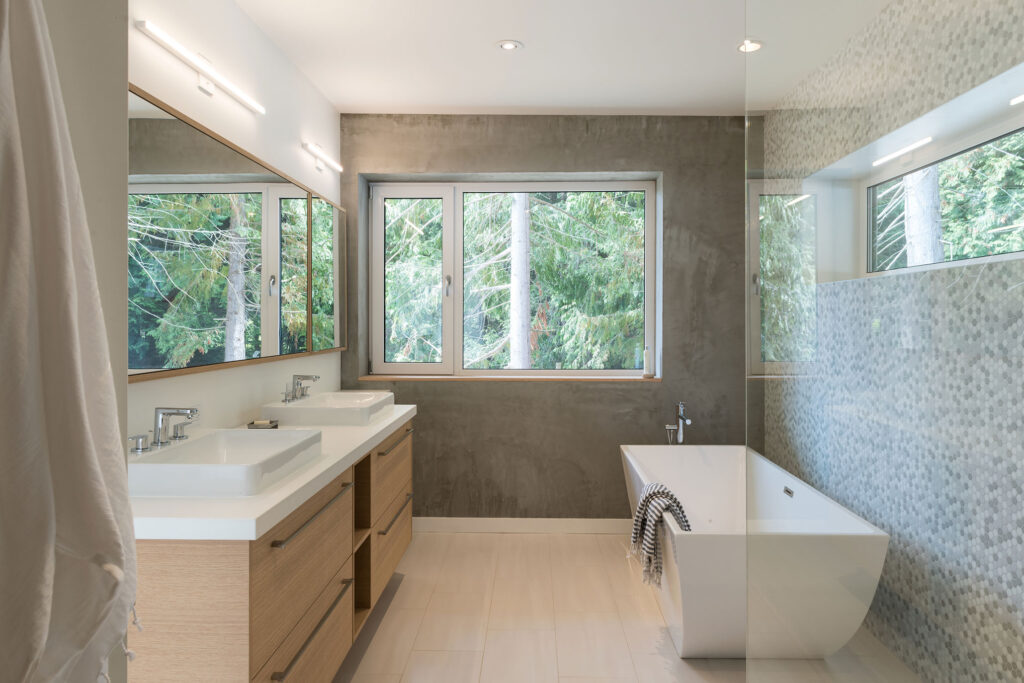
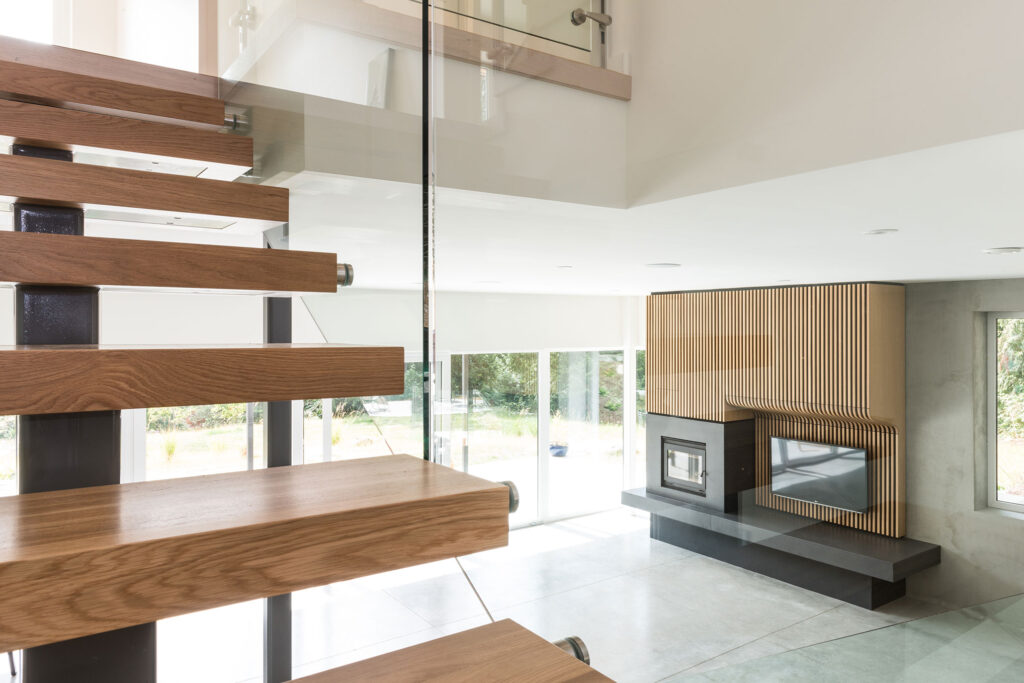
Thermal continuity was maintained across the building envelope. The wall assemblies achieved an R32 value, supported by R32 insulated footings, R40 insulation beneath the slab, and an R40 roof assembly. Insulation was carried continuously from foundation through roof, minimizing thermal bridging and reinforcing the passive design approach. Triple-pane glazing with fiberglass window frames further supported envelope performance.
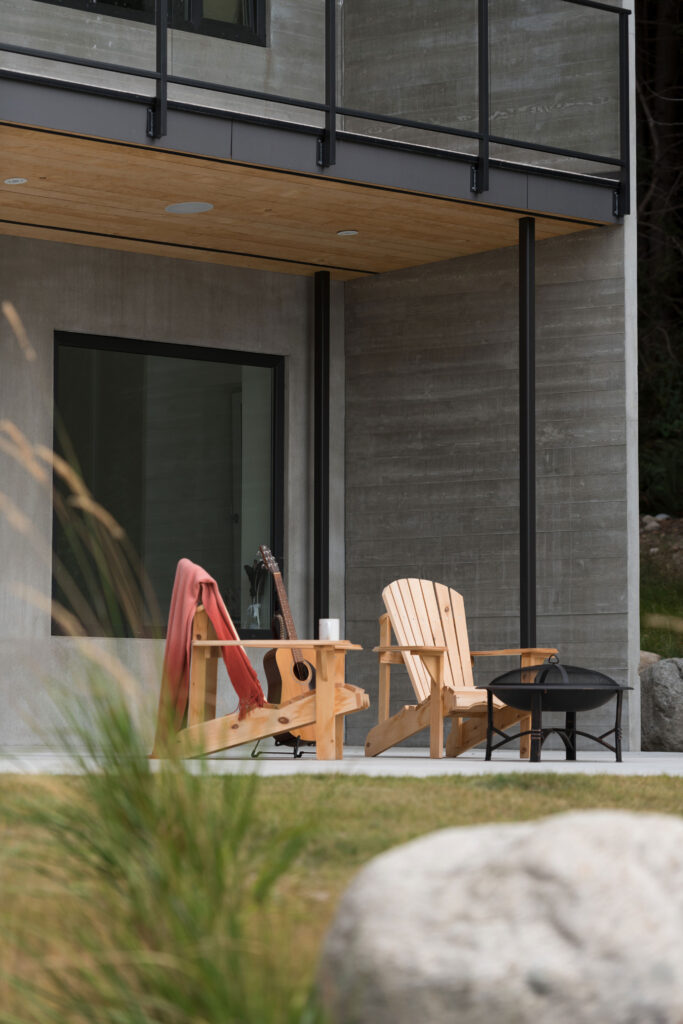
Panel fabrication emphasized precision and constructability. Steel casting tables were plasma cut for dimensional accuracy and epoxy coated to produce consistent surface finishes. Resawn wood impressions were cast directly into the concrete veneer, eliminating the need for applied exterior finishes.
Site access constraints influenced panel sizing and erection strategy. Panel dimensions were limited to remain within the lifting capacity of a 35-ton hydraulic crane, enabling construction despite restricted access. Stacked panels were used where appropriate, supported by a grout sleeve lifting system that allowed panels to be temporarily stacked during construction. An insulated spandrel panel spanning nearly 27 feet was installed above a large sliding door and window assembly on the ground floor, demonstrating tilt-up’s capacity for long-span residential conditions.
Prefabrication extended beyond wall panels. A full exterior concrete stair assembly was cast and craned into position, reducing on-site labor and reinforcing the project’s emphasis on controlled fabrication and precise placement.
Performance metrics validated the construction approach. Energy modeling indicated a heat demand of approximately 17 kWh/m² per year and an annual energy load of roughly 7,000 kWh. The building achieved an air change rate of 0.6 ACH, supported by a high-efficiency heat recovery ventilation system with approximately 95 percent heat recovery. On-site systems included an 11-kW solar photovoltaic array with battery storage, rainwater collection totaling approximately 9,500 liters, and a natural retention pond with a capacity of approximately 390,000 liters.
Designed as a 150-year building, the project illustrates how tilt-up concrete construction can be adapted to residential contexts where thermal performance, durability, and envelope continuity are primary drivers. The methods employed offer transferable insight for designers and builders evaluating tilt-up as a viable system for high-performance housing.
Project Credits
General Contractor: NZ Builders
Photographer: Leanna Rathkelly
This article was generated based on content submitted during the Tilt-Up Achievement Awards program.

Be the first to comment