
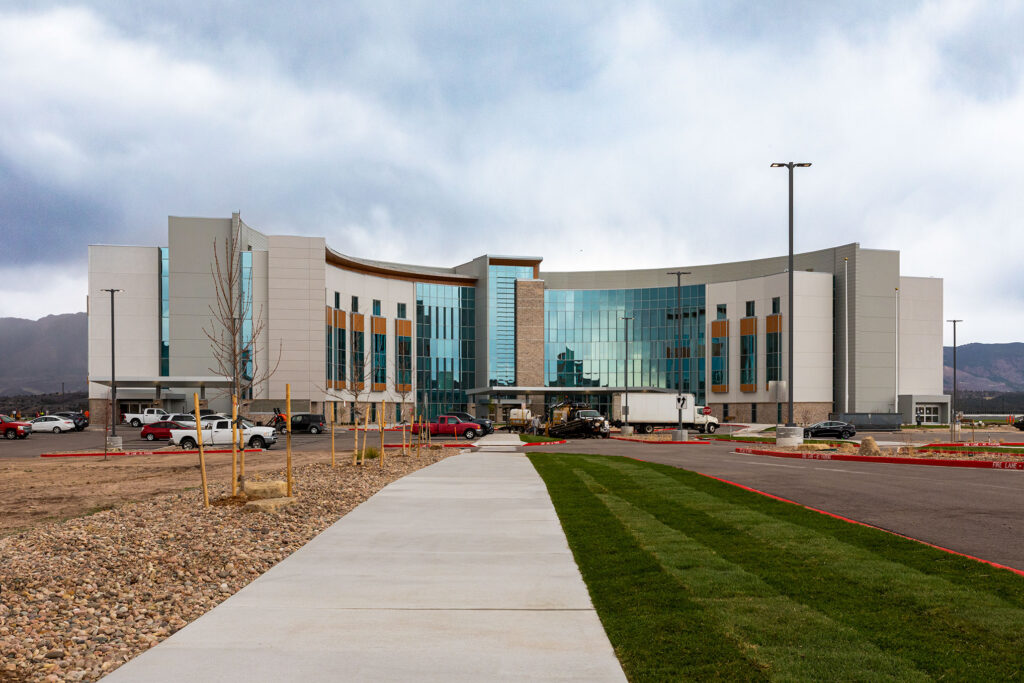
The Centura St. Francis Hospital – Interquest project in Colorado Springs, Colorado, is a 140,000-square-foot, four-story hospital developed to support a rapidly growing regional population. Recognized through the Tilt-Up Achievement Awards program, the project serves as a case study in the application of tilt-up concrete construction to a complex healthcare facility that combines curved geometry, multi-story organization, and demanding programmatic requirements.
Tilt-up construction was selected to support schedule efficiency and cost control while accommodating a full-service hospital program that includes emergency care, surgery, inpatient services, and critical care units. The building departs from conventional rectilinear hospital forms, instead organizing significant portions of the structure along a curved plan that required careful coordination between architectural intent, structural design, and erection sequencing.
Curved panel geometry and foundation conditions
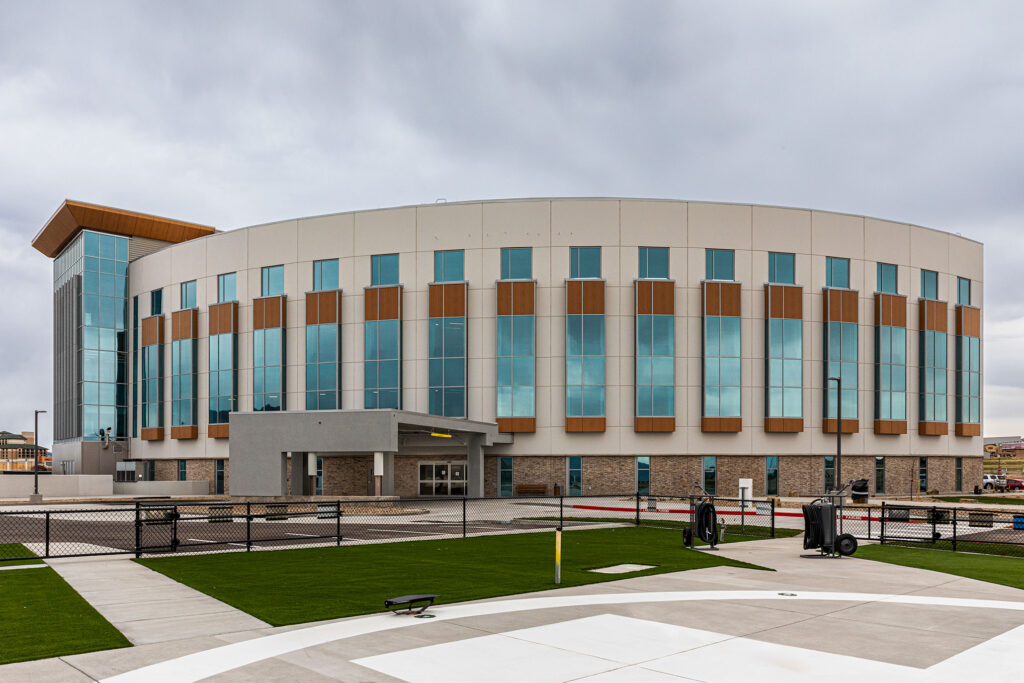
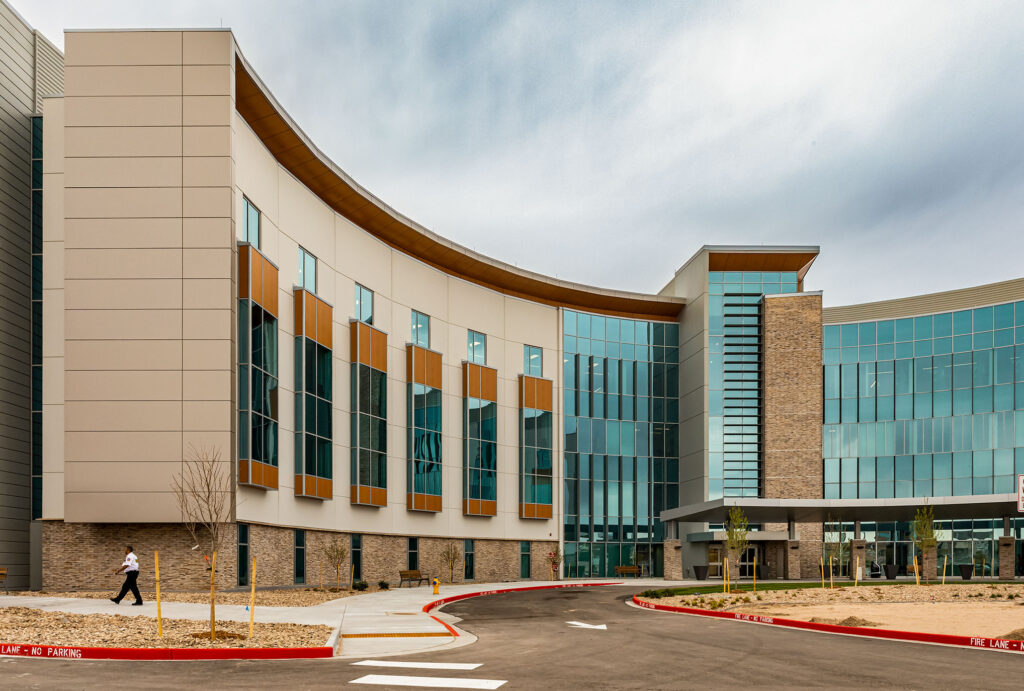
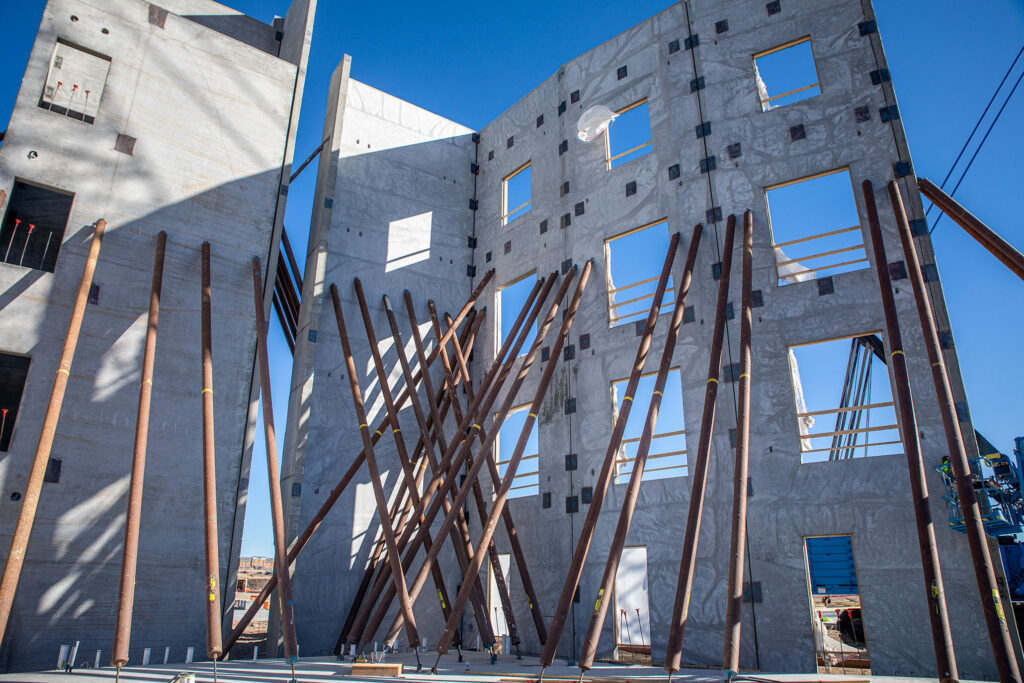
The structure incorporated 86 tilt-up wall panels totaling approximately 64,000 square feet of wall area. Many of the panels were arranged in a half-circle configuration, establishing a continuous curved elevation that defines the facility’s architectural character. Achieving this geometry required precise control of panel dimensions, alignment, and erection tolerances to maintain continuity across the curved façade.
Panel support conditions varied across the building footprint. Approximately half of the panels were erected on continuous foundations, while the remaining panels were supported by a basement retaining wall. This condition required coordinated detailing and sequencing to ensure consistent performance across differing foundation systems while maintaining the intended curvature of the exterior envelope.
Tall vertical elements and multi-story organization
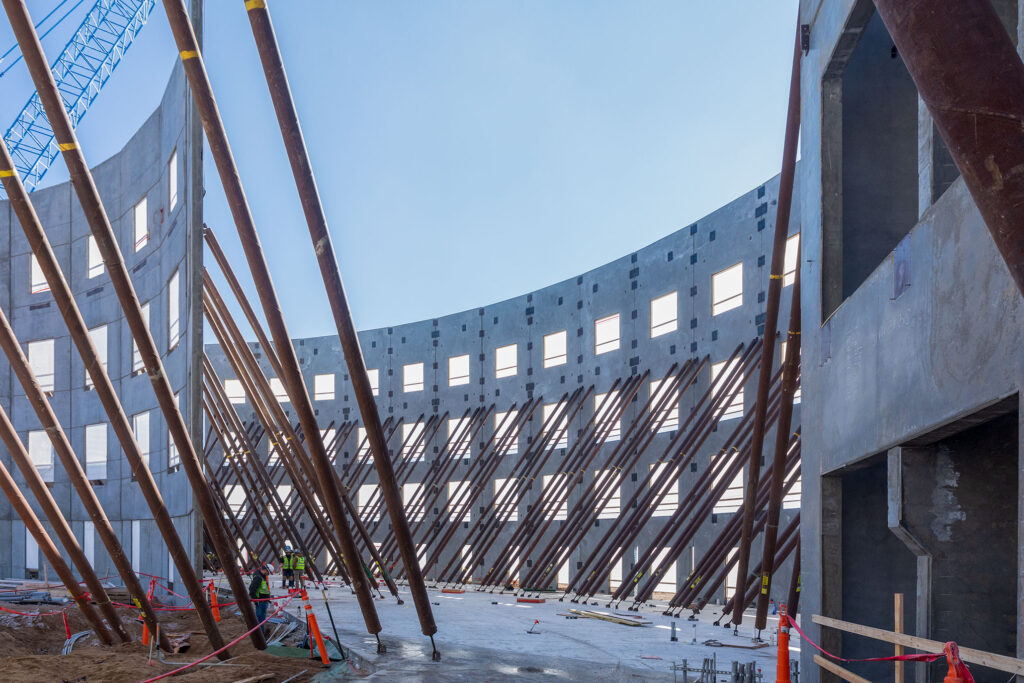
The project included elevator core panels extending to 94 feet 6 inches in height, representing the tallest tilt-up panels constructed in Colorado at the time and ranking among the tallest nationally. These panels supported the building’s four-story configuration and consolidated vertical circulation within the tilt-up structural system. Five-story elevator core panels further demonstrated tilt-up’s capacity to accommodate significant vertical scale within a healthcare application.
Rather than increasing complexity through excessive segmentation, the use of tall panels reduced the overall number of elements required to achieve the building enclosure. Panel design incorporated multiple pick-up points to manage lifting forces and support controlled placement consistent with established large-panel tilt-up practices.
Construction execution and architectural expression
Construction progressed under variable weather conditions typical of the Colorado Springs region, including cold temperatures, wind, and snow. Tilt-up construction supported efficient sequencing and rapid enclosure, helping maintain progress while accommodating seasonal conditions.
Architecturally, the panels featured a flat painted finish with reveals used to articulate the façade and reinforce the building’s curved form. Insulation was post-applied on the interior, supporting healthcare performance requirements while maintaining flexibility during casting and erection.
Broader relevance and community impact
The completed facility includes 72 inpatient beds, 10 intensive care unit beds, 10 specialty-sized operating rooms, and a 14-bed emergency department. Imaging services include computed tomography and ultrasound, supporting a full range of acute care functions. At full operation, the hospital is expected to support approximately 300 jobs, expanding access to medical services in the greater Colorado Springs area.
From an industry perspective, the project demonstrates how tilt-up concrete construction can be applied to healthcare facilities that require curved geometry, multi-story organization, and substantial vertical elements. The project contributes to the broader understanding of tilt-up as a scalable construction system capable of addressing architectural and programmatic demands typically associated with institutional buildings.
Project Credits
Concrete Contractor: Suntec Concrete
Photographer: Small Giants
This article was generated based on content submitted during the Tilt-Up Achievement Awards program.

Be the first to comment