
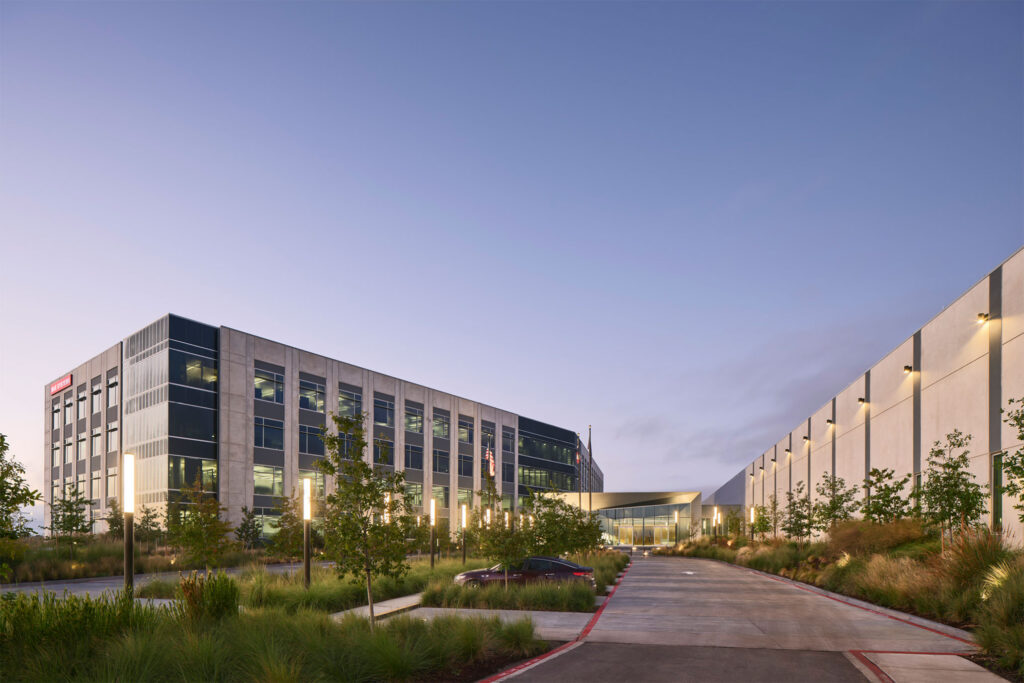
The BAE Systems facility in Parker, Texas, was developed as a mixed-use industrial campus combining large-scale manufacturing space, a four-story office building, and a shared lobby and reception area. Recognized as an Excellence in Achievement Award winner through the Tilt-Up Achievement Awards program, the project demonstrates how careful program organization and disciplined delivery strategies can support complex operational requirements while maintaining architectural clarity across varied building scales.
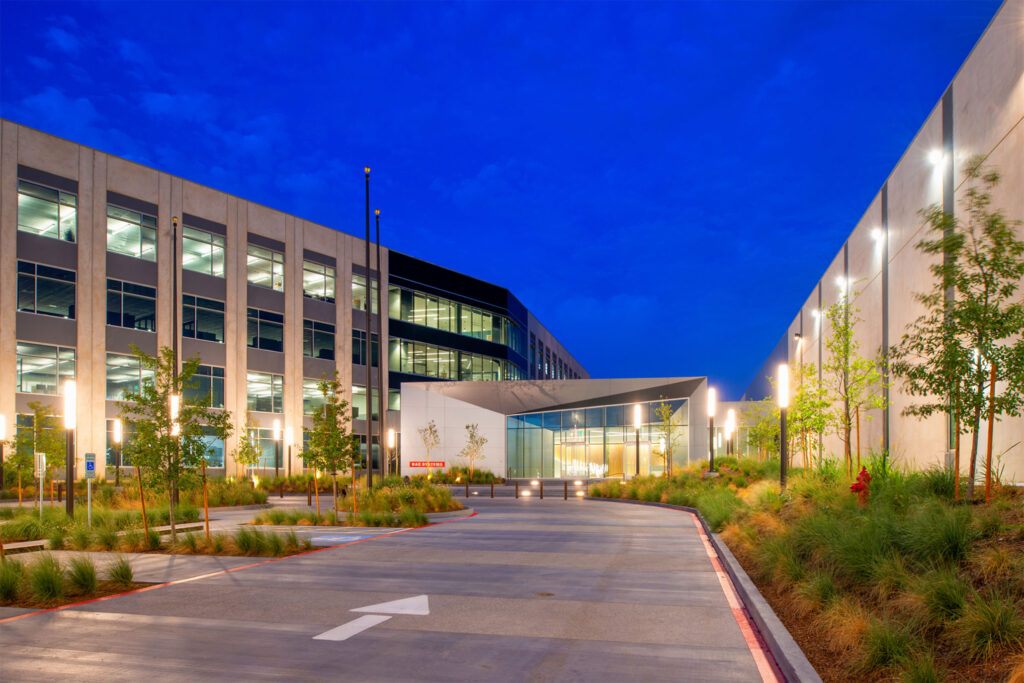
The building program was organized around three primary components: manufacturing, office, and a centralized lobby and reception space. The lobby functioned as the unifying element of the campus, providing both a physical and visual connection between production and administrative environments. This arrangement supported operational needs while reinforcing a core design objective—to present manufacturing and office spaces as balanced halves of the overall workforce rather than hierarchical components. The entry sequence focused visitors toward the lobby while allowing both program areas to remain clearly legible within the overall composition.
Project delivery was defined by aggressive schedule and budget constraints during a period of significant material price volatility. Risk was mitigated through the issuance of early drawing packages for structural steel and concrete wall systems, which accelerated submittals and allowed key materials to be priced and secured earlier than typical delivery timelines. Because the wall panels served as both primary structure and enclosure, early panel packages resolved a substantial portion of the building scope upfront, reducing exposure to market fluctuations and improving coordination by fixing critical structural decisions early in the design phase.
Site conditions introduced additional complexity. The building footprint was located in a topographical low point, requiring substantial fill to establish a buildable pad. Groundwater mitigation became a primary design consideration and was addressed through sub-surface drainage integrated within landscaped areas and along perimeter foundation walls. A clay cap was installed around the perimeter of the building footprint to further control groundwater migration at foundation interfaces, establishing long-term performance at grade.
Wall panel design responded directly to the project’s dual program requirements through two distinct enclosure strategies. The four-story office building incorporated panels with wide vertical openings to accommodate glazing at each level. Corners of the structure were intentionally left open, allowing curtain wall systems to infill two elevations. This approach increased daylight penetration and provided expansive views across the Parker campus toward downtown Austin, while maintaining structural continuity.
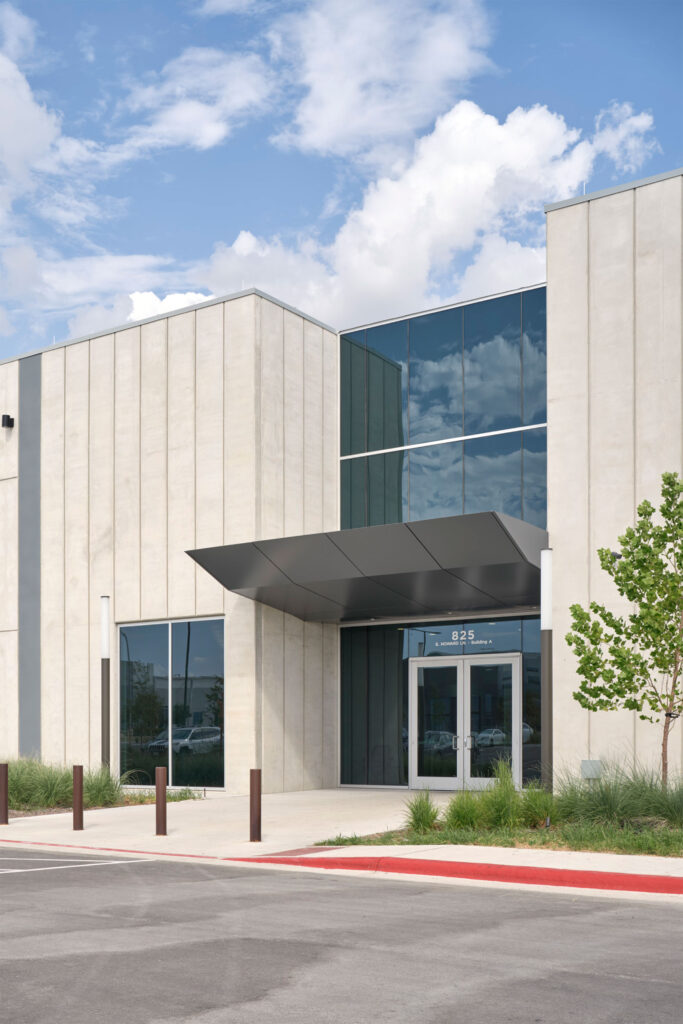
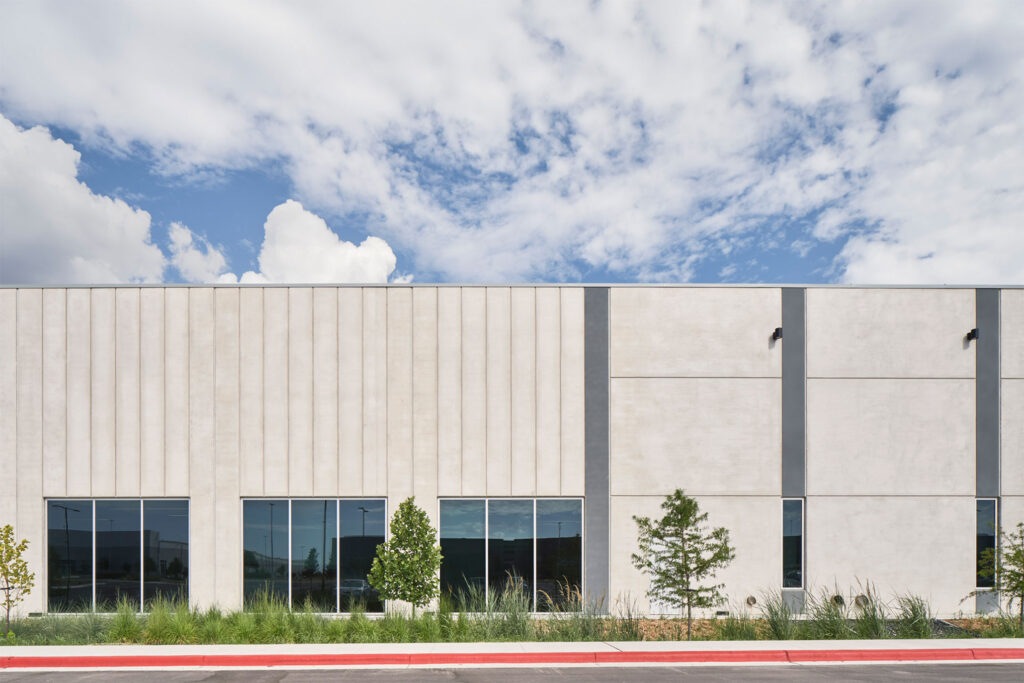
The manufacturing building employed a contrasting enclosure approach. Although single-story, its wall panels approached the height of the adjacent office structure, creating extended expanses of concrete along one of the campus’s primary internal vehicular routes. Early exploration of surface patterning through formliners proved ineffective at this scale, as the panel height diminished the impact of applied texture. In response, a system of vertical reveals formed directly through wood formwork was developed. This strategy introduced depth and articulation, reinforced vertical proportion across the long horizontal façade, and avoided alignment and tolerance issues often associated with large-scale formliner applications. All reveals were designed within structural tolerances, simplifying formwork and pre-pour preparation while maintaining consistency across the enclosure system.
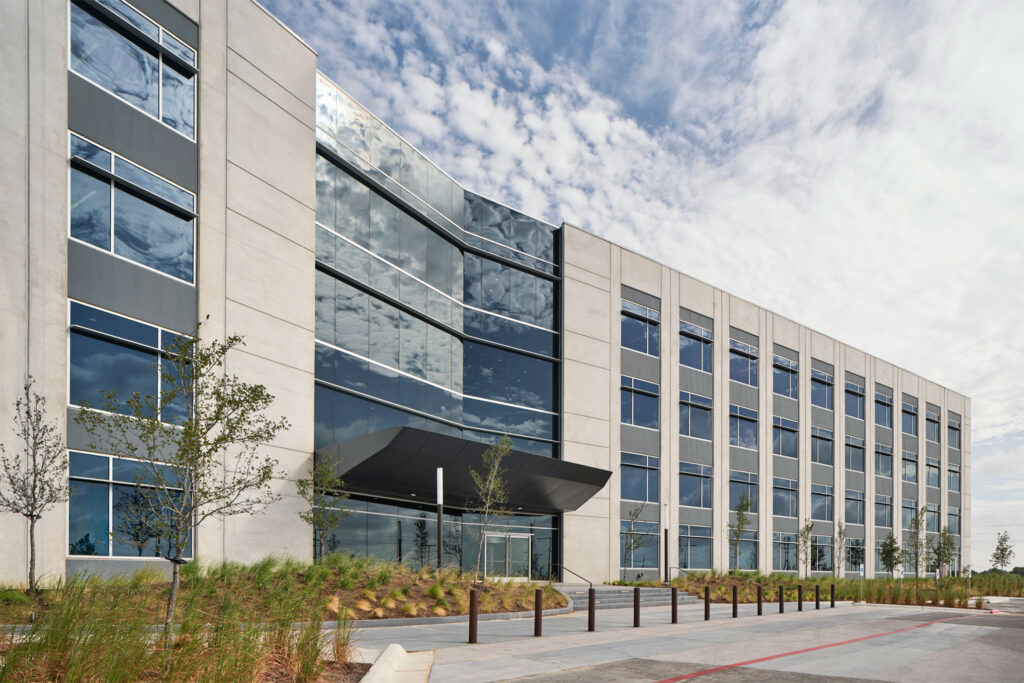
As an Excellence in Achievement project, the BAE Systems campus illustrates how industrial facilities can integrate manufacturing and office environments through clear organizational planning, early structural coordination, and enclosure strategies calibrated to program and context. The project contributes a repeatable framework for managing scale, schedule risk, and site constraints within complex industrial campuses.
Project Credits
- Architect: STG Design
- Photography: Andrea Calo
This article was generated based on content submitted during the Tilt-Up Achievement Awards program.

Be the first to comment