
Tilt-Up Innovation for Interior Demising Walls
By David Venegas, President, VEMAC, Inc.
2023 TCA Contractor of the Year
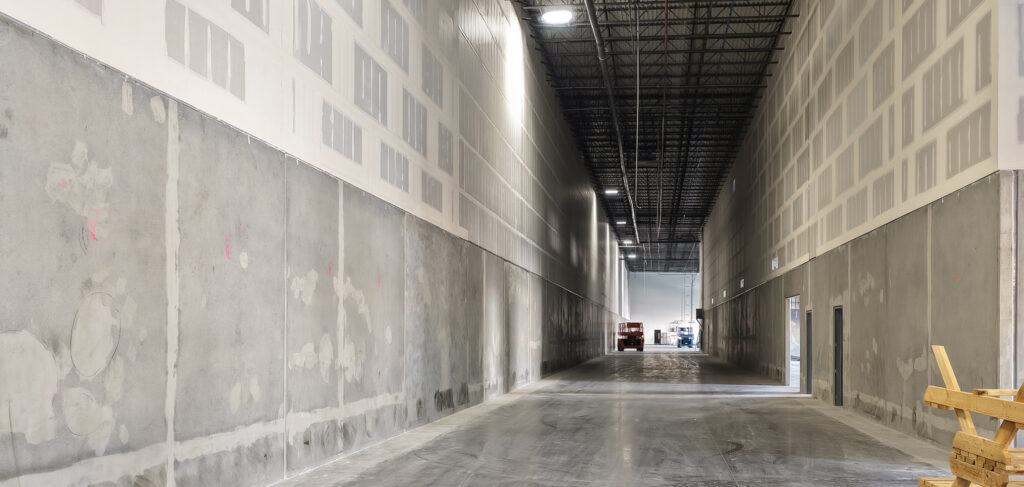
When vacancy pressures started creeping into the industrial tilt-up market, subdividing large bays felt like the obvious move. I assumed it was an inexpensive lift—frame some demising walls and move on. That assumption changed after a conversation with Jeff Hackmeyer, managing partner at Blue Road Investments. Jeff explained that demising walls in today’s 36–40-foot-clear industrial buildings have become expensive structural systems, driven by both height and the soaring cost of steel. When I saw the numbers, I was stunned. For that price, I thought, we could build something better—and stronger—with concrete.
To confirm what I was hearing, I called Robert Jackson of Raith Capital, who echoed the same frustration: The economics of tall interior metal-stud walls have gotten out of hand. That’s when I began exploring how tilt-up could play a role inside the building envelope, not just on its perimeter.
I started by identifying where the cost curve for metal studs steepens. Chris Malooly at EPX helped pinpoint the threshold: Once you exceed roughly 25 feet, steel-stud framing becomes dramatically more expensive. Below that height, light-gauge systems are still affordable. That insight led me to a hybrid idea—build a tilt-up base wall around 12 to 16 feet where the structure takes the most abuse from forklifts, pallets, and equipment, and continue to the roof with light-gauge framing above. This split delivers strength and durability where it’s needed while keeping costs under control.
The next hurdle was connection detailing. I explored a bolted connection with a small curb or buttress, which developers liked for the added wall protection. Another concept used a lightweight composite tilt-up panel bolted directly to the slab—the design we later submitted to the Mock-Up Medley at the TCA Convention & Expo. Before finalizing anything, I ran the details by Michael Stubbs, PE, SE, DBIA, and president of Stubbs Engineering.
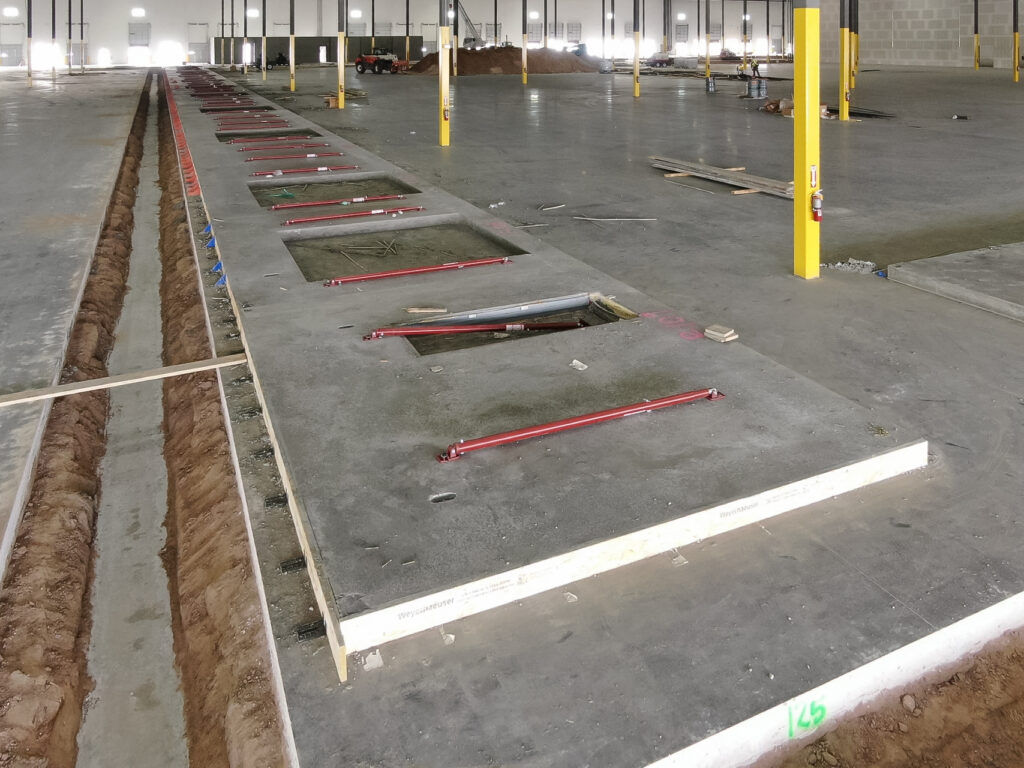
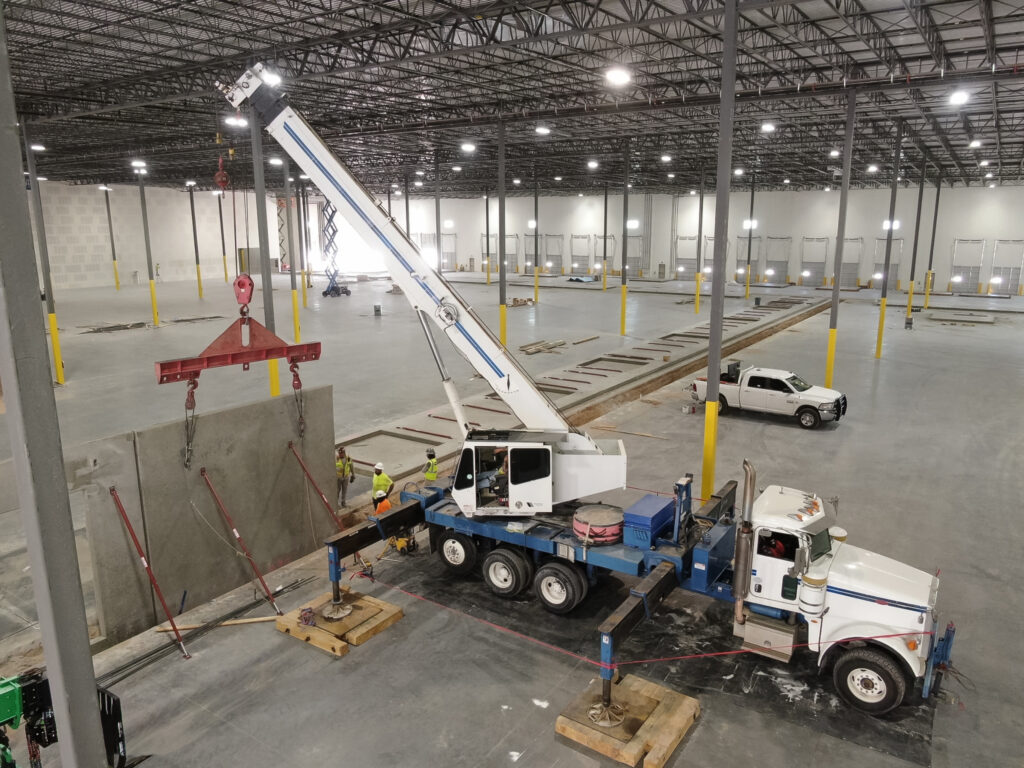
Michael helped frame the structural picture. “Once you bring tilt-up inside the building, the design approach changes,” he told me. “Those walls behave as cantilevers from the foundation because they don’t tie into the roof diaphragm the way exterior panels do. You’ve got to design the connection for both vertical and lateral loads, account for any moment transfer through the base, and decouple the slab so it can move slightly without cracking.” He emphasized the importance of a below-grade footing or grade beam—a detail that resists the tendency of the wall to rotate and keeps stresses off the floor slab. That insight became the backbone of the concept.
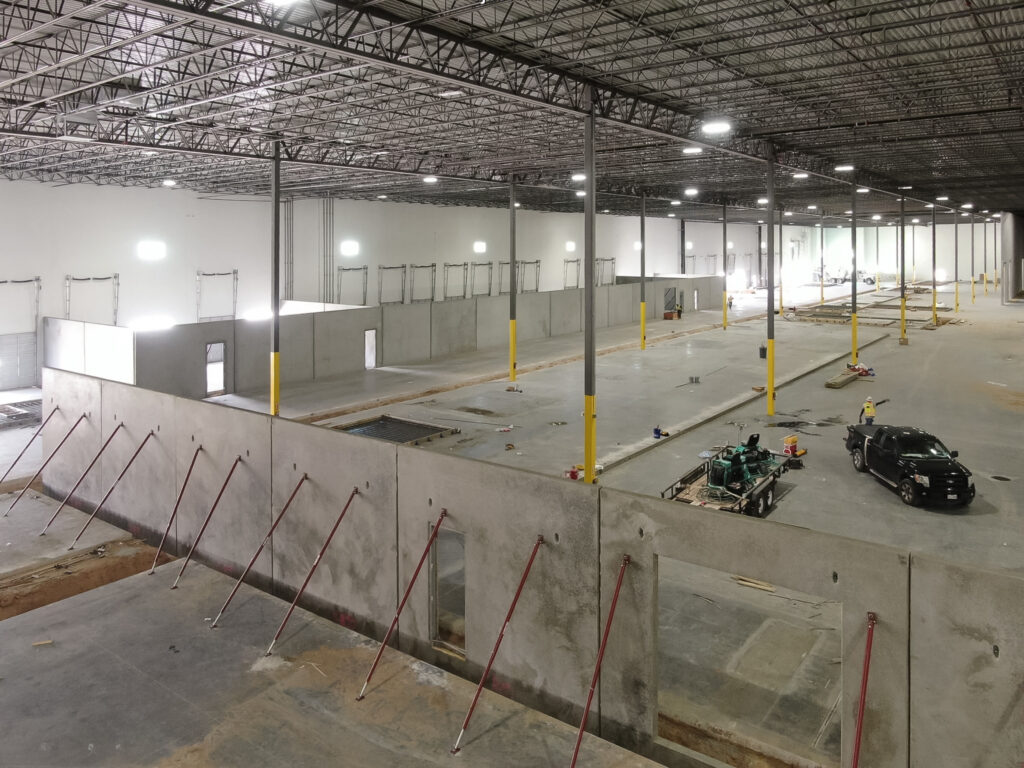
The idea sat in the back of my mind until Jarrod Portelance at Harvey Cleary called about an advanced manufacturing project in El Paso. The job required hard walls to full height, and Jarrod remembered the hybrid system from our earlier conversations. The project had originally called for CMU, but with limited block labor in the region, it would have been slow and messy. Because the CMU design already included a below-grade foundation, adapting it for tilt-up was seamless. We cast small panels inside the building, using standard and top picks, adjusting sizes and weights for efficiency. It went up fast, clean, and precisely as planned.
The result confirmed what I suspected: Partial-height tilt-up demising walls offer the perfect balance of durability, security, and economy. The concrete base stands up to constant impact and wear, while the light framing above allows for utilities and design flexibility. Keeping the concrete in that range of 12 to 16 feet provides the durability developers want without the full-height complexity that drives costs through the roof.
Innovation like this is what keeps us pushing at VEMAC. Being named the 2023 TCA Contractor of the Year was an incredible honor but, to me, it reflects a mindset more than an award—one rooted in curiosity, collaboration, and constant improvement. This idea started as a conversation about costs and turned into a real, buildable system that’s now finding traction. That’s the beauty of tilt-up—it rewards those willing to rethink the ordinary.
Contributors: Jeff Hackmeyer (Blue Road Investments); Robert Jackson (Raith Capital); Chris Malooly (EPX); Michael Stubbs (Stubbs Engineering); Jarrod Portelance (Harvey Cleary)

Be the first to comment