
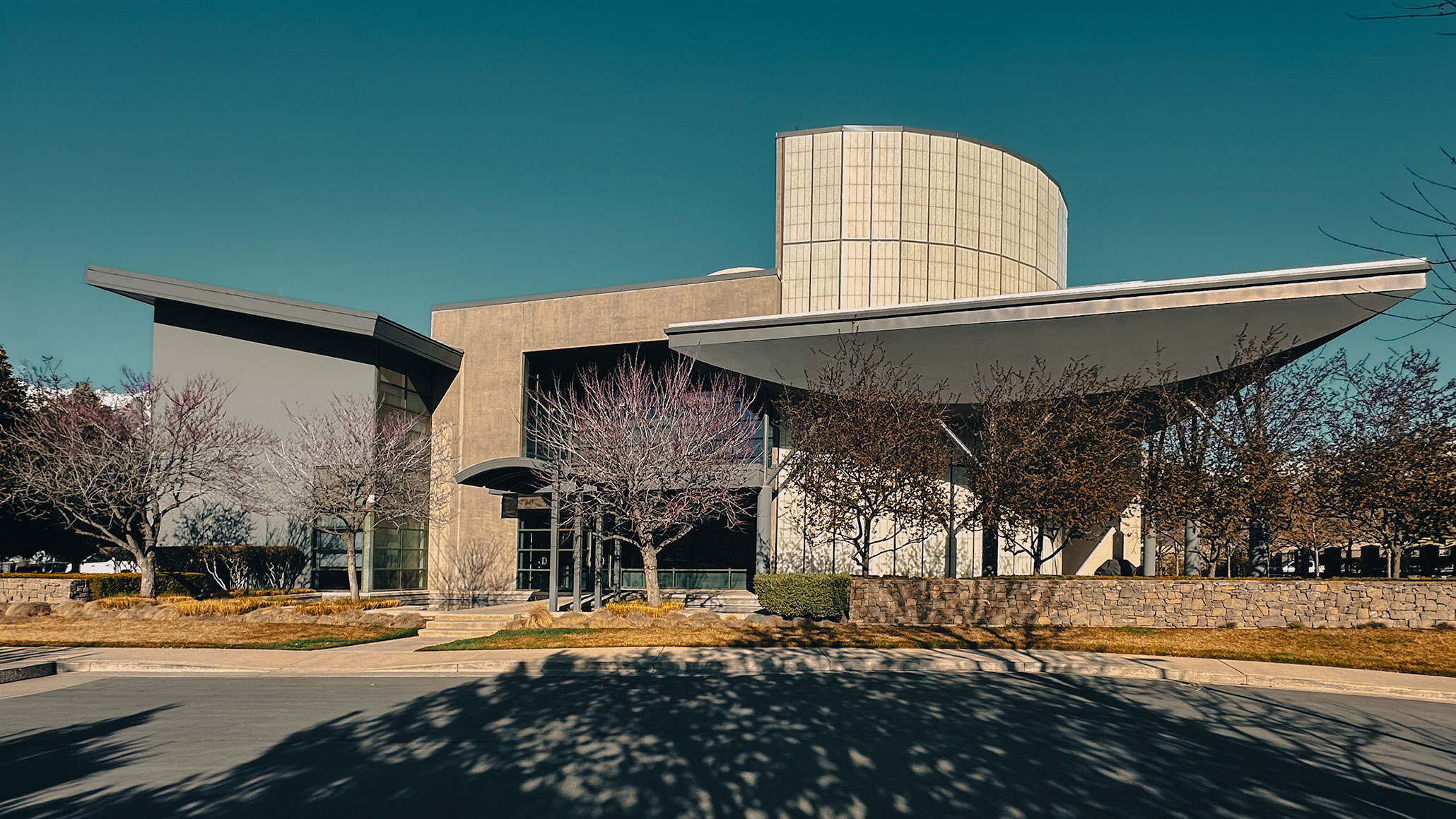
Current condition of the Clyde Companies Corporate Office Building, with mature landscaping, updated color treatments, and areas of re-exposed concrete revealing the original material expression. Photograph by James Williams, PE, CE, SE, LEED AP, FTCA.
Twenty years ago, the Clyde Companies Corporate Office Building set a different direction for tilt-up construction.
At a time when the system was still largely associated with warehouse and distribution facilities, this project demonstrated something more—how tilt-up could support architectural ambition, structural performance, and long-term workplace value within a single building.
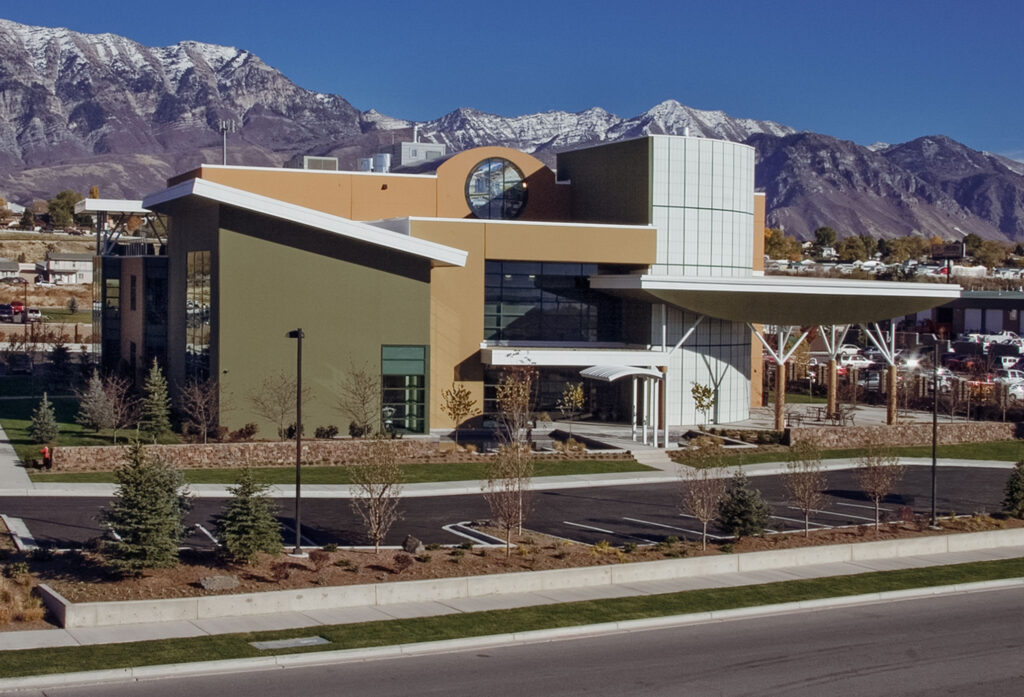
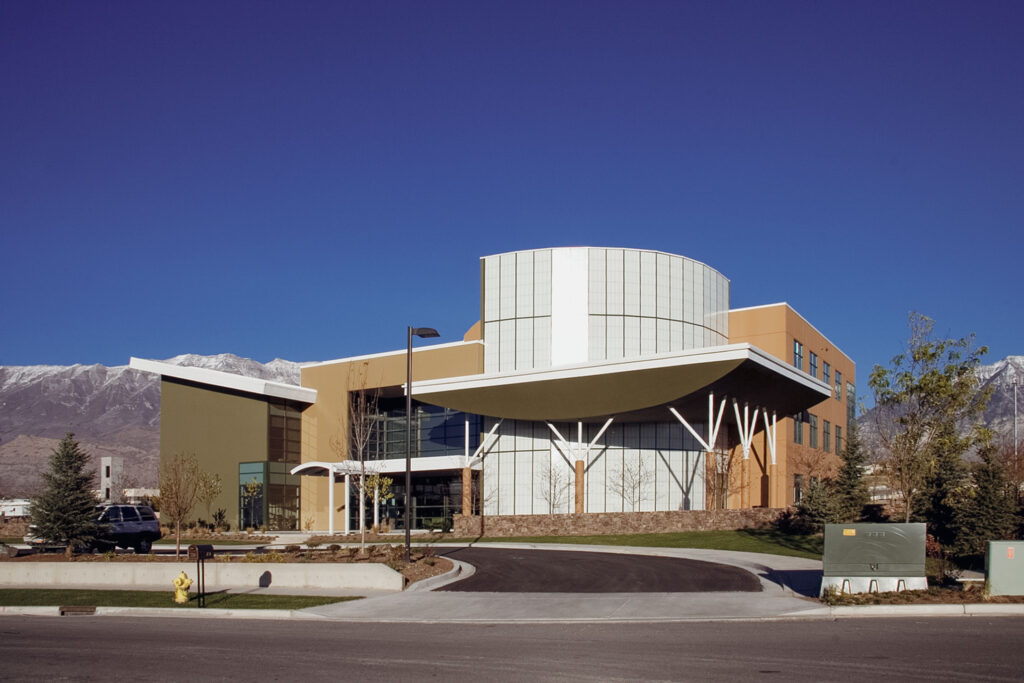
Exterior view of the Clyde Companies Corporate Office Building from the original award submittal, with the Wasatch Mountain range informing orientation, glazing, and response to light.
Located in Orem, the three-story office building was the first of its kind in the state and among a small number nationally to position tilt-up within a Class A office environment. Its significance was not just in its height or scale, but in how the system was used—and how those decisions continue to perform today.
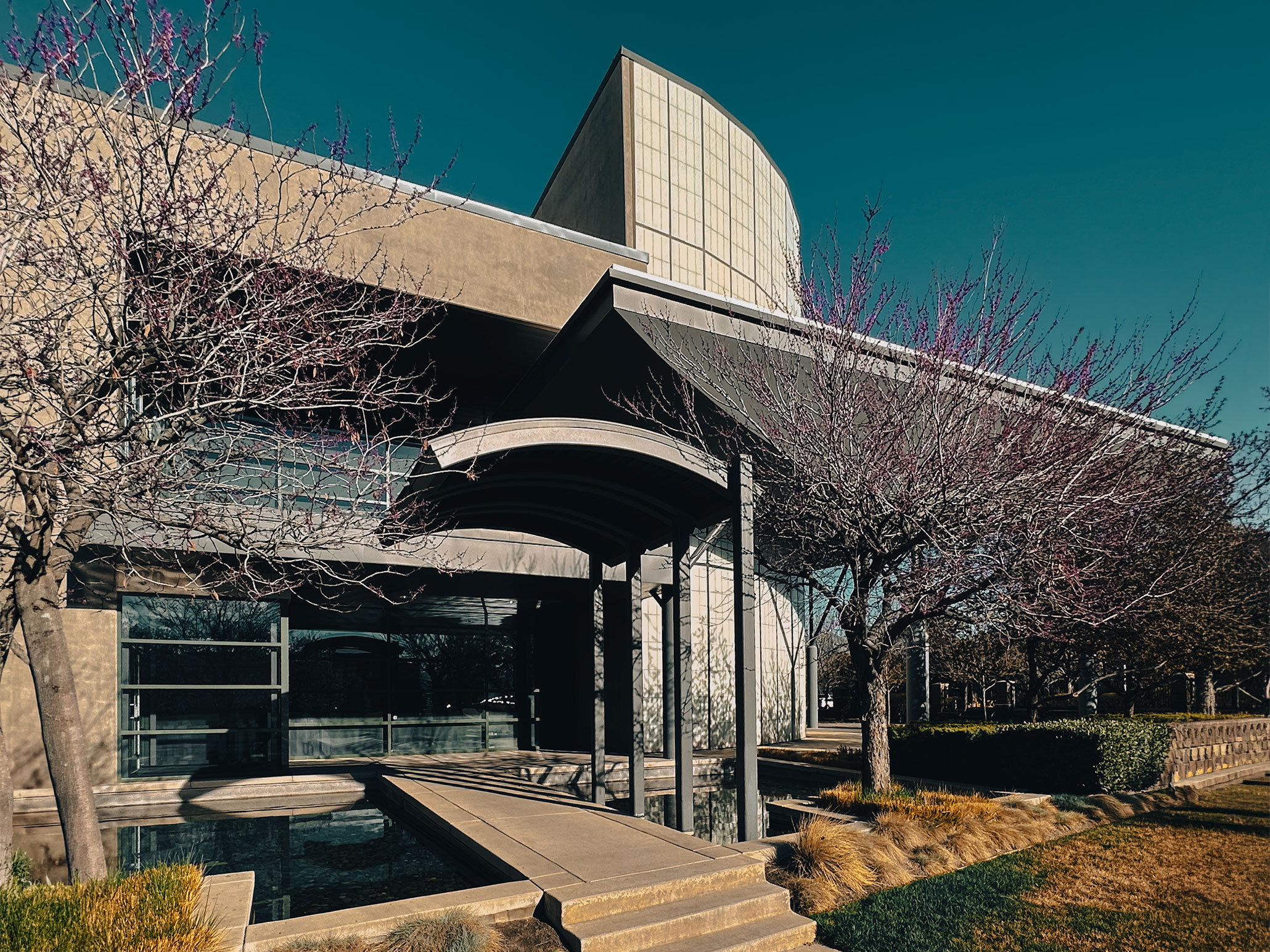
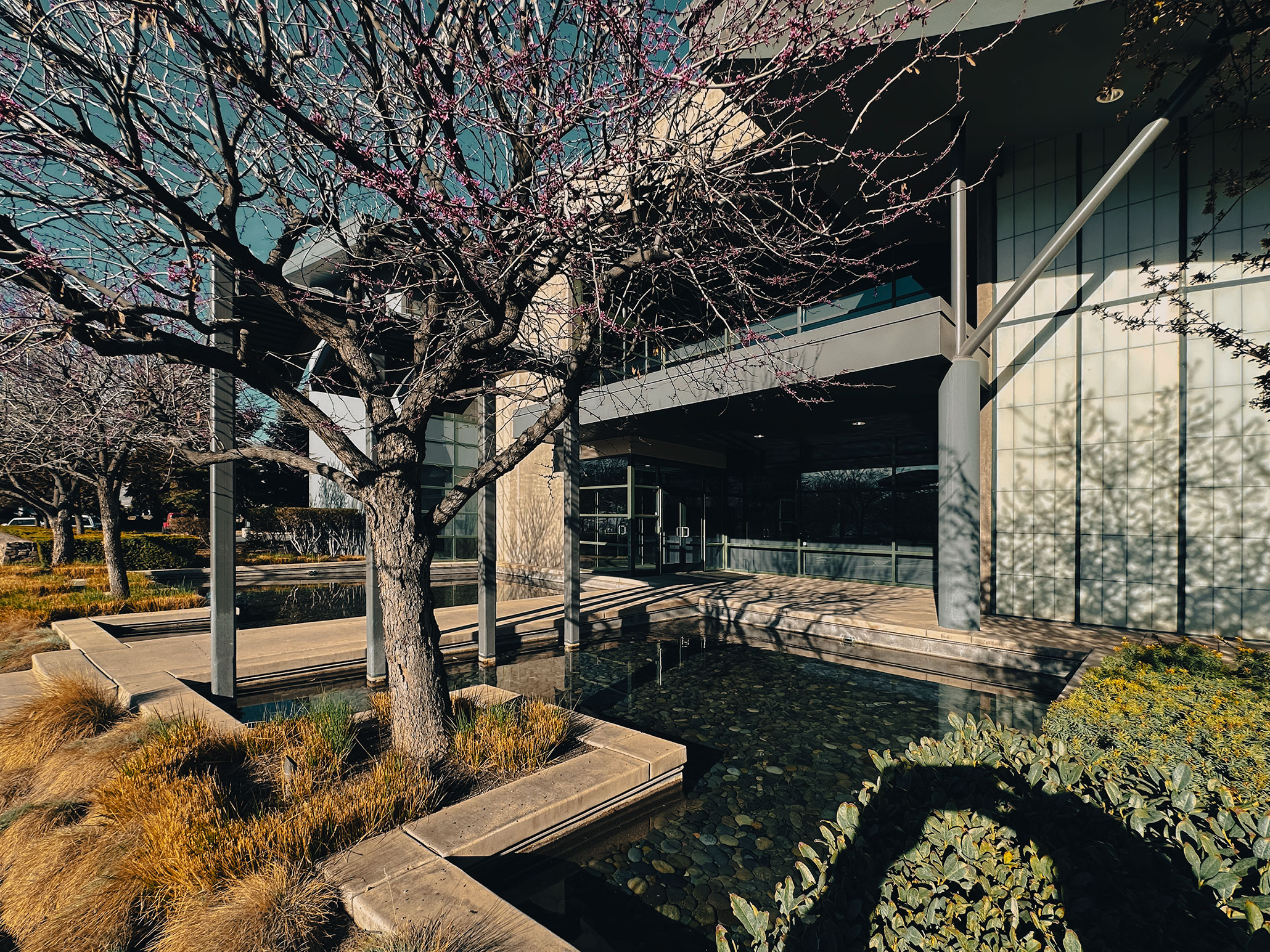
Reflecting pool and entry sequence in current condition, with mature landscaping and updated finishes reinforcing the project’s long-term spatial and material character. Photograph by James Williams, PE, CE, SE, LEED AP, FTCA.
Large portions of the wall panels were intentionally removed—reducing seismic mass while opening the building to light, views, and flexibility. Panels were offset, shaped, and detailed to create a sense of lightness, with continuous glass at corners and carefully framed openings. The tallest panel reached over 50 feet in height while maintaining a slender profile far exceeding typical height-to-thickness ratios.
Inside, the building is organized around a 50-foot-tall atrium, bringing daylight deep into the structure through an 18-by-40-foot skylight. Circulation elements—glass stairs, suspended walkways, and a bridge-like entry—reinforce the openness of the space while maintaining the structural clarity of the exposed concrete system.
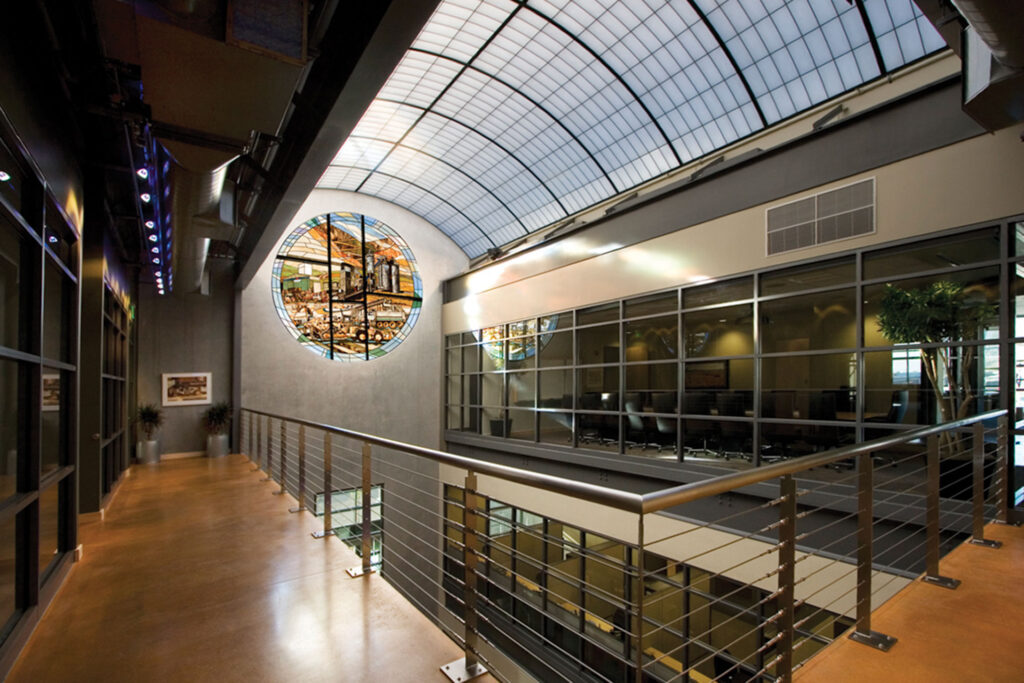
Atrium of the Clyde Companies Corporate Office Building, documented in the original submittal for the Tilt-Up Concrete Association Excellence in Achievement Award, illustrating the 50-foot volume, daylighting strategy, and exposed structural concrete.
The project extends beyond structure into experience. A reflection pool at the entry, engineered similarly to a water tank, contributes to both performance and atmosphere. Exterior canopies extend dramatically, appearing to float while providing critical solar control. Material choices—including exposed, stained, and sandblasted concrete—give the building texture and permanence without reliance on applied finishes.
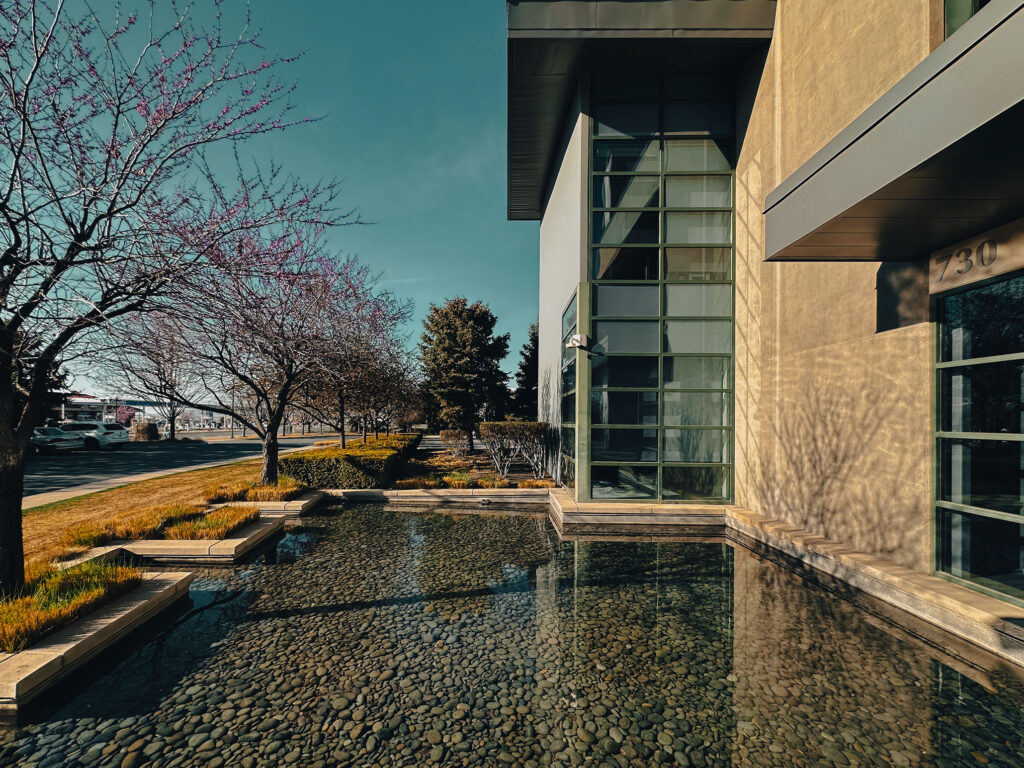
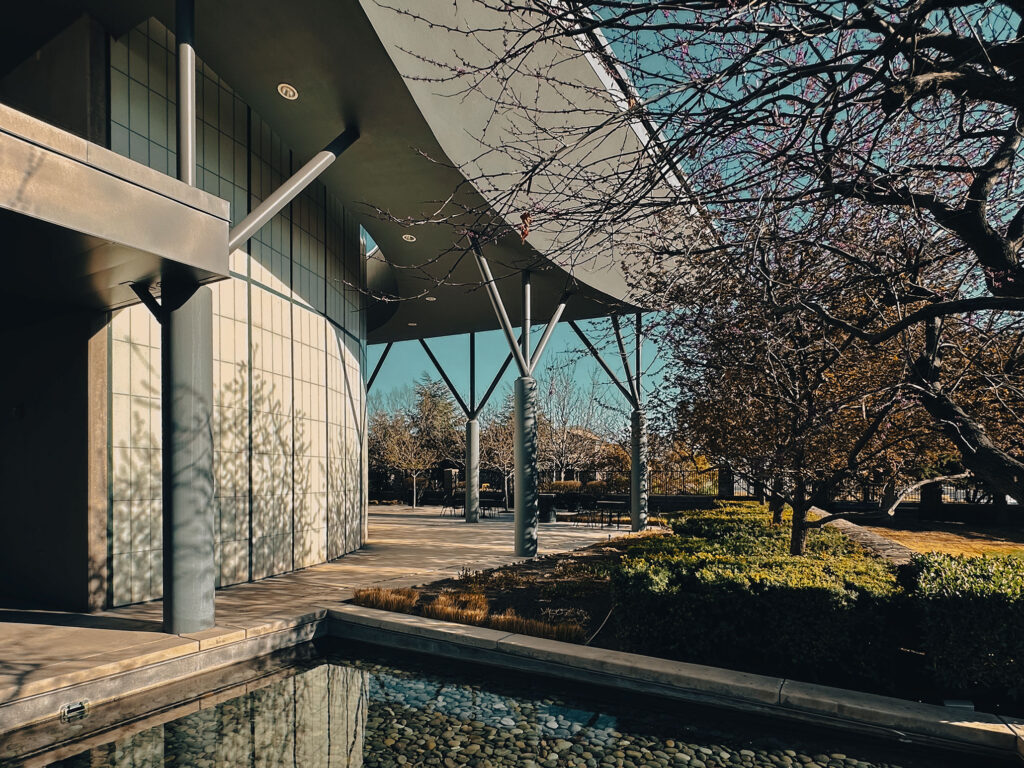
Reflecting pool and adjacent concrete wall in current condition, with mature landscaping reinforcing the relationship between material expression and site over time. Photograph by James Williams, PE, CE, SE, LEED AP, FTCA.
What distinguishes the project today is not simply what it achieved at completion, but how clearly those decisions have held up over time.
The building remains functional, adaptable, and visually relevant. Its use of natural light, orientation, and shading continues to support energy performance. Its open plan allows flexibility across tenants and evolving needs. And its expression of structure—clear, exposed, and intentional—still aligns with contemporary architectural priorities.
This is where tilt-up’s potential becomes most evident—not at completion, but in performance over time.
Project Team
Architect: AE Urbia
General Contractor: Robinson Brothers
Notable Awards
- 2008 Tilt-Up Concrete Association Excellence in Achievement Award
- 2008 American Concrete Institute Award of Excellence
- 2007 Associated General Contractors Building Project of the Year ($10–$25M)
- 2007 National Council of Structural Engineers Associations National Finalist
- 2007 Associated Builders and Contractors Honor Award
- 2007 People’s Choice Award (5th Place)

Be the first to comment