
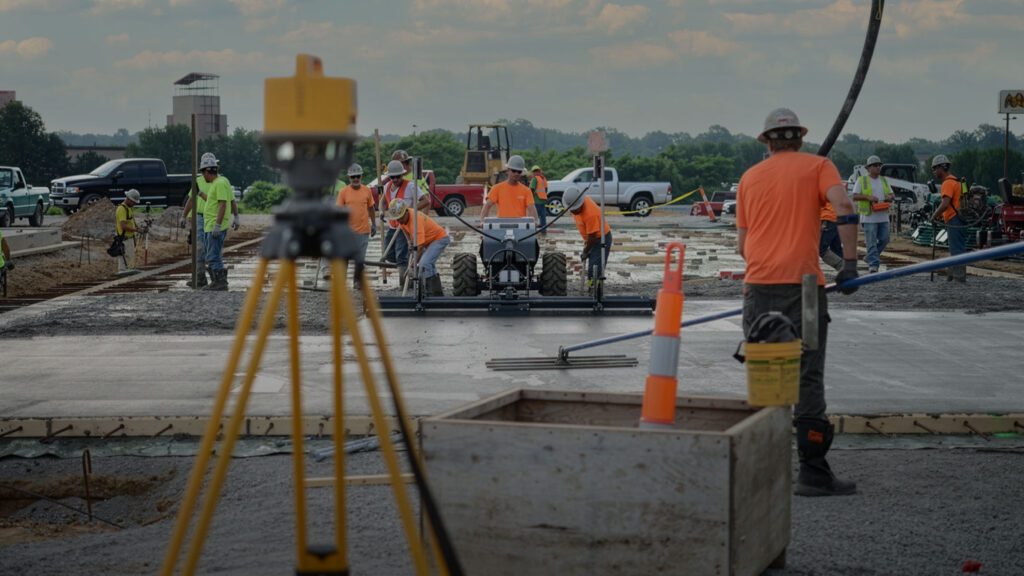
In many regions of the United States, competition in offices, warehouses, and logistics markets continues to intensify. With a large percentage of these buildings being delivered on a speculative basis, “speed to market” has become a defining characteristic of contemporary project delivery, often providing developers with a competitive advantage or sometimes serving as a necessity for viability.
As schedules continue to compress, construction activities that have traditionally occurred with greater separation are increasingly overlapping. Recent observations on select projects suggest that this overlap may influence slab-on-grade behavior in ways that warrant closer examination. While identifying potential effects and contributing factors, this article highlights considerations related to scheduling and sequencing but does not attempt to draw definitive conclusions.
In the southern part of the United States, the common construction sequence for tilt-up projects is typically as follows:
- Install building foundations.
- Construct the slab-on-grade, with the exception of leave-outs.
- Form panels on the slab and casting beds.
- Place concrete for panels.
- Lift and erect panels with temporary braces.
- Erect structural steel and roof deck.
- Place concrete in leave-outs.
- Remove braces.
With an emphasis on speed to market, schedules have increasingly condensed the time between slab placement and panel forming and casting. On some projects, concrete contractors are being scheduled to begin forming panels as early as one to three days after slab placement. Forms for perimeters, openings, and reveals or formliners are often secured to the slab using adhesives or mechanical fasteners. Reinforcing steel and embeds are placed shortly thereafter, with concrete placement for panels occurring as early as four days after slab placement.
Slab-on-grade performance is widely regarded as one of the most important attributes of warehouse and logistics facilities, as it directly affects tenant use and long-term functionality. As a result, slabs typically receive significant attention during design and construction. Guidance for slab design and construction is provided by ACI Committee 360, Design of Slabs-on-Ground, and ACI Committee 302, Guide for Concrete Floor and Slab Construction. Engineers and contractors generally follow these guides, along with refinements that have evolved since their most recent publication.
With accelerated construction schedules, questions have emerged regarding whether certain schedule-driven practices may introduce unintended consequences. These questions include whether forming and casting panels shortly after slab placement may restrain slab shrinkage, whether curing conditions are affected, whether slabs are being loaded earlier than anticipated, and whether these factors contribute to increased cracking. Observations from a recent project provide some context for exploring these questions.
Project Considerations
A project in the Houston area included two buildings, each approximately 500,000 square feet in size. Some funding-related issues arose after construction began, resulting in the concrete contractor being locked out of the site for approximately 14 months. Panel forms remained in place during this period. For both buildings, the main slab-on-grade areas (excluding leave-outs) had already been placed before construction halted. For one building, all panels except for stacked panels had been formed and cast on the slab. Forming for these panels began two days after slab placement, and panel concrete was placed six days after slab placement.
Upon returning to the site, the contractor observed cracking in the slab-on-grade adjacent to the panels. No comparable cracking was observed in the slab-on-grade of the adjacent building, where no panels had been formed or cast. Based on these observations, it appeared that the presence of panels on the slab of one building may have influenced the formation of cracks in the slab-on-grade.
Several cracks were observed adjacent to panels. While crack widths varied, the cracks were typically oriented perpendicular to the panels and extended to the panel forms. In addition, a crack that initially appeared to terminate at the panel edge actually extended further—a fact that was visible only after the panel was lifted.
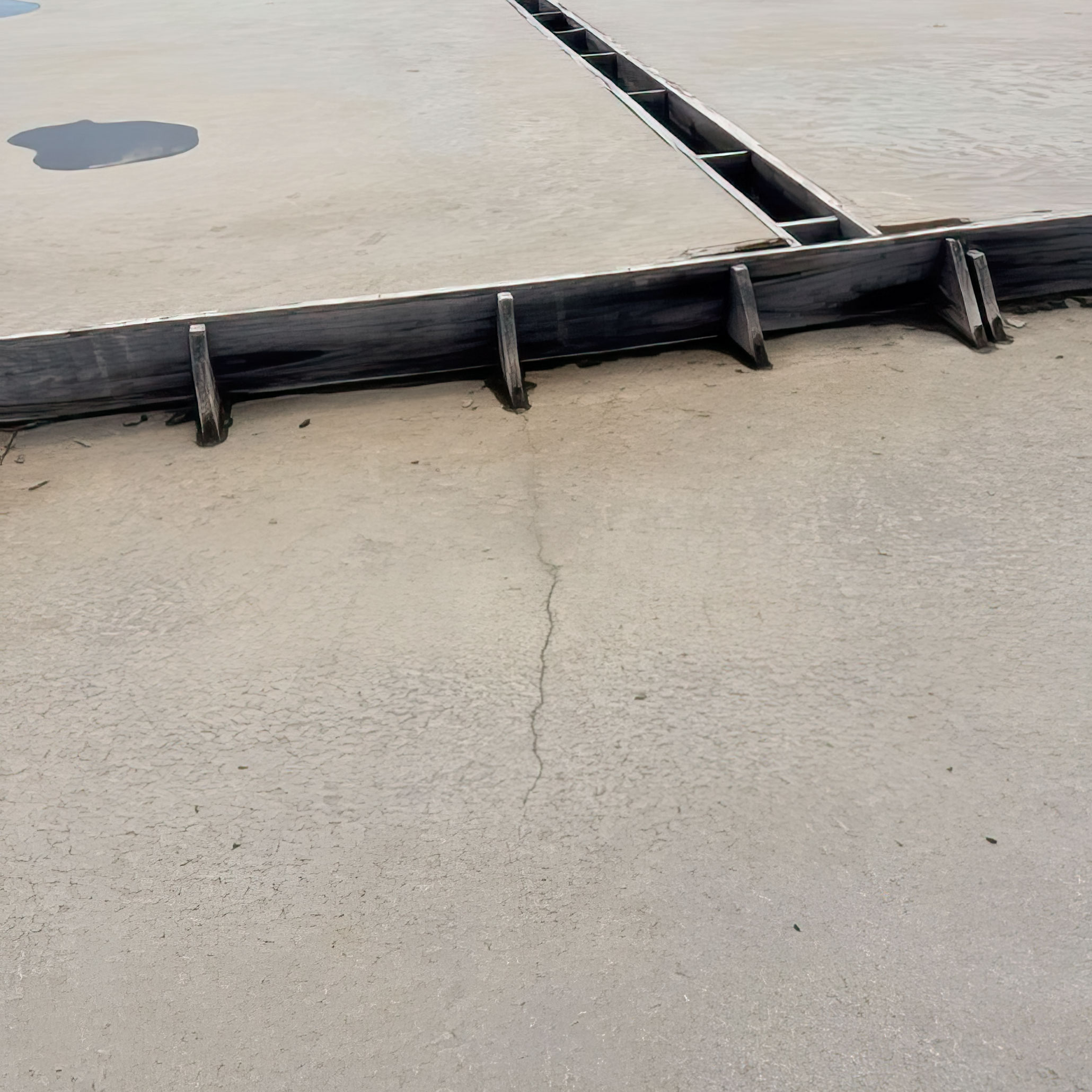
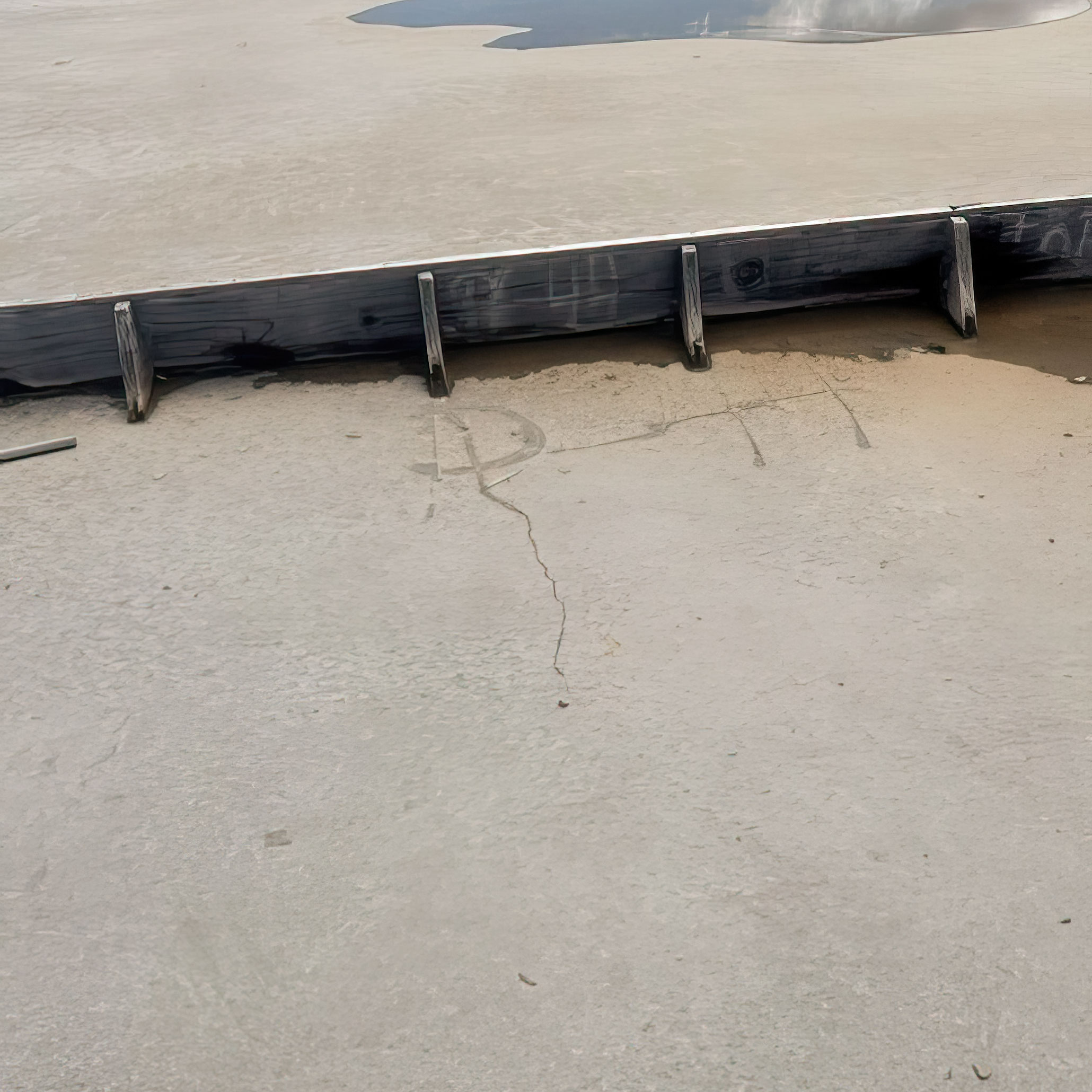
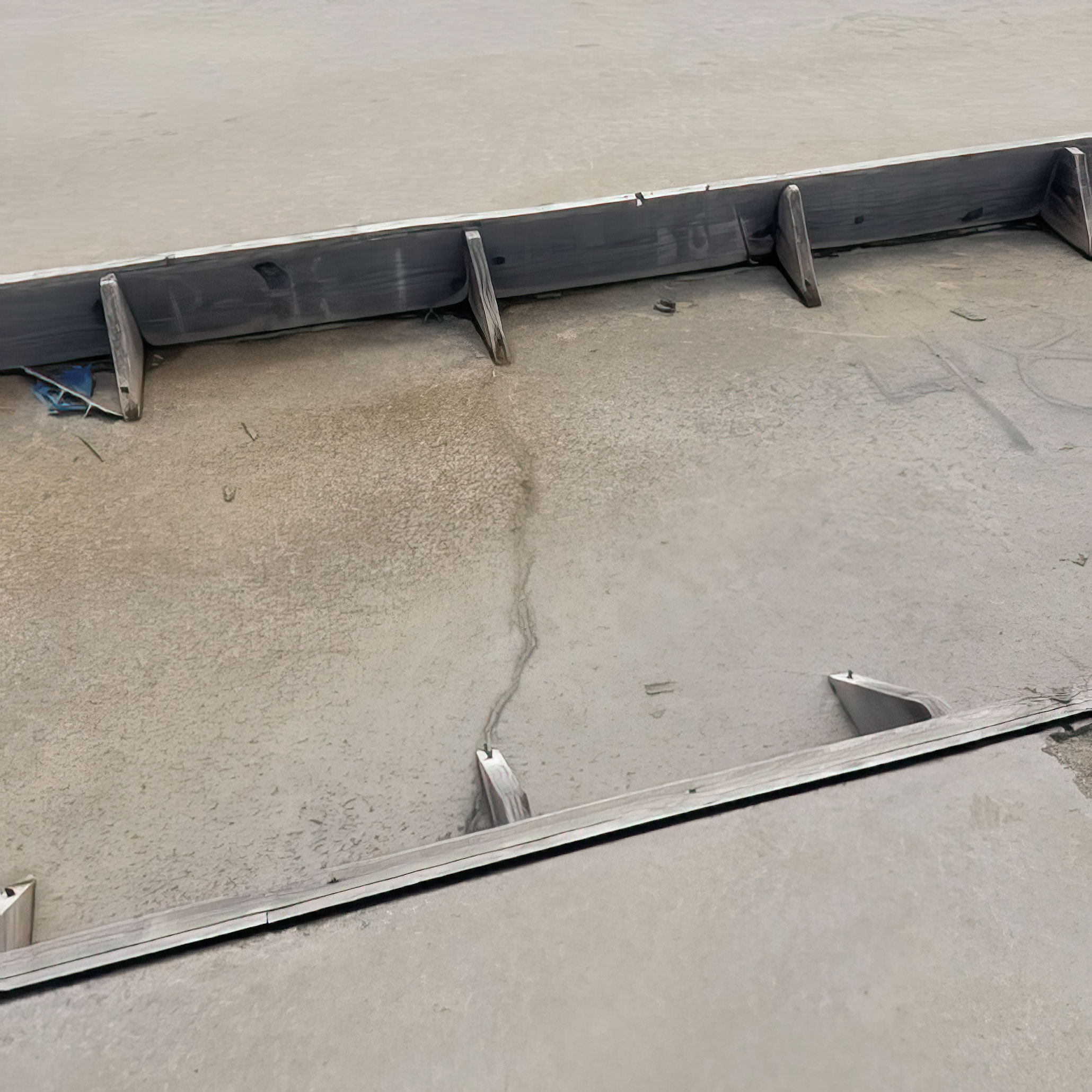
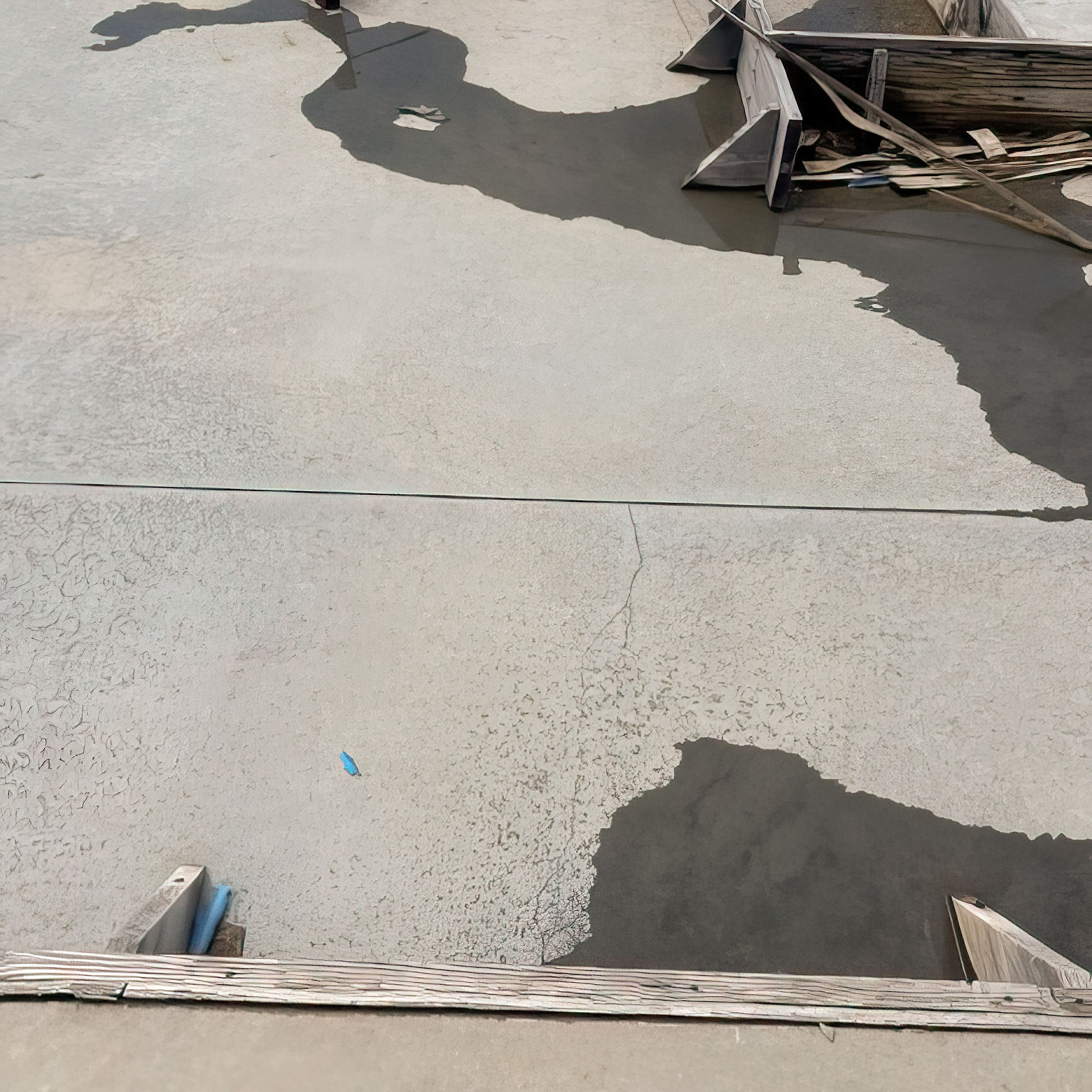
With two adjacent slabs of similar size and construction, differing primarily in the presence or absence of cast panels, the project presents a useful opportunity for observation. Several factors warrant consideration, including early loading, curing conditions, and potential effects on slab shrinkage. Unfortunately, the extended construction delay limited the ability to make interim observations that may have helped clarify contributing factors. As a result, definitive conclusions cannot be drawn from these observations alone.
One consideration is the impact of panel casting on slab curing when panels are placed shortly after slab placement. Curing is intended to promote moisture retention during hydration, allowing concrete to achieve its design strength while reducing the risk of plastic shrinkage cracking. Slab-on-grade curing is most commonly accomplished using dissipating curing compounds meeting ASTM C309 requirements, though wet curing is occasionally specified. On accelerated projects, wet curing is generally impractical as forming activities require removal of curing blankets or coverings.
In recent years, some manufacturers have proposed the use of bondbreakers as curing compounds. While these products do not meet ASTM C309 requirements, vendors note that the ASTM test methods are not specifically intended for hard-troweled warehouse slabs and site testing indicating comparable performance under such conditions. On the project referenced, the curing compound used was W. R. Meadows 1100 Clear, and the bondbreaker was Dayton Superior J-6.
Using the slab-on-grade as a casting surface for panels is a long-established practice. With a bondbreaker applied above the slab, the slab beneath the panels typically experiences favorable curing conditions as it is protected from weather exposure and ultraviolet radiation. It is common to observe retained moisture on the slab surface when panels are lifted, which indicates continued hydration. This condition was observed on the referenced project. As such, it appears unlikely that early panel placement adversely affected slab curing, suggesting that curing was not a primary contributor to the cracking that was observed.
Shrinkage behavior of the slab-on-grade is another consideration. Concrete continues to shrink over time, though at a decreasing rate. Contraction joints are typically sawcut into slabs to control shrinkage cracking, with early-entry saws used once the concrete can support foot traffic and equipment without damage. Proper activation of these joints is essential to accommodate shrinkage and minimize random cracking. Reinforcement is also important, and reinforcing steel crossing sawcut joints is typically limited to 0.10% to allow joint movement. On this project, the slab reinforcement consisted of No. 3 bars at 18 inches on center in a six-inch-thick slab.
Panel formwork is commonly secured to the slab using adhesives or mechanical fasteners, depending on regional practice. Formwork often crosses contraction joints. Given the flexibility of typical dimensional lumber formwork and the limited stiffness it provides across joints, it is unlikely that the formwork itself significantly restrained slab shrinkage.
Panels typically remain on the slab-on-grade for periods ranging from approximately seven to 35 days before erection. Panels are commonly cast no earlier than five days after slab placement, and in most cases contraction joints activate before panel forming begins. Under typical conditions, it is therefore unlikely that the presence of panels interferes with joint activation. In this case, however, the extended duration that panels remained on the slab distinguishes the project from typical construction conditions.
The weight of panel concrete also warrants consideration. A 10-inch-thick panel imposes an additional load of approximately 125 PSF on the slab-on-grade. While the bondbreaker allows relative movement between the panel and slab, some friction exists between surfaces. It is unlikely that this friction would significantly restrain slab shrinkage; this is similar to conditions where concrete is placed over a vapor retarder. Nevertheless, the extended duration of loading may be a contributing variable.
Environmental factors were also considered. Houston’s climate includes high temperatures, humidity, and significant annual rainfall. Portions of the slab that were beneath panels were shielded from ultraviolet exposure and temperature fluctuations, while adjacent exposed slab areas experienced greater environmental variation. This differential exposure may have resulted in nonuniform volumetric changes, potentially contributing to cracking adjacent to panels. A comparable condition exists where interior slabs transition to exterior slabs; this is where construction joints are commonly provided to accommodate differential movement.
Subgrade conditions in the Houston area typically consist of highly plastic clays that expand and contract with moisture changes. While prolonged exposure to weather can result in soil movement, both slabs were subjected to similar environmental conditions. Absent differing edge conditions or drainage, subgrade movement alone does not appear to fully explain the cracking pattern that was observed.
Early-age loading remains another consideration. Concrete strength development varies with mix design, cement type, and curing conditions. At three days, concrete may reach approximately 40% of its design strength; at seven days, this increases to approximately 65%. The use of supplementary cementitious materials or Type IL cement may further influence early strength gain. Loading slabs-on-grade at early ages can affect long-term performance, potentially contributing to cracking, curling, or durability concerns.
In addition to panel loads, accelerated schedules often result in other materials being stored on slabs earlier than was done in the past. Structural steel, bar joists, and deck materials may be delivered and staged on slab areas to accommodate fabrication schedules. On one project, bundles of bar joists exceeding 55 kips were observed on a slab five days after placement; these were supported on timber skids. Equipment used to transport these materials further contributed to early loading. Activities such as these may increase the likelihood of slab cracking and related performance issues.
Thoughts on the Project Information
The observations from the referenced project raise more questions than definitive answers. While slab cracking was clearly observed adjacent to panels, the specific cause cannot be conclusively identified. Curing, shrinkage, environmental exposure, and early loading were each considered as potential contributing factors. The extended construction delay limited opportunities for interim observation that may have clarified the timing and progression of cracking.
While laboratory testing could be developed to simulate certain aspects of this project, the unusual conditions—particularly the extended duration of panel loading—limit the applicability of such testing to typical construction practice. As such, the value of extensive testing under conditions that rarely occur may be limited.
Of the factors considered, early loading remains one of the most relevant for broader industry discussion, particularly given ongoing pressure to accelerate construction schedules. While the project does not definitively establish early loading as the cause of cracking, it also does not eliminate that possibility.
What Is Next
Emphasis on speed to market is expected to continue. In addition, unplanned delays such as weather can further compress schedules, increasing pressure to recover lost time. As a result, slab placement may occur under less favorable conditions, or slabs may be subjected to early loading from panel construction, material staging, or equipment traffic.
Potential mitigation measures warrant consideration. Increasing slab compressive strength could improve early-age performance but introduces cost and sustainability concerns. Higher cement content increases carbon emissions, and industry discussions already question whether typical 28-day strength requirements for warehouse slabs align with actual service conditions. As such, increasing slab strength is unlikely to be a widely adopted solution.
Another option is the development of clearer guidance related to construction sequencing and slab loading. ACI Committees 302 and 360 could potentially address these issues through future guidance, as could the American Society of Concrete Contractors (ASCC). Without such guidance, concrete contractors may seek increased allowances for acceptable cracking, particularly where accelerated schedules are imposed. ACI 302 currently anticipates cracking in zero to 3% of slab panels, and there is growing discussion regarding whether this range adequately reflects current construction practices.
Discussions regarding slab cracking are becoming more common toward the end of projects. While many cracks do not affect structural performance, they may raise aesthetic or marketability concerns for developers. Repair thresholds are often established based on crack width or location, but repairs themselves can draw attention to cracking. Increased early-age loading may therefore contribute to additional disputes and remediation efforts.
Regardless of future guidance, project teams can address these issues proactively. Preslab meetings on tilt-wall projects should include discussions of schedules, anticipated loading, planned staging areas, and environmental conditions during placement. Expectations regarding cracking and repair thresholds should also be discussed in advance. These conversations can help align expectations and reduce disputes at project closeout.
Recent tilt-wall projects have highlighted the challenges associated with accelerated construction schedules and their potential influence on slab-on-grade performance. While speed to market remains a defining feature of contemporary construction, thoughtful coordination and early dialogue can help teams manage its implications and achieve outcomes acceptable to all parties.
By Don Greive, PE
Chief Executive Officer
Pinnacle Structural Engineers
David Buzzelli
Vice President
Texas A&M Concrete LLC
The authors acknowledge the contributions of Derick Rainey, Vice President – Sales, Nox-Crete.


Be the first to comment