
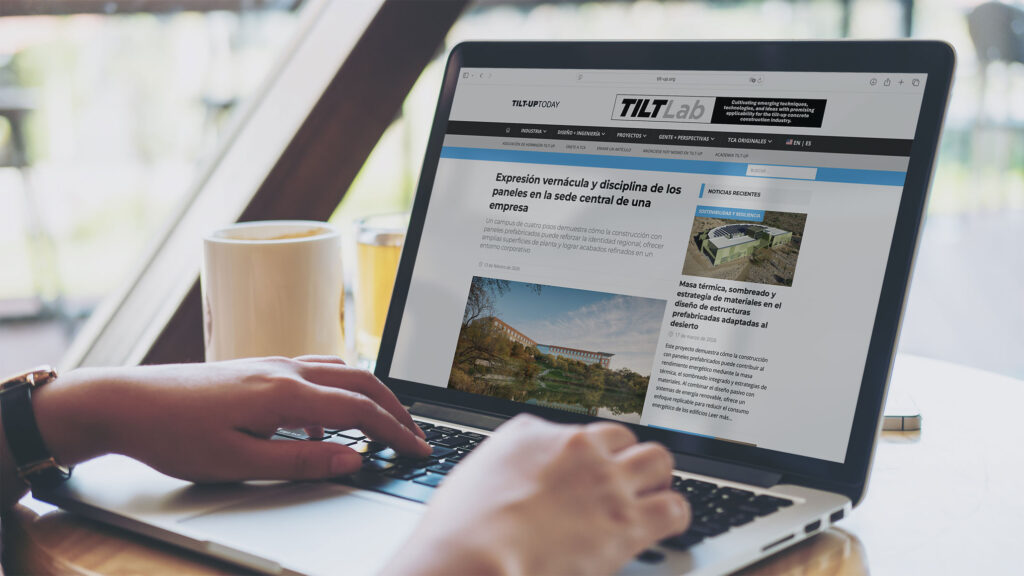
Tilt-Up Today now presents all editorial content in both English and Spanish within a single, unified article. This update reflects an intentional shift in how information is delivered, ensuring that technical knowledge is more accessible, consistent, and aligned with the needs of a growing and diverse audience across the tilt-up industry.
Evolving beyond parallel publishing
Historically, Tilt-Up Today has recognized the importance of bilingual communication. In 2014, the publication introduced a format presenting English and Spanish content side by side in its print edition, reflecting the growing role of Spanish-speaking professionals across the United States and Latin America. That effort established a foundation for broader accessibility and reinforced the importance of delivering technical information in multiple languages.
In digital publishing, this commitment continued through the use of separate Spanish-language articles or linked translations. While this approach extended reach, it introduced challenges in continuity, navigation, and content management. Readers were required to move between versions, and updates or revisions were not always synchronized across languages. This separation limited the ability to present a cohesive and unified editorial voice.
As the tilt-up community continues to expand—particularly across the United States, Mexico, and Latin America—the need for a more integrated model of communication has become increasingly clear.
A unified structure for shared understanding
The current approach places English and Spanish within the same article through a language toggle, allowing readers to seamlessly access content in their preferred language without leaving the page. Both versions are published simultaneously, maintaining consistency in structure, formatting, and technical accuracy.
This model reflects a broader commitment to clarity in communication. By aligning language delivery with the expectations of a global readership, the publication supports more effective knowledge transfer across design, engineering, construction, and manufacturing disciplines.
This continued focus is also reflected in the association’s broader engagement with Spanish-speaking markets, including input from international members and advisory groups that have helped shape how technical content is shared across regions.
The approach also mirrors established practices within the Tilt-Up Concrete Association, including the bilingual print edition of Tilt-Up Today, where English and Spanish are presented in parallel. Extending this framework into the digital environment reinforces continuity across platforms and strengthens the accessibility of industry information.
Language as a component of technical clarity
In technical fields such as tilt-up construction, shared understanding depends not only on the accuracy of information but also on its accessibility. Language plays a critical role in how that information is interpreted, applied, and communicated across project teams.
By integrating bilingual access directly into each article, Tilt-Up Today reduces barriers to engagement and supports a more inclusive exchange of knowledge. This contributes to a more cohesive industry dialogue, where professionals across regions can reference the same material with clarity and confidence.
Conclusion
The integration of bilingual publishing within a single article represents a measured evolution in editorial strategy. By prioritizing accessibility, consistency, and alignment with industry practices, this approach strengthens the ability of Tilt-Up Today to support informed decision-making and shared understanding across the global tilt-up community.
Tilt-Up Concrete Association
Be the first to comment