
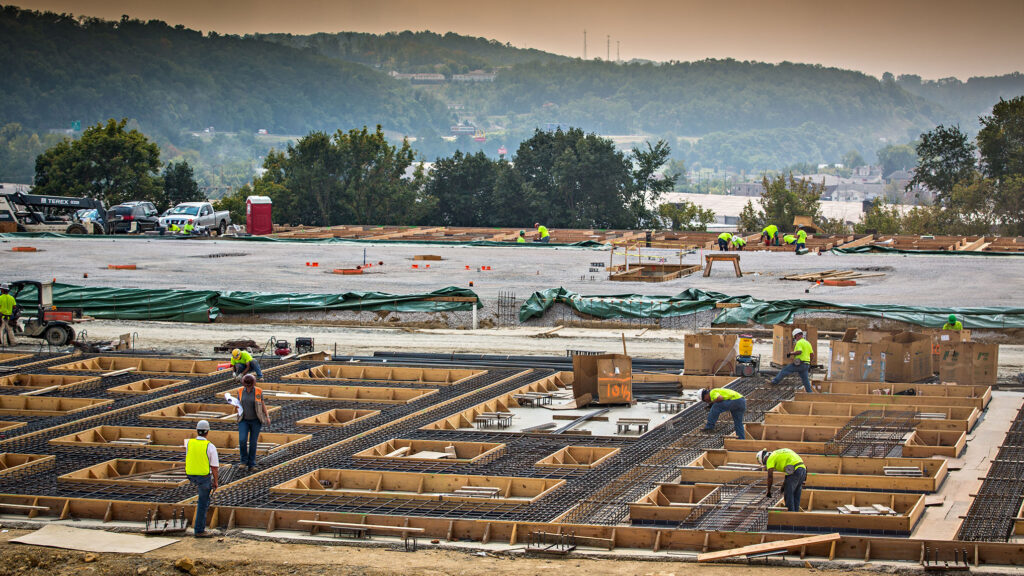
Workers install reinforcing steel and embeds in tilt-up panels prior to placement. Early coordination of materials, mix designs, and construction methods can help project teams reduce environmental impact. Photo by Matthew McFarland
Tilt-up panels are a major building component, and with every project there is an opportunity to consider sustainable options. Discussing options early in design and involving the entire project team, including developer/owner, designers, contractors, and concrete and construction material suppliers, can lead to more sustainable choices with low or no added costs. The following are possibilities that can be explored during the design and construction process.
Think about the entire tilt-up process. The design and construction process should focus on methods and materials which eliminate or reduce environmental impact. Options include exploring alternative materials and systems that might lead to construction efficiencies and reduced material usage. Consider sourcing steel reinforcing and components from more sustainable facilities. Streamline construction with reusable formwork where possible and think about ways to minimize water usage and waste.
Specify performance requirements for concrete mixes. Performance rather than prescriptive specs allows mix designs to be tailored to strength and serviceability requirements and provides flexibility for suppliers to use locally available materials. Request development of trial batches where sustainable mixes are not readily available. Mockups should be provided so contractors learn to work with new mixes, validate their properties, and allow for improvement.
Consider when each concrete member needs to reach the specified strength. This allows for expanded mix options. Timing for slab-on-grade to reach full strength is different from when tilt-up panels need to be strong enough to lift. Construction schedules and processes need to be considered along with final strength requirements. Consider allowing longer than 28 days for concrete to reach specified strength to expand mix design options.
Review the aesthetic impact of various mixes with Owners/Developers. Consider the impact of the concrete mix design on project aesthetics. The concrete mix makeup can impact the finished look and color, which should be understood as decisions are made. A robust discussion of color, finish, and GWP impact of preferred options should be an integral part of the design process.
Look for opportunities to reduce operational energy use. Study the role of insulation and air tightness in the building envelope. Balance of first cost with energy performance and environmental impact should be reviewed by the team as the design develops. For projects that hold off insulation until tenant fit-outs, provide the analysis to Ownership for future implementation.
Set lower embodied carbon targets for concrete. Request Environmental Product Declarations (EPDs) for concrete mixes to allow tracking of progress toward the target. Different concrete members have different specifications and Global Warming Potential (GWP) may vary. Aim for meeting the overall target if not all materials meet the reductions.
Glossary
Embodied Carbon: The carbon impact of a material or product that is associated with its production and construction or installation. At the building scale, a project’s embodied carbon impact is the sum of all the impacts of its components, such as structure, envelope, and interiors.
Environmental Product Declaration (EPD): An independently verified and registered document that communicates transparent and comparable information about life-cycle environmental impact of products.
Global Warming Potential (GWP): An environmental indicator developed to allow comparisons of the global warming impacts of different gases.
Operational Carbon: Carbon impact associated with a building’s day-to-day operations, such as energy usage and water consumption.
Definitions from the Building Transparency Glossary


Be the first to comment