
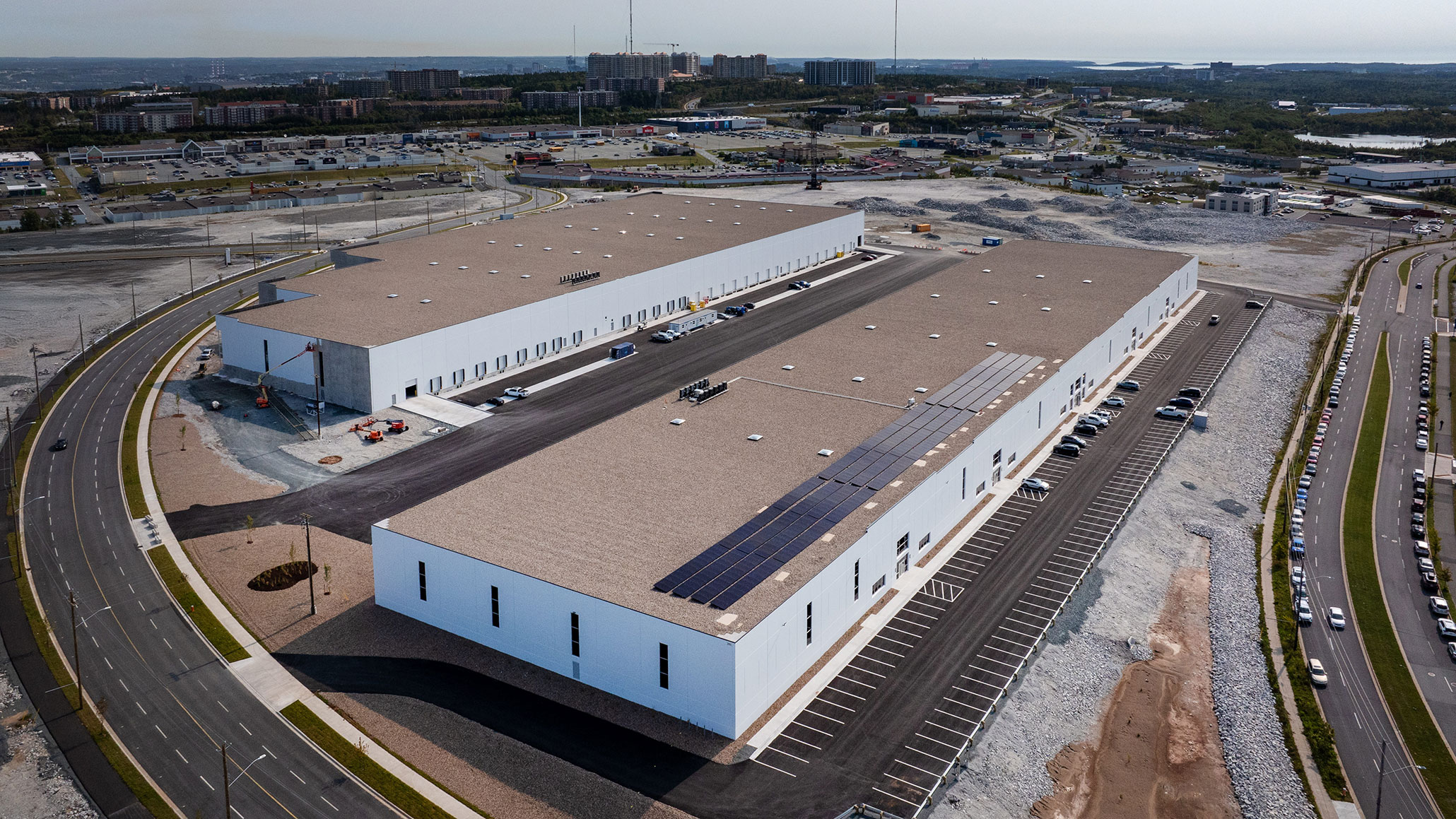
The Julius Boulevard Net Zero Industrial Development in Halifax, Nova Scotia, represents a decisive step forward in sustainable industrial design. Conceived and executed by Lindsay Construction for HPB Bayers GP Inc.—a partnership among Skyline Industrial REIT, Secure Capital, and Leftside Developments—the 400,000-square-foot, two-building complex advances the conversation about how tilt-up construction can deliver measurable carbon reduction, operational resilience, and long-term energy independence.
Completed in 2024, the development has achieved Canada Green Building Council’s Zero Carbon Building Design Certification, confirming that both embodied and operational emissions were systematically minimized and offset through intentional design, material selection, and renewable integration. The project was recognized by the Tilt-Up Concrete Association with the inaugural Excellence in Sustainability + Resilience Award, the Association’s highest designation for environmental performance.
Integrating Structure, Energy, and Environment
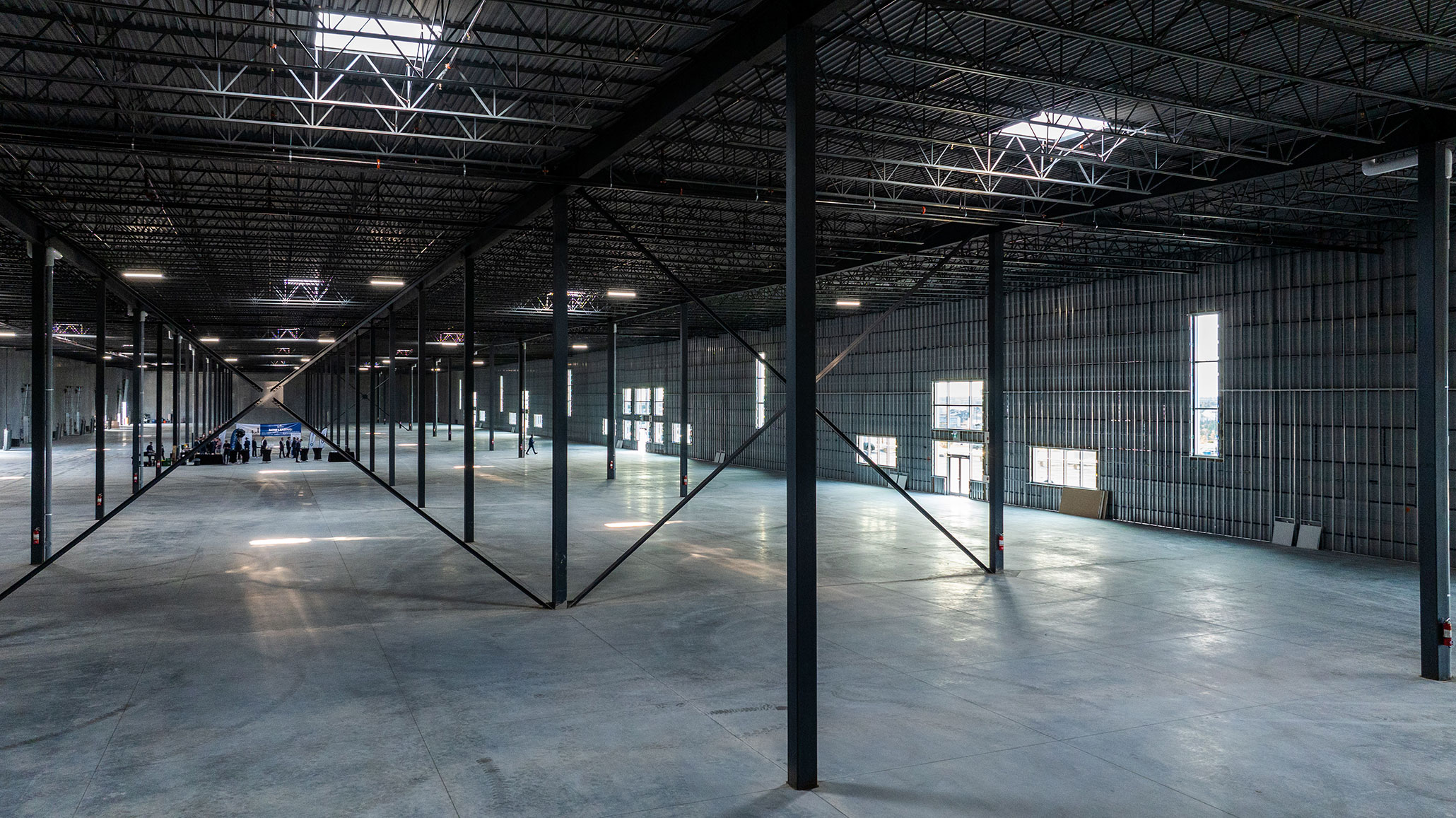
The design-build team pursued a net-zero carbon strategy from first principles: optimizing the building envelope and mechanical systems, reinforcing the roof for renewable energy generation, and leveraging the inherent thermal performance of concrete. The two structures—Building A (230,235 square feet) and Building B (170,445 square feet)—feature 31 to 35 bay doors, 40-foot bay spacing, and clear heights between 32 and 40 feet. This configuration, paired with high-efficiency glazing (U = 0.24, SHGC = 0.35) and R-40 roof insulation, reduced thermal bridging, and stabilized internal temperatures across seasons.
The project’s zero-carbon framework required detailed coordination between envelope design and mechanical systems.
- Base building heating is provided through an in-floor radiant system powered by solar-assisted air-to-water heat-pumps.
- Tenant spaces are supplemented by electric unit heaters during extreme conditions.
- Interlocking in-floor heating zones and local unit heaters for bay doors, which allows for disabling of heating when bay doors are left open, contributing to the overall efficiency of the facility and reducing operating costs.
- The concrete’s thermal mass functions as an energy reservoir
What Is Zero Carbon Building Design Certification?
Awarded by the Canada Green Building Council (CAGBC), the Zero Carbon Building Design Standard validates both embodied and operational carbon strategies during design. To achieve certification, projects must
- quantify embodied carbon through life-cycle assessment;
- offset operational emissions via renewable generation or verified offsets; and
- demonstrate a pathway to long-term zero-carbon operation through envelope, mechanical, and energy-management systems.
Tilt Walls Key to Operational and Embodied Carbon Reduction
The tilt walls were at the center of the project’s embodied y operational carbon reduction strategies.
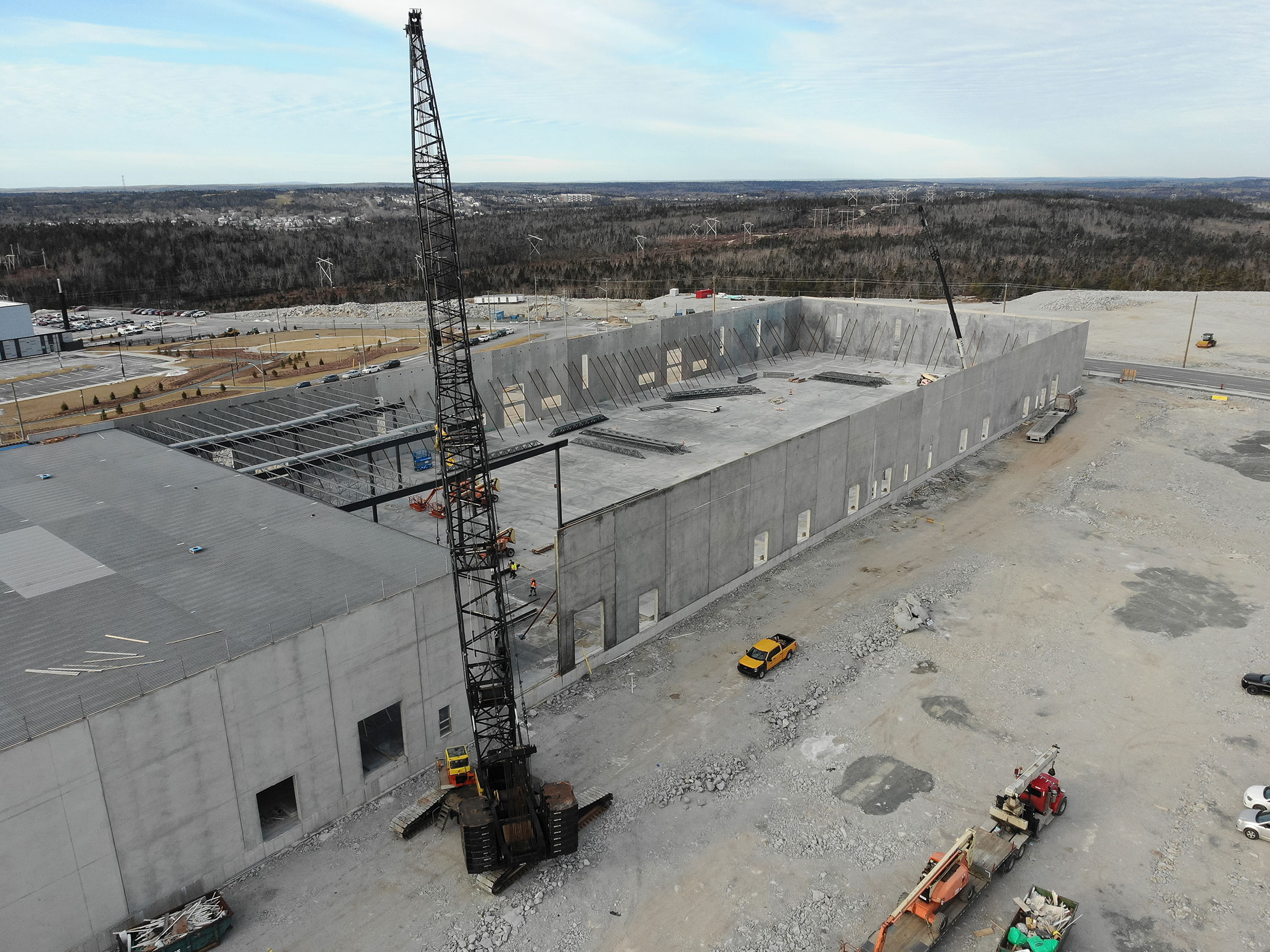
Prior to construction, the design and construction teams performed iterative analyses on the concrete/insulation wythe assembly to hone performance, balancing constructability, passive thermal mass, and structural robustness. This resulted in a 15-foot tilt-up wall assembly: a 9-inch structural wythe, 3-inch XPS insulation layer, and 3-inch nonstructural face wythe. The assembly has an R-30 overall rating. The panels were designed as noncomposite to improve constructability and allow independent optimization of thermal and structural behavior.
Previous buildings this team had constructed typically employed four feet of insulation; however, the analyses demonstrated diminishing returns of thermal performance beyond three feet—with the extra one foot of insulation providing roughly only 5% improvement. This, coupled with the fact that going from three feet to four feet of insulation required a substantial increase in the amount of connecting pins between wythes drove the team to choose the 9”/3”/3” assembly.
Reducing insulation may seem counterintuitive to energy efficiency. In this scenario, data-driven modeling quantified the delicate balance between passive thermal mass and reduction of active HVAC needs. Modeling confirmed interior temperatures could remain within operational ranges for several days during power interruptions—an increasingly vital performance attribute in the context of grid resilience y a testament to robust passive design strategies.
Mix designs incorporated supplementary cementitious materials (SCMs) such as fly ash and slag to reduce Portland-cement content—the principal source of concrete’s carbon footprint. Although environmental product declarations were not available for all components, Lindsay Construction worked directly with regional suppliers to validate carbon-conscious batching and sourcing.
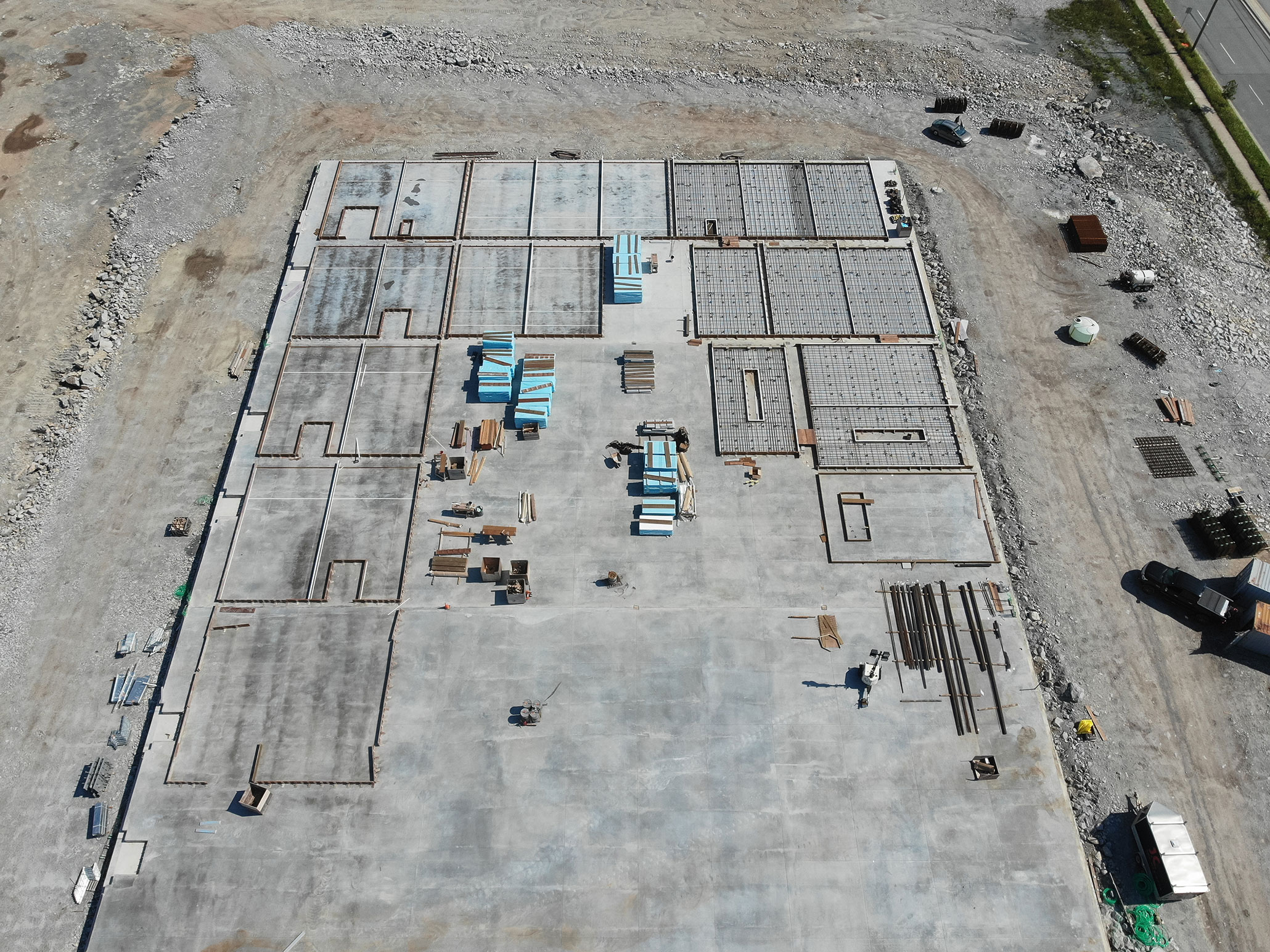
Foundation systems utilized insulated concrete forms (ICF)—serving simultaneously as structure and insulation—and reusable formwork was employed to reduce waste.
On-site, clean concrete waste was crushed and reused as base material, while wood, steel, and packaging were disposed of through local recycling programs. Preliminary tracking indicates over 75% of construction waste was diverted from landfills, underscoring a disciplined material-management approach consistent with Zero Carbon Design objectives.
Energy Efficiency
While the tilt-up walls’ thermal mass and insulation provide passive stability, high-efficiency mechanical systems deliver active control. The 523 kW solar array covers approximately 30% of the roof area, with a further 40% of the roof area available for additional solar panels to serve tenant loads. The solar array as installed provides for over 90% of the annual base building heating loads, with large areas of the roof available to support further solar production during tenant fit-out.
Intelligent building-management systems (BMS) further refine performance, automatically shutting off heating zones when bay doors are opened and modulating equipment to match occupancy and weather conditions.
Electric-vehicle infrastructure for both light-duty and transport vehicles was installed with expansion capacity, positioning the facility for long-term electrification of fleet operations.
Adaptive Engineering and Construction
Building adjacent to operating retail facilities presented significant geotechnical and logistical challenges. Rock excavation had to proceed in small, controlled sections to mitigate vibration and noise, extending the earthwork schedule and forcing concrete placement to occur during winter conditions.
The design-build model allowed real-time adjustments such as switching to clear-stone under-slab prep during cold weather periods to avoid freezing aggregate, which allowed slab prep and pouring to continue under challenging conditions. Slab pours were also sequenced to allow for in-slab heating lines to be provided just in time for the next pour.
Midway through construction, the ownership team opted to increase the building height and solar-ready roof area to allow for future energy expansion. Lindsay Construction’s fully integrated role as general contractor, engineer of record, and tilt-up subcontractor streamlined these adjustments without compromising the schedule.
Environmental Integration and Site Design
The project’s sustainability framework extended beyond the building envelope to encompass hydrology, ecology, and community context. Stormwater is managed through flow-restricted systems and bioretention ponds designed to capture and filter runoff, removing up to 80% of total suspended solids before discharge. Native landscaping minimized irrigation demand and supported infiltration, while nonpotable water reuse and low-flow fixtures reduced operational consumption.
Located within Halifax’s Bayers Lake Business Park—an urban logistics hub connected by four major highways—the development contributes to a densified, multimodal industrial ecosystem that shortens supply chains and reduces freight emissions. Its proximity to residential growth corridors enables shorter commuting distances for employees, reinforcing broader sustainability and livability goals.
Catalyst for Regional Utility Planning
The integration of distributed generation prompted the local utility’s first “campus study” evaluating how up to one megawatt of on-site generated power could be safely accepted into the grid. This study has since informed broader policy discussions about microgeneration and industrial energy management in Atlantic Canada.
Key Performance Highlights
- 400,000 square feet total area (two buildings)
- Canada Green Building Council (CAGBC) Zero Carbon Building Design certified
- 523 kW solar array covering 30% of roof provides 90% of base building needs
- Additional 40% of roof structurally available for solar during tenant fit-out
- R-30 walls / R-40 roof / R-40 doors
- >75% construction waste diverted
- 16-point tilt rigging system for large panels
- Integrated in-floor heating and heat pump ERV system
Replicable Blueprint for Future-Ready Industry
The Julius Boulevard project underscores the expanding role of tilt-up methodology as a platform for sustainable innovation. Its success depended not on a single technological breakthrough but on an integrated process that unites design, construction, and ownership around quantifiable environmental performance. It establishes a replicable model for climate-responsive markets where energy independence, low-carbon construction, and grid resilience are emerging priorities.
For Atlantic Canada, it sets a new precedent; for the broader tilt-up community, it illustrates how the industry’s most pragmatic building system can also be its most progressive.
By Erika Winters-Downey, SE, LEED AP BD+C
Director, Structural Quality & Sustainability
Clayco Design & Engineering
Calvin Knowles, P.Eng., LEED GA
Construction Director
Lindsay Construction Limited


Sé el primero en comentar