
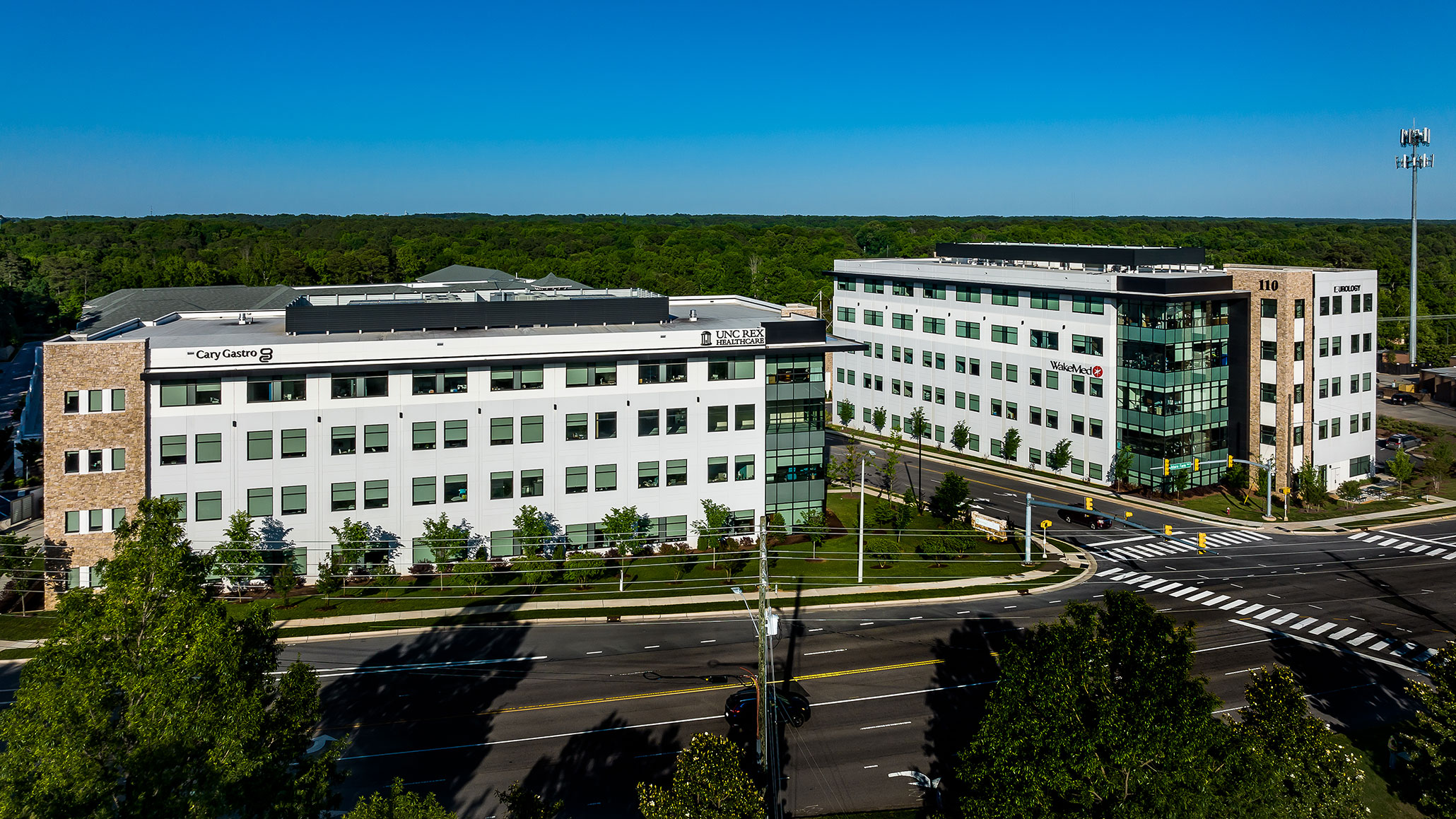
El Healthpark at Kildaire MOB 2, en Cary, Carolina del Norte, es un edificio de consultorios médicos de cinco pisos y 8.000 metros cuadrados diseñado para ampliar los servicios de atención médica ambulatoria dentro de un campus médico ya consolidado. Galardonado con el Premio a la Excelencia en el Logro, el proyecto introdujo una instalación de Clase A adyacente a una estructura tilt-up existente, estacionamientos y una gran comunidad de cuidados continuos para jubilados. Ubicado frente al Hospital WakeMed, el edificio consolidó múltiples especialidades —incluidas la atención de urgencias, la ortopedia, la atención primaria, la neumología, la pediatría y los servicios del sueño— en un entorno centralizado, reforzando el papel del sistema tilt-up en entornos de salud complejos.
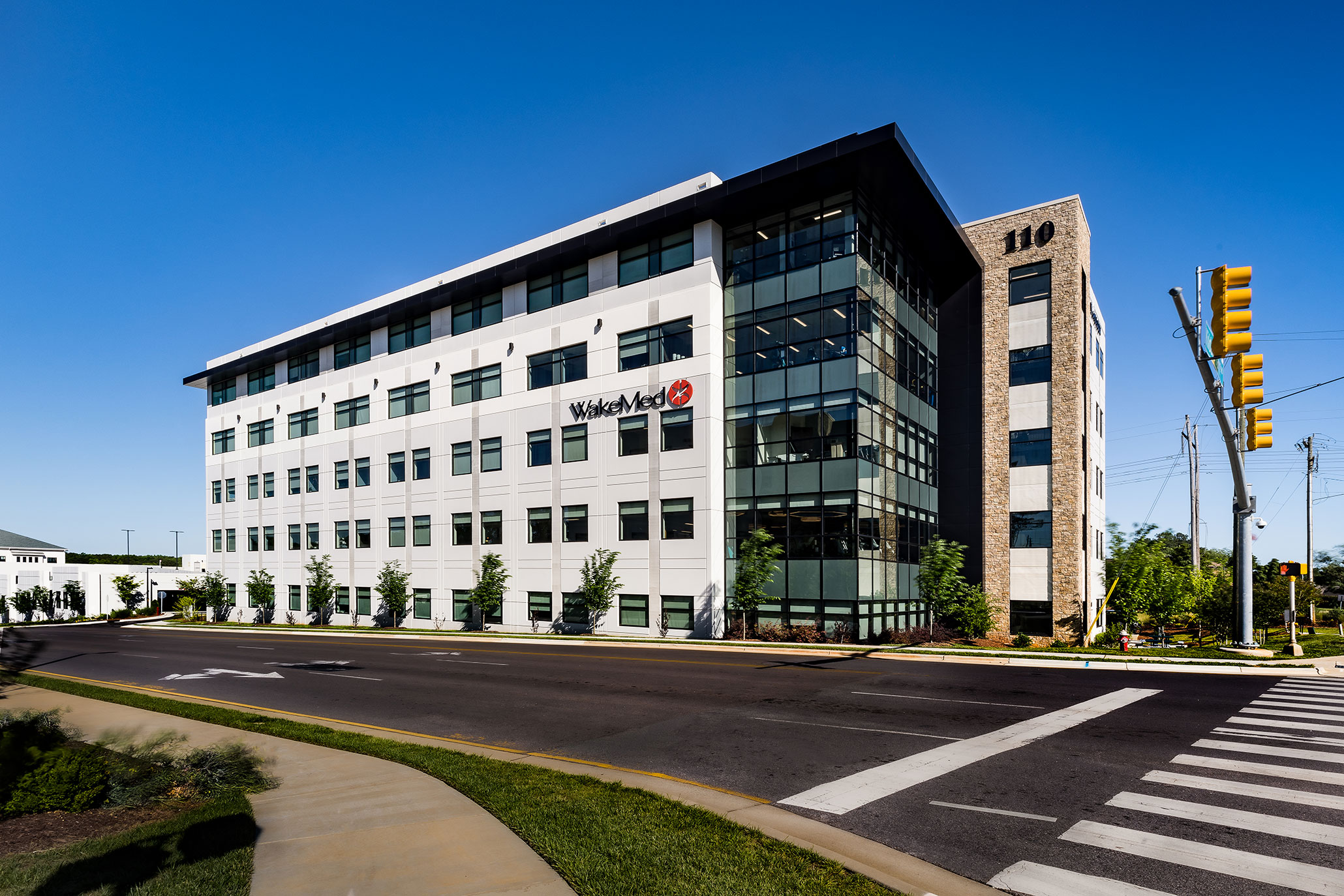
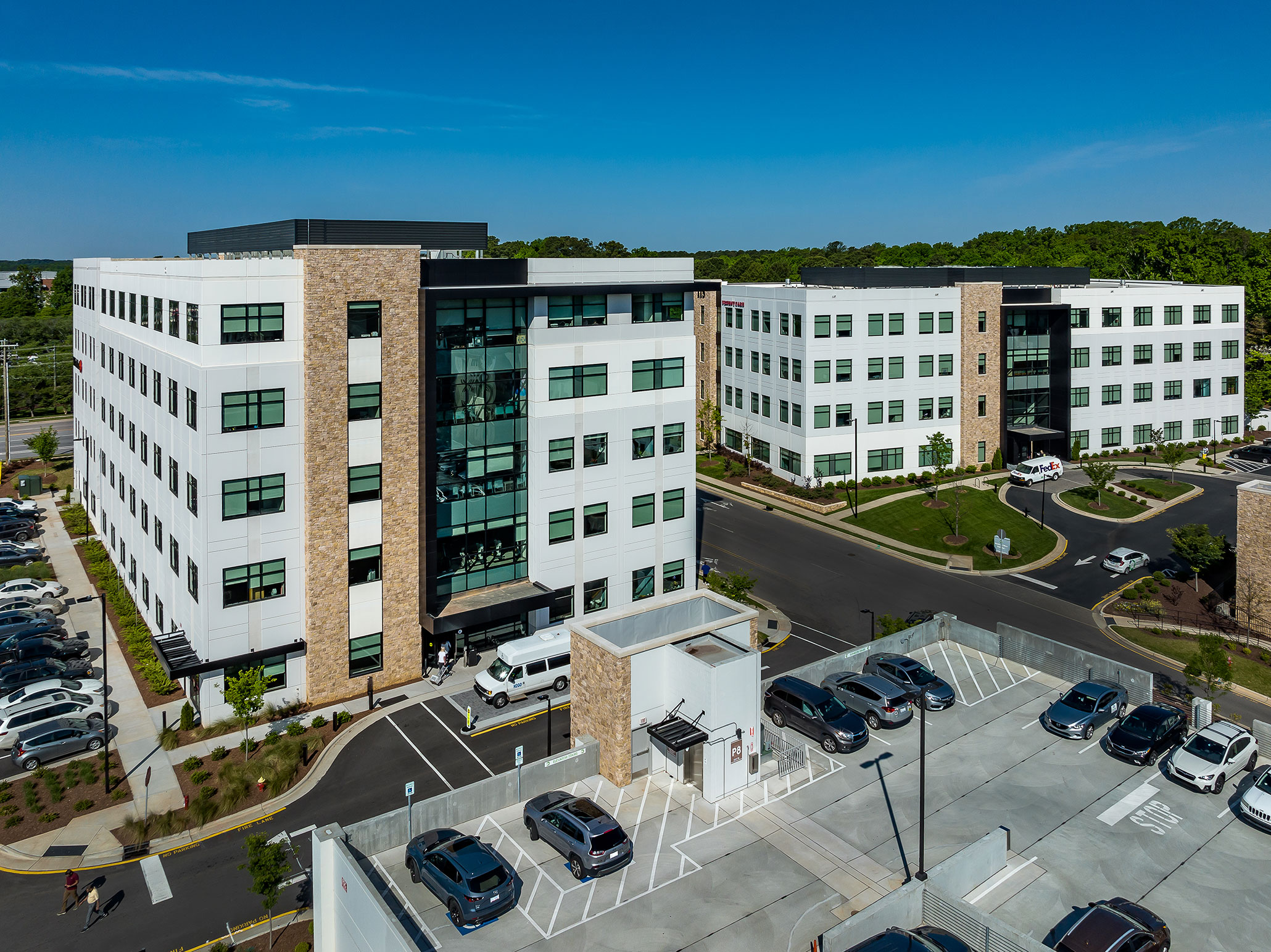
El proyecto requirió una cuidadosa coordinación entre el diseño de los paneles y la secuencia de montaje debido al espacio limitado de la obra y a las restricciones de altura. Las líneas de transmisión de alta tensión limitaban las operaciones de la grúa a lo largo de uno de los bordes del edificio, mientras que la actividad en curso en el campus reducía las áreas disponibles para el hormigonado. En respuesta a ello, el equipo del proyecto implementó una estrategia de paneles apilados, combinando paneles de cuatro pisos con paneles de un solo piso en la parte superior. Este enfoque permitió el uso de paneles más anchos en el nivel superior, al tiempo que introdujo una fachada escalonada que aportó variación dimensional. La articulación de la superficie se logró mediante encofrados de forma sinusoidal y patrones de reborde coordinados, en consonancia con la estructura adyacente, mientras que se integró un revestimiento de piedra selectivo para alinearse con el contexto del campus circundante.
La ingeniería y la planificación de la construcción fueron fundamentales para el éxito del proyecto. El refuerzo de los paneles se realizó mediante tirantes cerrados en la mayoría de las patas de los paneles, lo que refleja las exigencias estructurales de la construcción tilt-up de varios pisos. Debido a las limitaciones de espacio, el arriostramiento de los paneles se orientó hacia el interior, lo que requirió una coordinación precisa con la estructura de acero del edificio. El uso de modelos 3D permitió al equipo de construcción visualizar previamente la ubicación de los arriostramientos e identificar posibles conflictos antes de que comenzara el montaje. Las operaciones de la grúa también se estudiaron exhaustivamente utilizando software especializado para garantizar una distancia de seguridad con respecto a las líneas eléctricas y un alcance adecuado para colocar los paneles de los niveles superiores. Este análisis llevó a la adopción de una configuración de pluma abatible para la grúa, lo que permitió la colocación segura y eficiente tanto del acero estructural como de los paneles del quinto piso.
La aplicación de estas estrategias permitió lograr un proceso de construcción controlado y predecible a pesar de las limitaciones del proyecto. En términos más generales, el proyecto demuestra cómo el método tilt-up puede adaptarse a instalaciones sanitarias de varios pisos en entornos activos y con restricciones de espacio. Al acelerar el calendario de construcción del armazón del edificio, el proyecto facilitó la ocupación anticipada por parte de los inquilinos y contribuyó a la rápida puesta en marcha de los servicios médicos. Este resultado pone de relieve la capacidad del método tilt-up para facilitar la prestación de servicios de salud mediante una construcción eficiente, un diseño coordinado y la adaptabilidad a condiciones complejas en el sitio.
Créditos del proyecto
Contratista de hormigón: Citadel Contractors, Inc.
Fotografía: Benton Henry Photography
Este artículo se ha elaborado a partir del contenido presentado durante el programa de los Premios Tilt-Up Achievement.

Sé el primero en comentar