
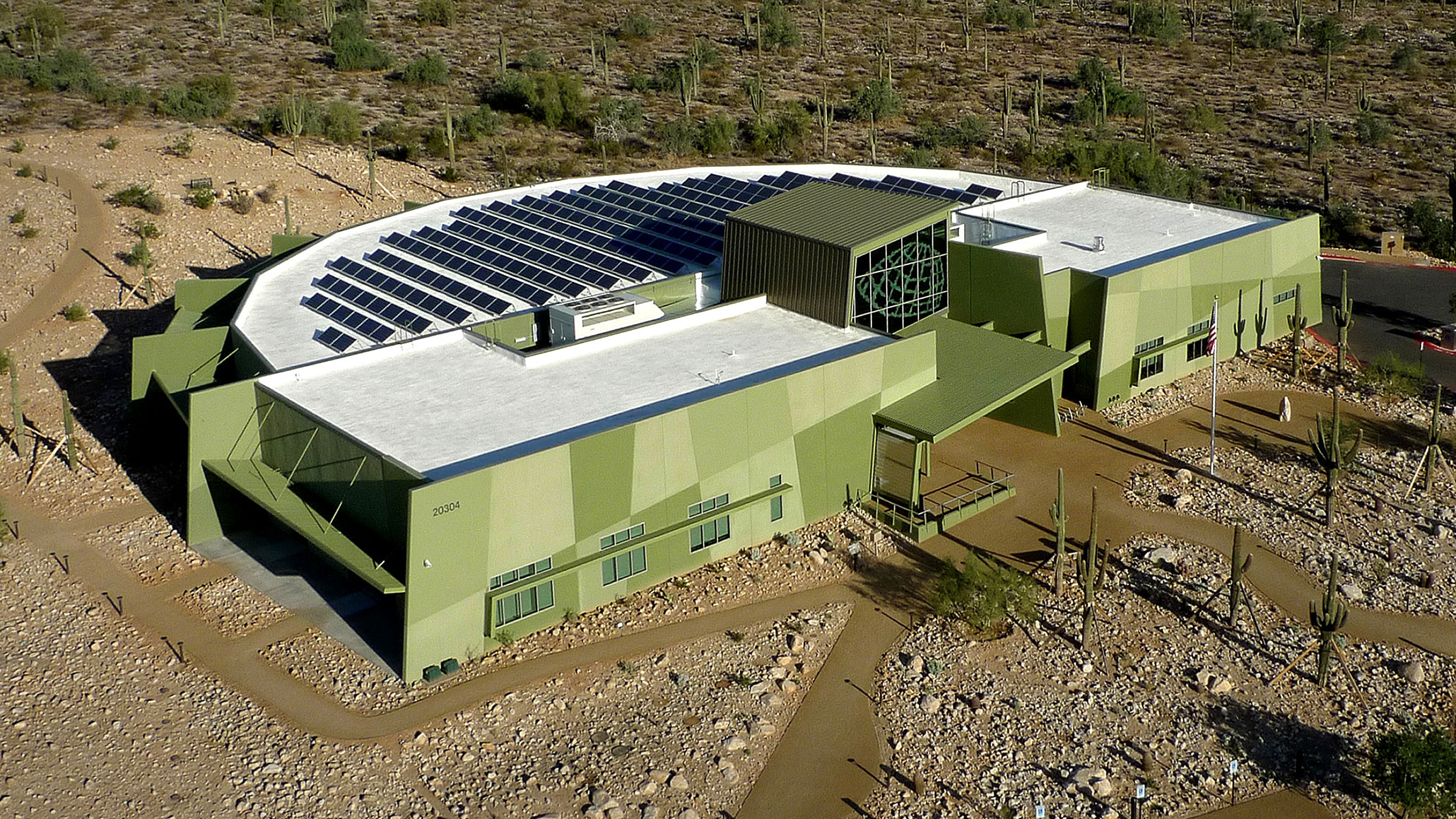
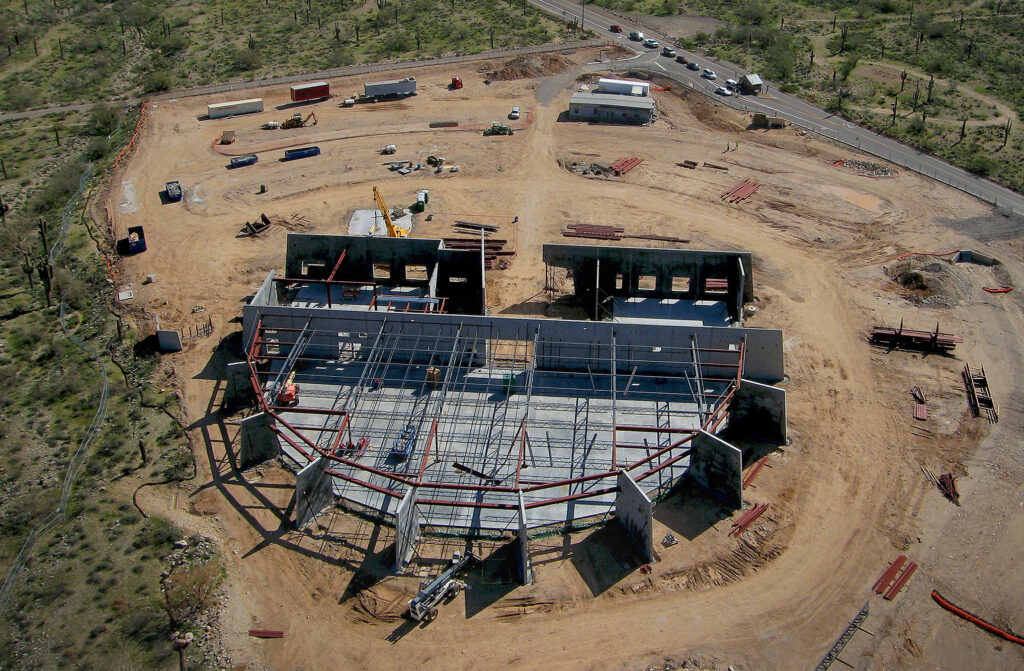
La Biblioteca y Centro de Naturaleza White Tank Branch, situada en Waddell, Arizona, es una biblioteca pública y un centro de educación ambiental ubicado a la entrada del Parque Regional White Tank Mountain. Galardonado con el Premio a la Excelencia en los Logros, el proyecto demuestra cómo la construcción con paneles prefabricados puede aplicarse como parte de una estrategia ambiental integrada en un entorno desértico, yendo más allá de la rentabilidad para garantizar el rendimiento del edificio a largo plazo.
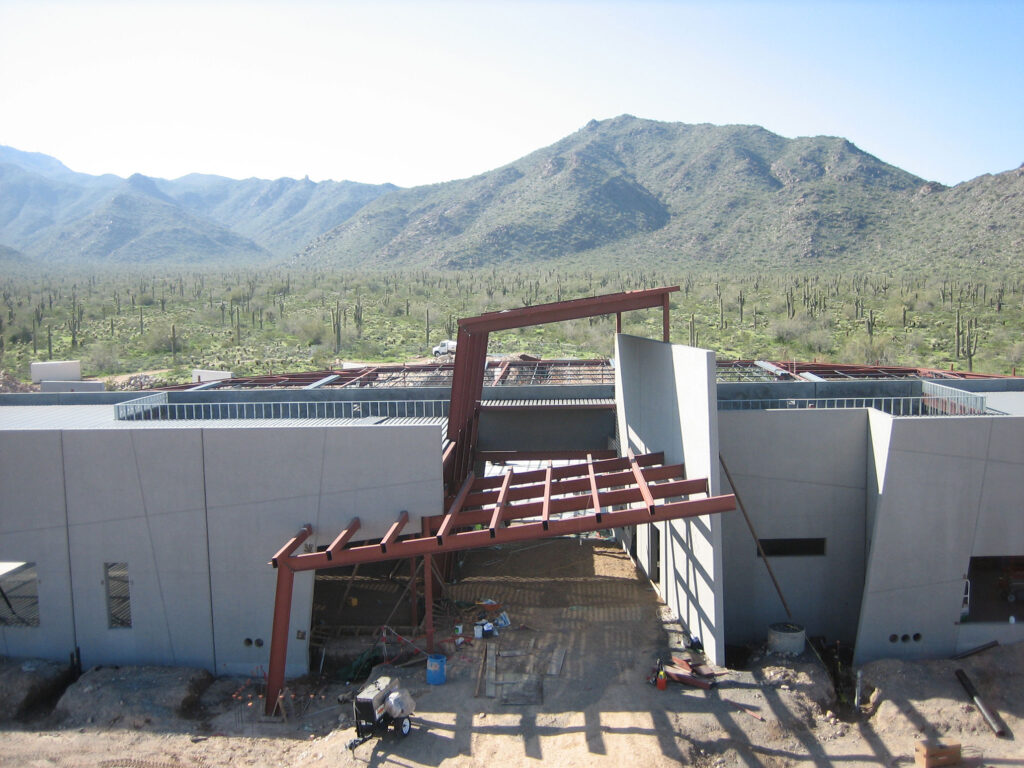
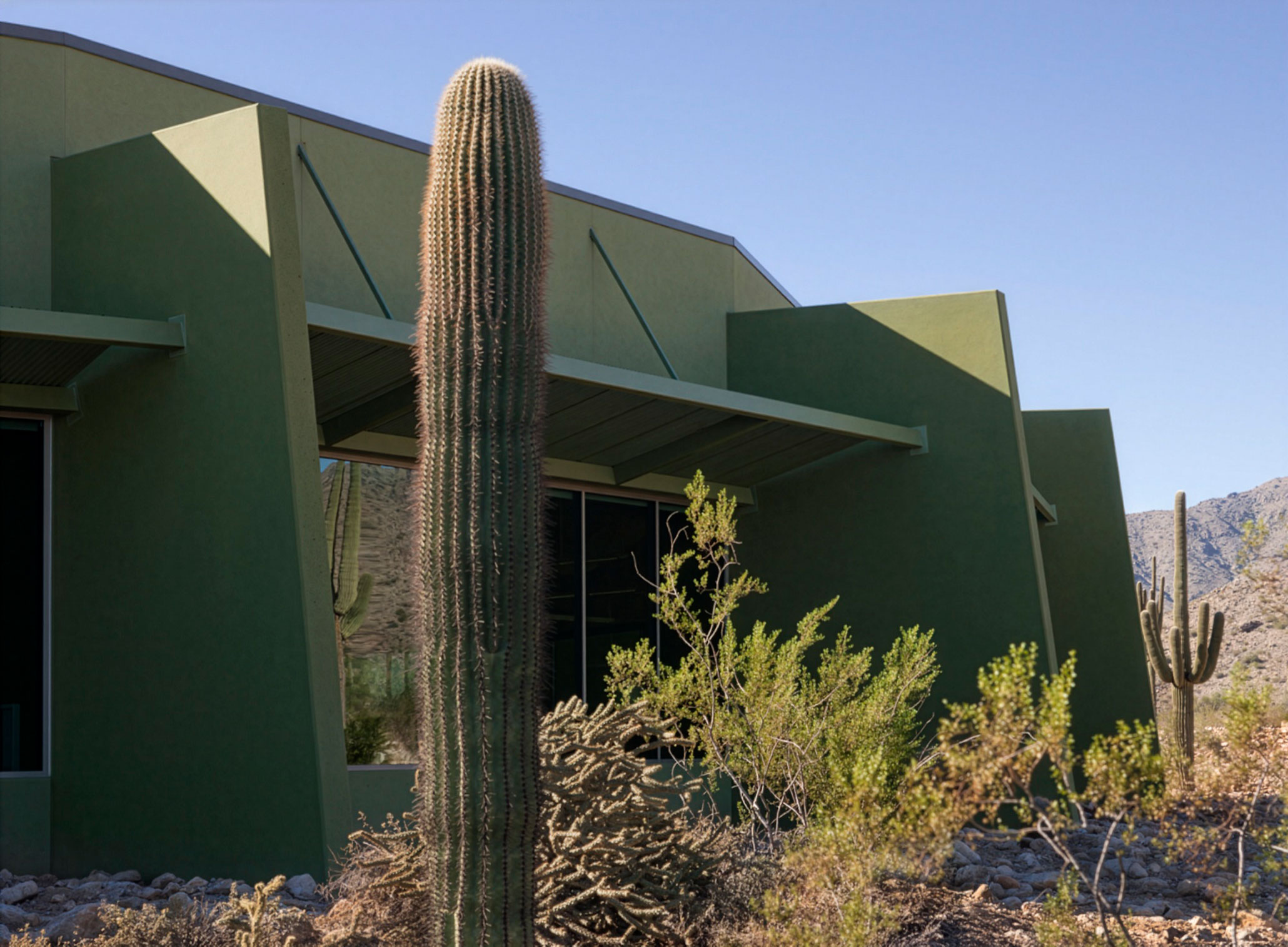
El diseño del edificio respondía directamente a su entorno, tanto desde el punto de vista visual como térmico. Un muro monolítico de hormigón de 60 metros de largo, subdividido en diagonal en formas abstractas, se pintó en tres tonos de verde para armonizar con los colores de la vegetación autóctona, entre la que se incluyen saguaros, palo verdes y mezquites. Este enfoque integró la expresión arquitectónica con el contexto ambiental, al tiempo que mantuvo las ventajas de la panelización tilt-up en cuanto a la facilidad de construcción.
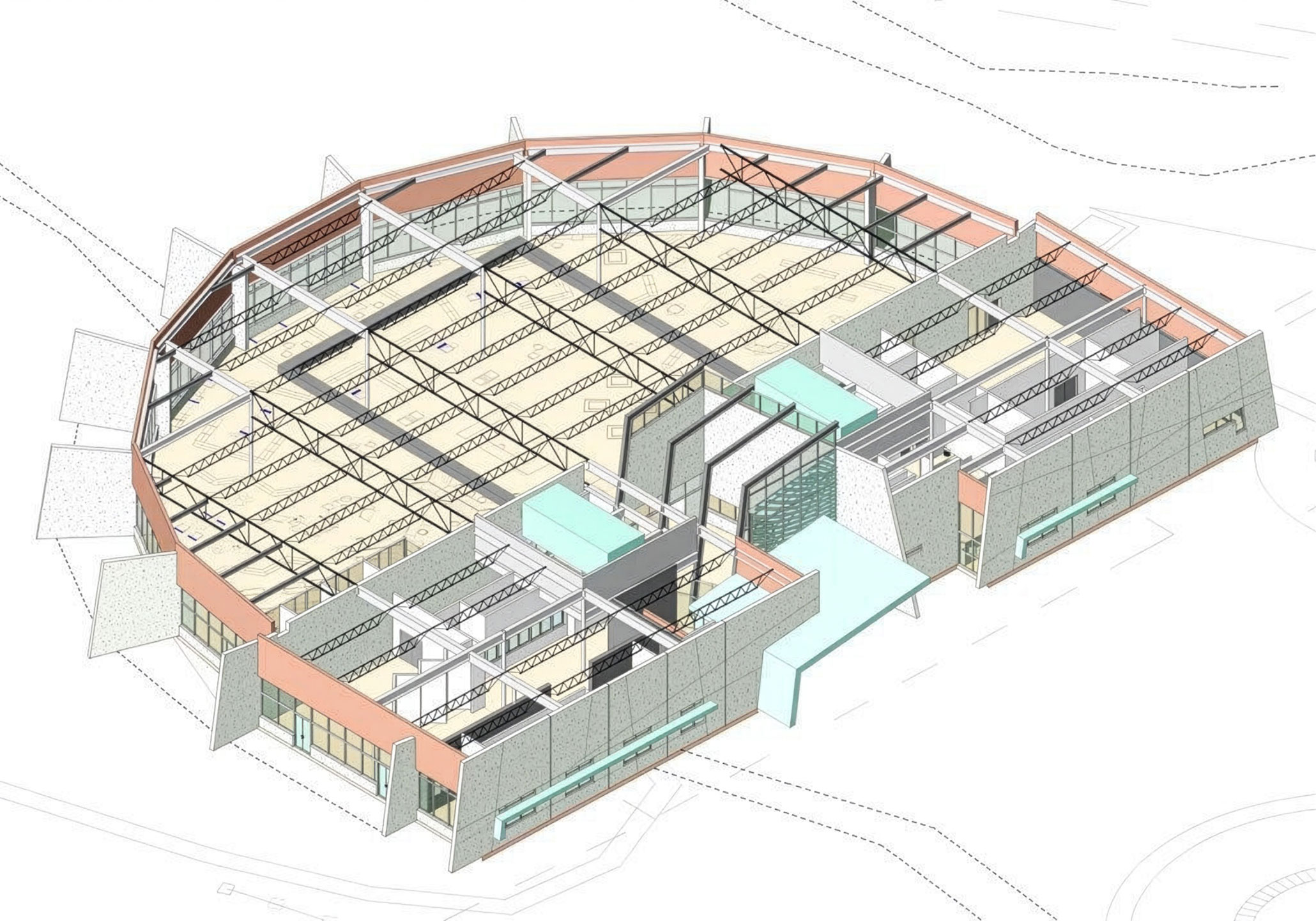
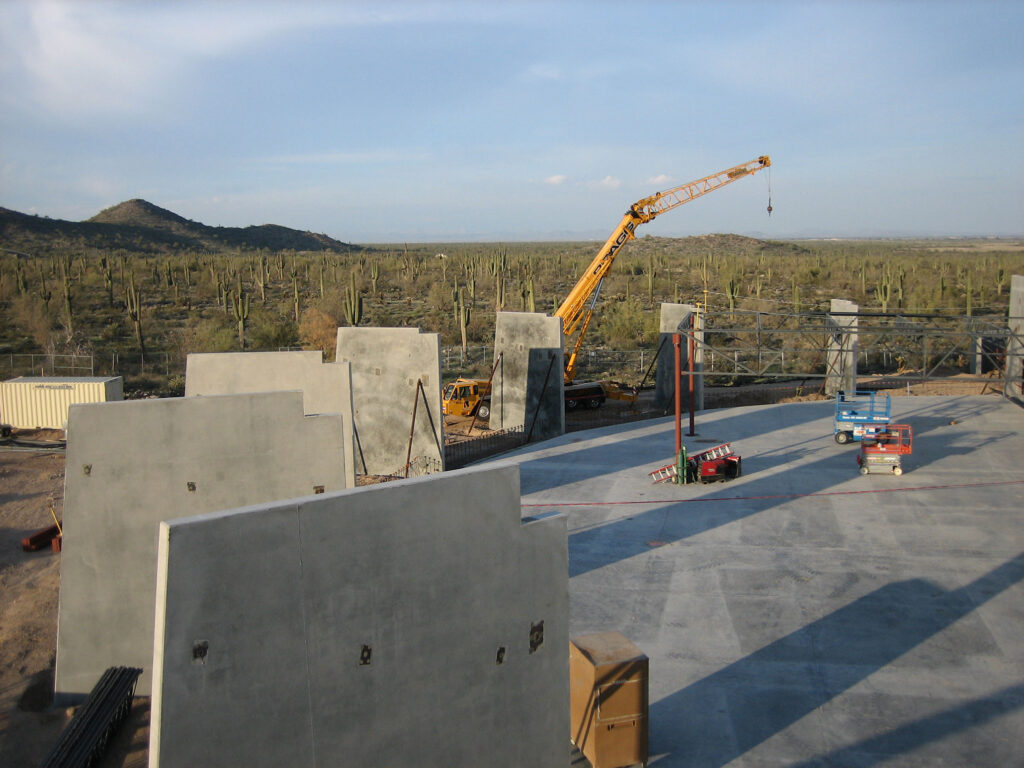
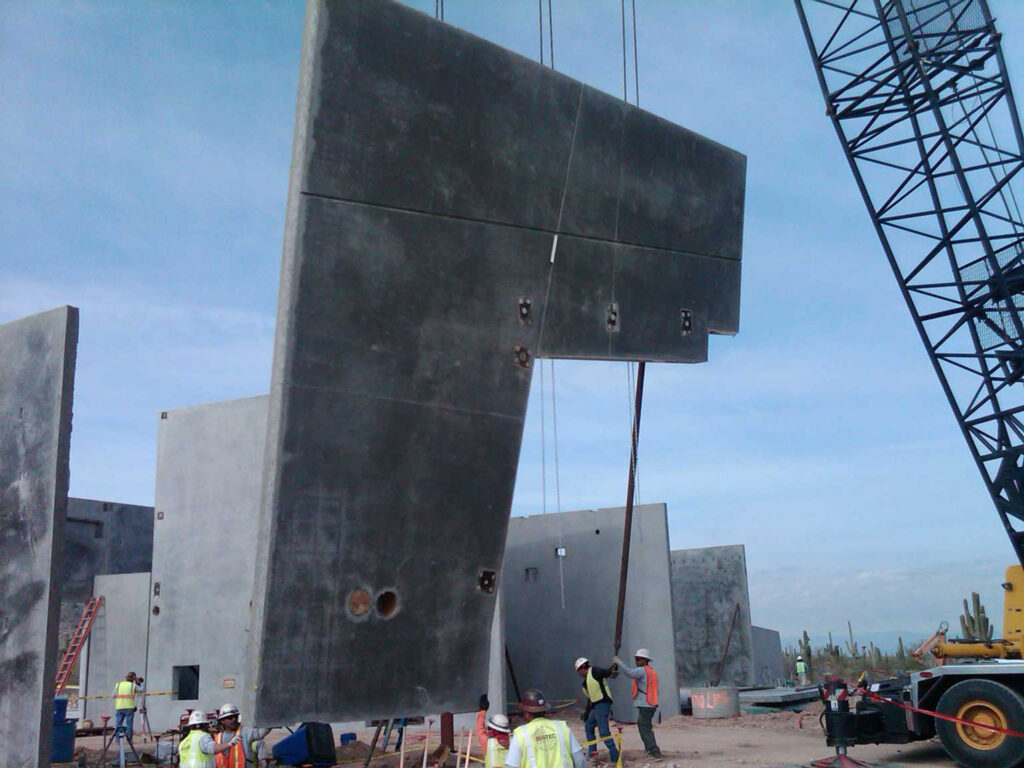
Se optó por la construcción «tilt-up» en parte por su rentabilidad, pero el sistema de paredes resultante también desempeñó un papel fundamental en la regulación de las condiciones interiores. Los gruesos paneles de hormigón actuaron como masa térmica, absorbiendo el calor durante las horas de mayor temperatura del día y liberándolo gradualmente a medida que bajaban las temperaturas exteriores. Este efecto de inercia térmica redujo las fluctuaciones de la temperatura interior y disminuyó la demanda energética general. El rendimiento del sistema de paredes se mejoró aún más mediante la adición de una barrera de aire líquido interior, un armazón y aislamiento en paneles para limitar la transferencia de calor y mejorar la eficiencia de la envolvente.
Aprovechar la masa y la orientación para mejorar el rendimiento pasivo
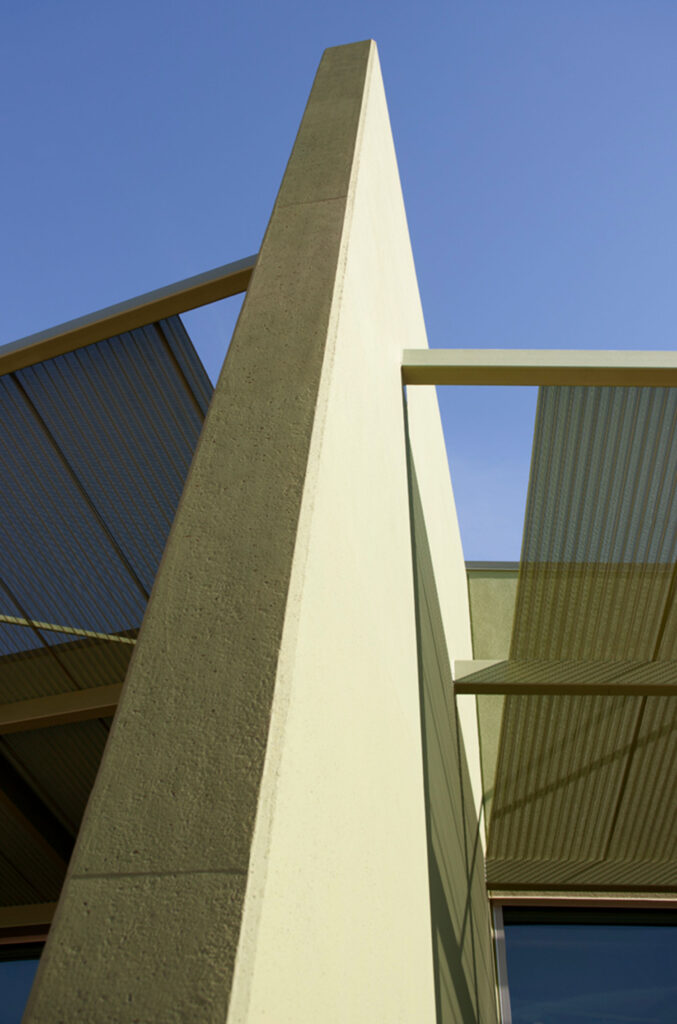
El proyecto muestra cómo se pueden coordinar los muros prefabricados con la orientación y la exposición solar para mejorar el rendimiento pasivo. A lo largo de la fachada trasera del edificio se colocaron aletas de sombra largas y profundas —construidas como parte del sistema de muros prefabricados— para proteger los amplios acristalamientos de la radiación solar directa. Estas aletas redujeron la ganancia de calor en las grandes superficies acristaladas, al tiempo que permitieron la entrada de luz natural, logrando así un equilibrio entre el rendimiento energético, el confort de los ocupantes y la visibilidad.
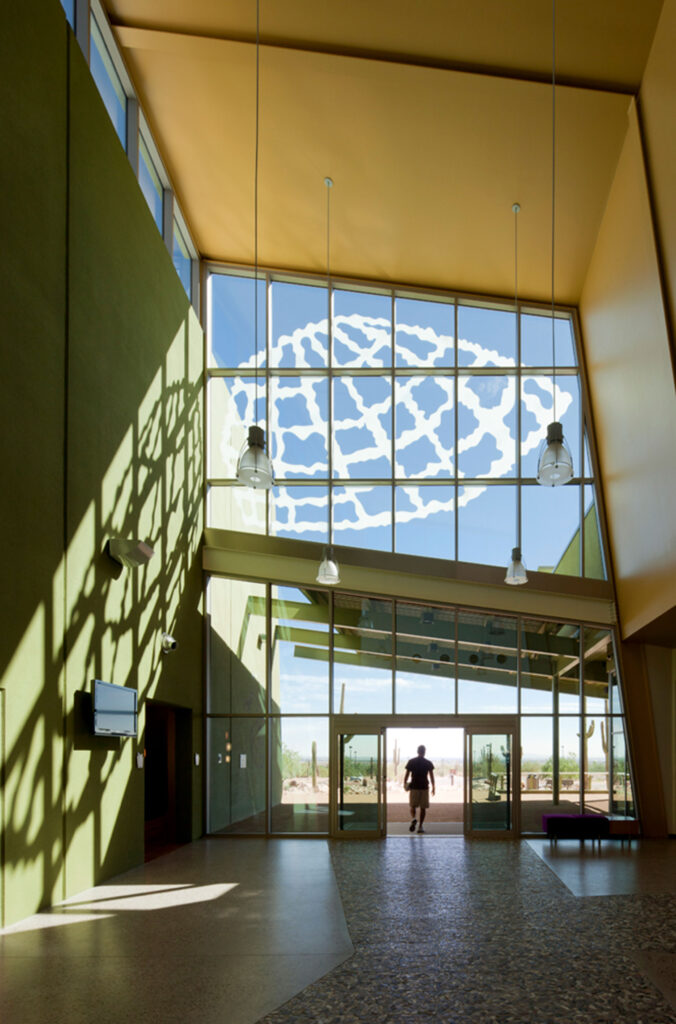
La estrategia de acristalamiento del edificio funcionó en combinación con estos elementos de sombreado. Las ventanas de piso a techo proporcionaban una iluminación natural constante, mientras que los sistemas de sombreado interiores reducían el deslumbramiento y limitaban la ganancia de calor no deseada. Este enfoque por capas pone de relieve cómo los elementos prefabricados pueden ir más allá de la simple envolvente para influir activamente en el desempeño ambiental.
Integración de estrategias de materiales y energía
La selección de materiales contribuyó además a los objetivos medioambientales del proyecto. El hormigón y el acero de refuerzo incorporaban altos niveles de contenido reciclado, en consonancia con los objetivos generales de sostenibilidad. Durante la construcción, se evitó que más de 921 toneladas de escombros acabaran en los vertederos gracias a prácticas de separación y reciclaje, lo que demuestra que los proyectos de construcción con paneles prefabricados pueden incorporar estrategias de gestión de recursos tanto a nivel de materiales como de procesos.
Los sistemas energéticos del edificio complementaron sus estrategias de diseño pasivo. Se instaló un sistema fotovoltaico en la azotea compuesto por 228 paneles para generar aproximadamente 25% de las necesidades energéticas anuales de la instalación. Esta integración de energía renovable in situ con una envolvente de alto rendimiento ilustra cómo la construcción con paneles prefabricados puede respaldar estrategias energéticas tanto pasivas como activas dentro de un sistema unificado.
Otras medidas de diseño del emplazamiento reforzaron el enfoque medioambiental del proyecto. En la zona de estacionamiento se utilizó granito triturado y compactado para reducir las superficies impermeables y favorecer el drenaje natural. Se replantó la vegetación autóctona recuperada del emplazamiento para minimizar las necesidades de riego, y se aplicó un revestimiento reflectante al techo para mitigar el efecto isla de calor.
La Biblioteca y Centro de Naturaleza de White Tank es un ejemplo de cómo la construcción con paneles prefabricados (tilt-up) puede integrarse en una estrategia ambiental integral en climas adversos. Al combinar la masa térmica, el control solar, la eficiencia en el uso de materiales y los sistemas de energía renovable, el proyecto ofrece un claro ejemplo de cómo la construcción con paneles prefabricados puede contribuir a reducir la demanda energética y a mejorar el desempeño de los edificios. Sus enseñanzas son aplicables a proyectos similares que busquen equilibrar el costo, la durabilidad y la sostenibilidad ambiental mediante enfoques integrados de diseño y construcción.
Créditos del proyecto
Contratista de hormigón: Suntec Concrete
Fotografía: Bill Timmerman
Este artículo se ha elaborado a partir del contenido presentado durante el programa de los Premios Tilt-Up Achievement.

Sé el primero en comentar